
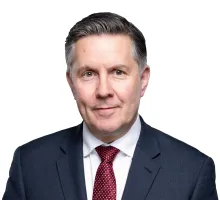
MELINDA JAMES, HOST: Have you been to one of the Urgent Care Clinics that have popped up around the place? There are a few around Wollongong, and one is officially being opened today in Shellharbour by the Federal Health Minister, Mark Butler, who joins me now. Minister, good morning. Thanks so much for your time.
MARK BUTLER, MINISTER FOR HEALTH AND AGEING, MINISTER FOR DISABILITY AND THE NDIS: My pleasure.
JAMES: So this is the latest for our region, the Shellharbour Urgent Care Clinic that's being officially opened today. There’s still some wait around the Nowra Urgent Care Clinic. Do you know much about the progress of that?
BUTLER: We'll be opening that next week as well. I've lost count, I think that will be the 133rd clinical opening up to 137. We're almost fully done with the whole network. But yes, Shellharbour this week, Nowra next week. Obviously, there's a clinic in Wollongong, there's a clinic in Dapto. I'm not sure how far your station goes, but there's also one down in Batemans Bay. We're starting to get pretty good coverage.
JAMES: Yeah, we fight over Batemans Bay with our friends down in Bega. Look, Minister, it's interesting your visit today coincides with new report that's come out, an independent review of Urgent Care Clinics which is largely complementary; cost effective, popular, but serious workforce shortages depending on how far away you are from major centres. How big an issue does the government recognise this is with people's, one quote being: it's a bit of a nightmare trying to find nursing staff.
BUTLER: I read that. Look, let me step back just a second. A few years ago, this model really didn't exist in Australia. It's very common overseas. In America, I think there's 15,000 Urgent Care Clinics. New Zealand has had this model for many, many years, sort of something that sits in between your typical general practice on the one hand and a fully equipped hospital on the other. We've only really been building this network now for two or three years, which is why this evaluation report is so important.
We funded an ongoing evaluation to point us to the lessons we needed to learn to make sure this network is successful. I think it has been successful. More than 2.5 million patients have already gone through one of these Urgent Care Clinics. Once the network is fully up and running over the course of this year, they'll see 2 million people every year over seven days a week, extended hours, and obviously they are fully bulk billed. People are getting high-quality urgent care when and where they need it in their own community.
And it's also, we know, taking real pressure off crowded hospital emergency departments. But that doesn't mean there aren't lessons we need to learn. Making sure they're staffed appropriately is obviously something we're very focused on. Making sure that over time these clinics get access to pathology, x-ray and other imaging services across the time that they're open is obviously also very important. A lot of people go into these clinics with breaks, particularly kids who fall off their skateboards or get injured at Saturday afternoon sports. To be fully effective we've got to learn those lessons, and this evaluation report is something I'll be reading very closely.
JAMES: Okay, so there is some acknowledgement that maybe there is a lack of access to things like x-ray and pathology services, particularly around, just outside ordinary opening hours, I suppose?
BUTLER: There is, and all of the operators are contracted or are obligated to work on that over time, also to work on their opening hours. I must say, I think the staffing that's pointed out in this ABC story is something obviously we're focused on. There are staffing issues right through the healthcare system from general practice through to specialists right through to the hospital system. But by and large, as I go around these clinics, the operators are finding that people are very keen to work there. They like the work. They like the environment that they're working in. It's a little bit more stable and calm than hospital environments.
We are seeing a lot of people shift to these clinics because they're an exciting new model of care. But obviously, right across the healthcare system we've got some workforce challenges, which is why we're so focused on expanding training opportunities and also trying to make sure that people who want to come and work in Australia from countries where we’ve got high confidence in their training systems, like New Zealand and the UK, Ireland, Canada, places like that, are able to come here quickly and at low cost.
JAMES: There is some question as to how much they're alleviating the pressure on emergency departments at our hospitals. It does seem to be the case that even though it has reduced the number of presentations to hospital EDs by, I'm quoting here, up to 10 per cent, it does seem that it hasn't had a huge effect on waiting times at emergency departments. How do you interpret that?
BUTLER: What you see is a very material reduction in what we call non-urgent or semi-urgent presentations to hospitals. There might be a break or a respiratory illness where people aren't able to access another care option, particularly over the weekend or late at night. If your kid has broken an arm at Saturday afternoon sport, your usual general practice is probably not open. Often the only option you have is to take him or her to the local hospital ED, but they can be quite adequately cared for at an Urgent Care Clinic.
Removing that workload or certainly reducing that workload from hospitals means that the hospital ED is then able to focus its resources on the things for which it really was built and equipped, which is those life-threatening emergencies like heart attacks and strokes and, you know, serious accidents and things like that. I don't think anyone expects with this investment that hospital EDs are going to be places where people are sitting around wondering when their next work is going to be.
Hospital EDs are always going to be busy. We're a growing population. We're getting older. We're getting a little sicker in terms of chronic disease, so I think hospital ED pressure is something we're going to be managing for a very, very long time. But this is certainly taking some pressure off it at a relatively modest investment.
JAMES: We've just got one request here from a listener. I'll just have to pass it on because it's the right thing to do. How about an Urgent Care Clinic for Wollondilly, ideally in Wilton? So that's just one for you to note down, Minister, there that someone's keen on attracting one to Wilton.
Look, just finally and very briefly, interestingly, there were some reports from the Royal Australian College of General Practitioners, so the College of GPs. They're saying in their pre-budget submission to you that they want an independent body to set Medicare rebates, so to take the politics out of this completely. What do you say to that, just briefly? Is that something you'd look at, having an independent body set rebates rather than it being a political thing?
BUTLER: I can see where the College is coming from. They really reacted very strongly, obviously, to the last government freezing the Medicare rebate, effectively freezing the income of their GP members for six years. But it's not a plan we have right now. As your listeners probably know, this has been a really big focus of our government over the last four years to turn Medicare around.
What you've seen, for example, in Alison Byrnes' electorate of Cunningham is that last October, there were 10 general practices that fully bulk billed their patients, and within a few months that's up to 24, around half of the general practices in Alison's electorate are now bulk billing. You'll see the same down in Carol Berry's electorate of Whitlam. Bulk billing is turning around, particularly for those people who don't have the benefit of a concession card. You've seen big increases over the last few months because of our investments. You've got these Urgent Care Clinics, we're training more doctors than we've ever trained before, particularly more general practitioners, and we're slashing the price of medicine.
I'm not much inclined to give up the opportunity to strengthen Medicare, as a government. There's no more important social program for Australia, I don't think, than Medicare. I see where the doctors are coming from, but it's not a plan we have right now.
JAMES: Minister, I really appreciate your time this morning. Thank you very much.
BUTLER: Thanks so much.
JAMES: That's Mark Butler, Federal Health Minister, on his way to Shellharbour to open the new Shellharbour Urgent Care Clinic, and as you heard there, the one in Nowra due to open next week.
Media event date:
Date published:
Media type:
Transcript
Audience:
General public
Minister: