
JULES SCHILLER, HOST: Let’s go to specialist fees. I mean, seeing a specialist is life and death for some people. It’s the difference between pain and no pain. And we know that many people are deferring seeing specialists because they just don’t know how much they’re going to pay, and even if they have private health, the out-of-pocket costs can be absolutely prohibited.
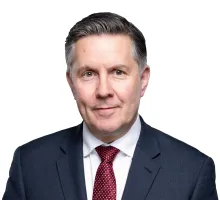
Mark Butler is the Federal Health Minister. Mark Butler, you have promised to do something about spiralling specialist fees before. Have you made any progress?
MARK BUTLER, MINISTER FOR HEALTH AND AGEING, MINISTER FOR DISABILITY AND THE NDIS: We've got legislation in the Parliament now being debated. It will be debated again when we get back there the week after next. It's true to say that in our first term, Jules, we focused very much and quite unapologetically on GP fees. We'd seen bulk billing start to move into freefall right across the country. So a lot of our energy, a lot of taxpayer investment was focused very much on trying to turn bulk billing around. And that is working. It's working, frankly, better and faster than I expected. But I also said, including to the Australian Medical Association, the next frontier is specialist fees. I mean, this is becoming a barbecue stopper out there in the community. As you say, more and more people we know from our research, when they get a referral from their GP to go and get a particular procedure, aren't going ahead with that referral because they learn the cost, the out-of-pockets that can run to hundreds of dollars for just a consultation and thousands of dollars for procedures. They've skyrocketed over recent years.
So, yes, this is a big agenda for our second term of government. And I've said to the doctors’ groups, every option as far as I'm concerned is on the table.
SONYA FELDHOFF, HOST: I'm sure a lot of people would love to hear that. But what's in the scope of what you can practically do to change that situation?
BUTLER: The first thing we're doing is providing some transparency. Several years ago, the former government set up a website called Medical Cost Finder for you to be able to search. If you'd been referred to a particular surgeon for a knee operation, you could search and find out what their fees was. But it was voluntary. It was opt-in. And of the tens of thousands of specialists, literally only several dozen actually uploaded their fees, so it failed. What we've decided is we're going to upload all of their fees for them. So everyone's fees will be there for everyone to see and search online.
Transparency is the first measure, and that's the legislation in the parliament right now.
SCHILLER: How many of them have uploaded their fees, though? Because you mentioned- you know, under the Morrison government, only seven did it out of, I think, 11,000 specialists. Have you improved that?
BUTLER: To his credit, the former president of the AMA uploaded his and made a call to his colleagues to do it. We might have got to a few dozen but I think everyone can conclude this has been a failure, which is why we've got legislation to make it mandatory.
SCHILLER: So a few dozen out of- sorry, Minister…
BUTLER: Thousands.
SCHILLER: … A dozen out of 11,000 or a few thousands?
BUTLER: A few dozen. You didn't hear me wrong, Jules. Literally a few dozen.
SCHILLER: A few dozen.
BUTLER: It would be funny if it wasn't so serious. And that's why we announced last year we would make changes so that we will publish it for them. We have access to all those fees. So once we've got the legislation through the parliament, I hope the opposition supports it. We'll be able to set up a system that uploads their fees automatically. But transparency is only the first measure. What we're seeing is the fees going up at ridiculous levels in some areas and a huge variability between different specialists.
For a colonoscopy or cataract surgery here in Adelaide, some surgeons might charge very little and others will be charging astronomic amounts with no rhyme or reason, no difference in the quality of the procedure. So starting to think about ways we can regulate their fees and stop them blowing the fee out this much is also something that's on the table for us.
FELDHOFF: Minister, is there also an ability to give greater autonomy to a patient to choose a specialist? Because my experience has been that a GP refers you and you go to that specialist. It sort of doesn't matter what the fee is.
BUTLER: Totally. And we're very much looking at that as well, to have open referrals so that if the GP says you need a particular procedure, you're an adult, you can do your own searching and work out which specialist in the region, after doing your due diligence and searching that website, that's very much something we're looking at as well.
SCHILLER: We've only got about a minute left. Can you strip Medicare rebates from specialists who charge excessive fees? That's a suggestion from the Grattan Institute.
BUTLER: That's on the table. We want to think about that carefully. We don't want a situation where we have doctors who are trained to be part of Medicare effectively opting out of the Medicare system. For some doctors, the out-of-pocket charge is several times the Medicare rebate everything now. That’s how high they have risen. I want to think about that carefully, consult about it carefully. I wouldn’t do it lightly. But again, like everything, I've said it. It's on the table as far as I'm concerned. This can't continue. This is becoming not just a hip pocket issue, but people are not getting the care they need because of this.
SCHILLER: Mark Butler, Federal Health Minister, thank you for your company.
Media event date:
Date published:
Media type:
Transcript
Audience:
General public
Minister: