
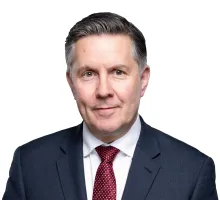
CHRIS SMITH, HOST: Yesterday saw major reforms to the NDIS scheme. They are changes designed to cap spending at $55 billion by the end of the decade because the scheme, as the Minister said yesterday, was just unsustainable. They’re aiming to take 160,000 recipients off the scheme, which could drive growth down to around about two per cent. That’s the aim, because right now it’s in excess of 10 per cent. I’ve got Health Minister Mark Butler on the line right now. Minister, welcome to the Super Radio Network.
MARK BUTLER, MINISTER FOR HEALTH AND AGEING, MINISTER FOR DISABILITY AND THE NDIS: Good morning, Chris.
SMITH: I want to play for you a little bit of what Chris Minns had to say, the Premier of New South Wales, only 20 minutes ago in reference to your announcement yesterday. Here is the Premier.
[Excerpt]
CHRIS MINNS, PREMIER OF NEW SOUTH WALES: What I am saying, as part of that reform, we've got to be honest with people. And we can't provide NDIS-like services at the state level. The reason for that is we've got obligations to provide basic healthcare. That's what we do in our public hospitals, life-saving, but essential healthcare in our public hospital system. And that doesn't extend to the broad spectrum of disability support and services.
[End of excerpt]
SMITH: So that's what he's had to say. We can't provide NDIS-like services. That doesn't sound like you've got New South Wales on board.
BUTLER: I think we have state and territory governments on board and have had for a few years, Chris. Look, I've been in this game long enough to know there's always a bit of argy-bargy between governments, particularly when you start talking dollars. But it's important to remind your listeners that National Cabinet, so all of the premiers and the PM, way back in 2023 recognised this was important work for us to do in partnership. They allocated $10 billion, so $5 billion from us, the Commonwealth, $5 billion collectively from the states to build those local community supports that Premier Minns was just talking about. Now, we've allocated $4 billion of that already to a program I called Thriving Kids that I think you and I have talked about. That's the kids under the age of nine who are currently on the NDIS at pretty alarming levels. One in four junior primary boys in some parts of the country are on a scheme that was designed for permanent and significant disabilities.
We've got a track record here. Right now, New South Wales and other states are just getting on with the job of building or, in some cases, rebuilding those community supports, including with money we've given to them to do that. There's still $6 billion in the kitty that was allocated by Premier Minns and by all of the other states a few years ago. We've got to rebuild those supports for other parts of the community as well. But I don't pretend this is going to be easy work. This is a big change to the NDIS.
SMITH: It won't happen next year, will it?
BUTLER: It will happen over the course of the rest of this year and next year, and I want the new system to be in place the year after that in 2028. Now, that sounds like a long way away, but it's a lot of work for us to do, obviously with states and territories, but also with the disability community itself. There's this philosophy at the centre of the NDIS, ‘Nothing About Us Without Us’, and I'm very much committed to that. I want to work with disability activists and advocates, people from the community, to make sure we get these reforms designed right.
But I guess what was at the heart of what I said yesterday, Chris, is that I think the NDIS is at risk. I think the community is starting to think that something that was a source of national pride has become a source of deep national concern. Growing too fast. It's too big. There are people on the scheme who weren't intended to be on it. There's too much rorting, too much fraud. And if we don't get it back on track, I think its future is at risk.
SMITH: You could have gone harder by means testing it. And I noticed your comments about a month ago suggested that that was under consideration. Why didn't you means test the NDIS?
BUTLER: First of all, I think the philosophy of a scheme of lifelong support, so not episodes of care, not aged care for a period at the end of your life, but for your entire life, the philosophy is that everyone should be on it equally. And I think that's a reasonable philosophy. But even when you look at what a means testing system would look like in a scheme like the NDIS, Chris, it won't yield much because the vast bulk of NDIS participants don't have much by way of financial means. Most of them are on the Disability Support Pension. Some are working, obviously, but they're often spending a lot of that money on their own support needs as well. Whether you look at it from a philosophical perspective or, frankly, just a practical perspective, means testing is not going to shift the dial on this, so we're not looking at that. That's not part of our plan.
SMITH: Okay. Explain to my listeners what you're going to do to reduce the number of shonky providers.
BUTLER: The first and most important thing is to set up a digital payment system. Tat's not foolproof, obviously. We know that through bitter experience. But right now, there's about 600,000 claims being processed every day without any evidence. And some of the evidence is people scribbling a number, a dollar number on a piece of paper and sending it through.
SMITH: It's madness.
BUTLER: And so, we've got to get that under control. We've got to be confident that wherever we are sending money for an NDIS service, we know who we're sending it to and we know their character, and we know the merit of the service that they're claiming. Some of this is just pretty small-time fraud by people who need to be cleaned out of the system. And some, as I said yesterday, are very serious organised criminals who sniffed out a honeypot and they're trying to raid it for all that they can. We've got the Criminal Intelligence Commission involved in this. That's how serious at some levels it's got. But we also want to make sure that as many providers of these services as possible are registered or are vetted by government to make sure they’ve got the right qualifications, because the whole lot of people offering services, frankly, who’ve got no background or experience or training in disabilities, and they're right character. They're not just raiding something because it's easy money.
SMITH: Okay, you're pressed for time. I've got one more question. The scrapping of John Howard's private healthcare rebate for people over 65, it'll cost 1.4 million individuals up to $640 a year, according to the Australian Financial Review. Aren't these people going to dump their private cover as a result of this and place a greater burden on Medicare?
BUTLER: First of all, that number's not right. Our modelling obviously depends on your policy, but on average, we think this will cost people in the order of $220 to $250 a year, or less than a dollar a day. And of course, I don't do that lightly at a time of cost of living pressure. But I have to say, this was not the right decision by John Howard. It was done in the heat of an election, but there is no rationale to pay two households who are listening to your program, Chris, a different level of government support when they have the same income but happen to be of different ages. And when we look at what the impact of this is going to be, we think a very low number, about 0.4 per cent of older Australians, might withdraw their coverage in a market that's growing by two per cent per year.
I just think this is a question of generational equity. And as I said yesterday, I need, as the Aged Care Minister, to find every single dollar I can to pile into aged care, because the demand for aged care right now is growing through the roof. Because if you work back 80 years, as I said yesterday, you get to 1946 when the baby boom started. And those baby boomers are turning 80 this year in unprecedented numbers, which is the age really when you really start to have to need aged care support. It was a hard decision. I get that. But the budget's in tough condition at the moment. We need to make sure that every dollar is being wisely spent. I don't think there is any rationale ever for paying older Australians a more generous level of support than households under 60, under 65, who are on exactly the same income.
SMITH: Okay, I'll take calls on that, no doubt. I've got a few calls on the board as well. But thank you very much for your time this morning.
BUTLER: Good to talk to you, Chris.
SMITH: Good on you. Good to have you on, Federal Health Minister Mark Butler.
Media event date:
Date published:
Media type:
Transcript
Audience:
General public
Minister: