
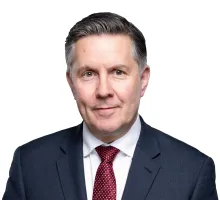
MARK BUTLER, MINISTER FOR HEALTH AND AGEING, MINISTER FOR DISABILITY AND THE NDIS: Thanks very much for coming out this morning. We have a very exciting important announcement around breast cancer treatment. I’m delighted to be joined by Vicki Durston, the Head of Policy and Advocacy for the Breast Cancer Network of Australia, the key peak patient organisation for Australians living with breast cancer.
We’re also joined by Jenny from Cancer Nurses, who is a nurse practitioner working in breast oncology, and Katie, is a patient living with metastatic breast cancer who will talk about her personal experience here, and I really want to thank all three for coming along today.
As Australians know so well, breast cancer is the most common form of cancer experienced by Australian women, and although Australia has some of the best survival rates in the world, even breast cancer survivors often need to continue with treatment for years after their primary treatment to deal with the consequences of their cancer and their cancer treatment, but also to suppress certain hormones that will drive cancer cells and raise the risk of a relapsed or reoccurrence.
For many, many years now, thousands of Australian women who have survived breast cancer have relied upon a particular hormone suppressant, or GnRH agonist called Zoladex, sponsored by AstraZeneca. This is a monthly injection that around 13,500 women taken every month, often for years to reduce that risk of reoccurrence, and to give them confidence that they are going to be able to continue on with life.
AstraZeneca, the sponsor of that company, made an announcement some months ago that they intended to withdraw Zoladex from the PBC for this particular dose, and that has, I’m sure Vicki and Jenny and particularly Katie will outline, caused enormous anxiety, enormous anxiety among many thousands of Australian women.
Over the last few months, we’ve been working together to find a solution to this. The Breast Cancer Network, I have to express my enormous gratitude, pulled together a roundtable. We’ve been working together to do what we can to ensure security and affordability of an alternative treatment. We scanned the rest of the world and found there is an equivalent treatment called Triptorelin sponsored by a drug company called Ipsom. We invited that company to make an application to Australia, to our Pharmaceutical Benefits Advisory Committee, expedited that process, and are able to announce today that this equivalent treatment, Triptorelin, will be available on the PBS from 1 October, ensuring that there is no gap in this incredibly important hormone suppressant for Australian women. Without PBS listing, it could be available on the private market, but it would cost about $1,380 per script. It will now be available at affordable PBS prices.
I really want to thank Ipsen, the sponsor company, for agreeing to act so quickly and bringing their drug to the Australian PBS market. We know how important the PBS is for Australian patients. It obviously gives them access to the world’s best treatments at affordable prices, but it also gives them the security that that drug will be available for them when they need it.
I’m going to hand over now to Vicki to talk about this from the perspective of BCNA, and then to Jenny and then to Katie, and then happy to take questions.
VICKI DURSTON, BREAST CANCER NETWORK AUSTRALIA, DIRECTOR OF POLICY AND ADVOCACY: Thanks, Minister. Today's PBS listing of monthly Triptorelin is incredibly important, as mentioned by the Minister, for women affected by breast cancer. And this is certainly an important day in what has been a confusing and very uncertain period for the last four months. And I think it's important to understand why. For women who require ovarian suppression, it is a critical part of their breast cancer treatment. Put really simply, some breast cancers are fuelled by oestrogen. Ovarian suppression switches off a major source of that fuel. It is used to reduce the risk of cancer returning, as the Minister mentioned, to help control metastatic breast cancer and prolong life, and for some younger women to help protect ovarian function and preserve the possibility of having children in the future.
This is a cancer treatment. It's about controlling disease, protecting life and preserving choices for the future. a treatment made available and has been used for 30 years. And that's why when AstraZeneca announced that monthly Zoladex would be discontinued in Australia, the concern was very real. And at that point, there was no confirmed monthly alternative on the PBS. So imagine, you're a woman relying on this treatment, you're thinking, what happens to my treatment now? Will my cancer progress? Will my cancer start growing? No woman should be left fearing what happens next.
We also saw women making incredibly different, difficult decisions about their bodies and their futures because they needed certainty. Some chose to have their ovaries surgically removed, like Katie here today, and she'll talk more about this. And I think that tells you just how significant this became. And trust was tested. So our job at Breast Cancer Network Australia was to listen to what women were telling us, bring those experiences together with the clinical evidence and work constructively with government to really look to find a solution.
Our ask was very clear. Women needed a funded monthly alternative before Zoladex was withdrawn, come 1 November. I want to acknowledge all the courageous women and advocates who came forward. We want to acknowledge Minister Butler and the Assistant Health Minister White, the team from the Pharmaceutical Benefits Advisory Committee and the Department of Health led by Daniel, who really stepped up, and really heard the impact directly from those of lived experience, clinicians and Breast Cancer Network Australia, who responded to this critical issue.
And I want to acknowledge Ipsen. When an alternative was needed, Ipsen stepped forward with Triptorelin and established safe and effective treatment equivalently used internationally for decades, working at pace with government through the processes required to make it available to Australian women come 1 October.
And that brings us to today. Women now have what they are needed through this process, continuity treatment, certainty and choice. There still may be many questions and Breast Cancer Network Australia will continue to be here to support and answer all those questions as we transition through. But today we can finally say to women, there is a funded monthly treatment option for those who need it. And after the uncertainty of the past few months, that is an incredibly important outcome. Thank you.
JENNY GILCHRIST, NURSE PRACTITIONER, CANCER NURSES SOCIETY OF AUSTRALIA: Minister Butler, thank you for the opportunity to speak today. As a breast oncology clinician, every day I see how important ovarian suppression is for young women with cancer. For women undergoing chemotherapy, it can help protect ovarian function and preserve the possibility of future fertility. In hormone receptor positive breast cancer, ovarian suppression is also a critical part of anti-cancer treatment. And the impact extends beyond breast cancer, with these medications also used by women with other cancers and conditions such as endometriosis. When AstraZeneca made the commercial decision to remove the monthly Zoladex formulation from the Australian market, it threw many women, and quite frankly many of us caring for them, into disarray.
Women already dealing with the enormous uncertainty of a cancer diagnosis were suddenly asking whether they would still have access to a treatment that they relied on, whether they would need to change their treatment or even whether they should consider having their ovaries surgically removed. That is an extraordinary burden to place on women who already have enough to deal with. And that is why the PBS listing of Triptorelin is so important. Triptorelin is not a new or experimental treatment, and importantly, the evidence is for Triptorelin itself. It was the ovarian suppression therapy used in the landmark trials which helped establish ovarian suppression as a part of standard cancer treatment for premenopausal women with hormone receptor positive breast cancer.
We also have robust randomised trial data showing that Triptorelin, given throughout chemotherapy significantly reduces the risk of chemotherapy-induced early menopause and improves the likelihood of ovarian function recovery after treatment. Triptorelin is not an unknown substitution. It has its own strong evidence base, has been used in women with breast cancer internationally for many, years, and as clinicians, we can have real confidence prescribing it. The PBS listing now means that we have clear evidence-based treatment pathway moving forward. Women going through cancer treatment should be able to focus on getting well, not on whether an essential medicine will be suddenly just taken off the market because of a commercial decision. For our patients, having that certainty matters enormously.
KATIE-MARIE THORPE, PATIENT: Thanks, Jenny. Today’s announcement that Triptorelin will be available on the PBS is a very welcome step forward after months and months of uncertainty for women in the breast cancer, endometriosis and wider women’s health communities who rely on ovarian suppression as part of their treatment.
I just want to paint a picture of what the past few months have looked like for those of us who may not have been living it. In June this year, thousands of women woke up to the headline saying that Zoladex 3.6 milligrams would be delisted from the PBS and the Australian market with no viable alternative. There had been no warning from our oncologists or treating teams, no clear official communication telling us what would happen next, we simply woke up to a headline, read the news, and if you were like me, thought, hang on, that’s my medication keeping me alive. Zoladex was not just another prescription, it was part of the treatment to keep my advanced breast cancer from spreading. A metastatic diagnosis guarantees a life full of hard uncertainties, but whether I can access the treatment that my oncologist prescribes should never be one of them.
That uncertainty became part of that catalyst for a decision that I cannot undo, I chose to have my ovaries removed. That meant surgery, weeks of recovery and permanently entering surgical menopause at 34 years of age. It also meant having to confront finally and irreversibly that I would never carry a child. It may sound like an extreme reaction, but I was not the only woman having that conversation. Women right around Australia were sitting in specialist rooms discussing permanent surgery options because there was no certainty about what ovarian suppressing treatment would be available to them in the months ahead. Nobody should be making irreversible decisions about their body because they are afraid a medicine might disappear.
And that is why today matters. Today gives women clarity, certainty and choice. I want to thank the Minister, when I sat with him last month and spoke about the ripple that this had caused in our community and the position that women had been placed in, he listened. To see the action follow so quickly really matters to us. It shows strong leadership and it shows what can happen when patients are heard and their experiences are taken seriously. We need a healthcare system that understands the people it exists to support. Commercial decisions will happen and governments may not always be able to prevent them, but our health system can decide what happens next. Patients should not be the ones left to carry the burden while decisions around them are made.
I want to thank Ipsen for stepping up and providing Triptorelin as another option when there was no certainty about a suitable ovarian suppressing treatment, and I want to acknowledge Breast Cancer Network Australia for the tireless and fearless advocacy throughout this. They’ve kept pushing for women to have safe, accessible treatment at an incredibly vulnerable point in their lives, and this is why we have this positive outcome today. Thank you also to the advocacy groups, clinicians, advocates and women who kept asking questions and refusing to let this issue disappear.
I truly believe the best advocacy is not the kind that opens the door for one person, it is the kind that holds the door open for everyone coming in behind them. Somewhere in Australia, there will be a woman sitting in an oncology room in the months or years ahead, hearing that she needs ovarian suppression as part of her cancer treatment. She may already be frightened, I can definitely guarantee she’ll be frightened, she may be thinking about reoccurrence, fertility, side effects, family, work, all the other things, or whether the protocol in front of her is going to keep her alive. Because of today’s announcement, at least one of those fears will be removed. She will have options and the chance to choose what is right for her body with her doctor.
Living with cancer will always come with things that we cannot control. But today, women have been given some of that control back. And for thousands of women in our community, that means so much more than just another medicine being listed on the PBS. Thank you.
BUTLER: Thank you, Katie, and Jenny and Vicki, but Katie particularly for telling your personal story, which you've done a number of times and is a hard thing for you to do, I'm sure, but is a really powerful motivation for government and others to act. Happy to take questions on this.
JOURNALIST: Minister, there have been a few cases of pharmaceutical companies withdrawing really important drugs like Zoladex. What more can be done to safeguard the Australian market from things like this happening again?
BUTLER: You're right. We've seen a number this year. This has been a very high-profile example of that, but you'll remember there are a couple of incredibly important multiple sclerosis, or MS, drugs that were proposed for withdrawal on the PBS. Again, we ensured that there was an expedited process through the Pharmaceutical Benefits Advisory Committee to forestall that and to keep those drugs on the PBS. There's more work happening now about MS treatments over the course of the rest of this year. And I think what both of these cases demonstrate is the need at a time when the pharmaceutical industry globally has been really, frankly, upended to a degree by US Administration policy changes, that we are going to have to remain agile. We need to put in place some policy responses to ensure we protect the PBS and those core missions of the PBS, to ensure that Australians have access to the world's best medicines and they are priced affordably through PBS arrangements.
But from time to time, I suspect right now, we're going to have to respond to these commercial decisions that Katie and Vicki and Jenny talked about being taken by sponsors, not here in Australia, but frankly in the global headquarters in Europe or Japan or the US. We're going to have to respond in an agile way, and I'm really, really proud of the fact that in partnership with the patient community, our department and the Pharmaceutical Benefits Advisory Committee have acted very, very quickly in scanning the global market, then inviting Ipsen, and I thank them again for being willing to participate in this process.
JOURNALIST: In withdrawing their drugs, pharmaceutical companies have been critical that the government has yet to fully respond to the recommendations from the HTA review. How is that progressing?
BUTLER: We do have to take that process forward. I announced last September a number of priority actions which are underway, particularly around a couple of the core criticisms that pharmaceutical companies make of the PBS guidelines, particularly the selection of comparator medicines when they're applying for listing, the discount rate, things like that are already underway. But we also recognise there’s a bigger piece of work for us to do as government, in partnership with the pharmaceutical industry, but also with patient groups like BCNA to set up the PBS for the future. We were intending to do that anyway, even before the US administration policy changes. That's added a particular element to it, or dynamic to it as well, and we'll be doing that as part of the renegotiation of our strategic agreements with Medicines Australia that is in the process of kicking off as we speak.
JOURNALIST: In terms of the AstraZeneca access program that was going to happen for Zoladex, have you spoken to them? Do you anticipate that they'll now fully withdraw Zoladex and not run this access program, given an equivalent is about to hit the market?
BUTLER: That's really a matter for AstraZeneca. There had been a number of pieces of coverage, I think including through you, about whether that program was going to be ongoing or for a fixed period. And I think that just goes to reflect the messages you've heard there about the uncertainty that this sponsor announcement had for women undertaking this treatment. At the end of the day, listing on the PBS is that security, that certainty, as well as that affordability. And so even if there were a private market arrangement, our view as government, and I think the view of BCNA and the community was, we needed a treatment on the PBS because that is the core guarantee of security, certainty and affordability.
JOURNALIST: What, if any, costs will there be to the budget? Or is it just offset by Zoladex?
BUTLER: Yeah, we think this broadly will be neutral because this is really a substitution of a treatment, like for like. As Vicki and Jenny said, this is regarded as an equivalent treatment It's a monthly injection that will be received in the same way by patients through their treating clinicians, nurse practitioners or doctors, and effectively for the government should be budget neutral.
JOURNALIST: Minister, you said that without a PBS listing that Triptorelin would cost $1,380 per script. Can you tell patients what sort of range they should be expecting to pay now? I know you said affordable, but what should they be looking at?
BUTLER: For a general patient that will be $25 a script, which would be what they would be paying now. For concessional patients that would be $7.70 a script. Standard PBS prices.
JOURNALIST: Can I maybe just ask one for Vicki?
BUTLER: Yeah, please.
JOURNALIST: I know it's early days, but I was just interested in what the response has been so far to this news from the community.
DURSTON: Yeah, thank you so much for the question. And I think that certainly what we've seen is the importance of, like the Minister mentioned, we need to have an option on the PBS, and that was something that we stood firm in calling for. Today presents that opportunity for women. There's still a lot of questions that obviously women want to know, and that's why Breast Cancer Network Australia will be ensuring that we can answer those questions.
Certainly, what we're hearing is that women want options and choices. So what this demonstrated is when a well-established drug that's on the PBS is removed from the PBS and with no other option, that created the fear and uncertainty. So today is a welcomed announcement. And certainly, it is something though, that will remain on our agenda through advocacy. And certainly, we'll be working with our global partners and obviously advocates around the country to continue to monitor and also work with government to ensure that those, when this happens, and if this happens again, that we're ready and that we're able to respond accordingly. Thanks.
JOURNALIST: On the move to ditch the proposed $5,000 veterans’ allied health cap, do you regret initially pursuing this?
BUTLER: Without going back over the reasons for the design that we had in this budget measure, let me say a couple of things. As the son of a Vietnam veteran and the grandson of two World War Two veterans and veterans further back in other conflicts Australia has been involved in, I understand very, very intimately the importance of strong veteran health services. What the government has been particularly focused on and we will continue to do is to lift the rebates or the prices paid for allied health services for veterans. Because what we were finding is that veterans were having difficulty getting access to allied health services because the price being paid through the veterans’ program was lower than allied health practitioners or allied health professionals were able to receive through other social programs. This is often a slightly overlooked element of the budget decision, but we're going to maintain that so that veterans have better access.
But we've heard the message from the veterans’ community. We understand that this does not have a pathway through the Senate, and so we won't be proceeding with the changes to the cap arrangement, the existing cap arrangements that require veterans to go back to their GP after 12 visits and substituting that with the $5,000 review arrangement. Not going to go into the whys and wherefores of that. We've heard the message from the veterans’ community and we won't be proceeding with that.
We want to focus today on legislation that is in the Senate that will directly implement 20 additional recommendations of the Royal Commission into Veteran Suicide and support the further implementation of another 20. This is the business now that we want the Senate to get on with over the course of today.
JOURNALIST: Is this is a misstep from the government to try and do this, given the veteran community was already sounding the alarm before the budget?
BUTLER: We came to this position, I know the Minister came to this position, trying to improve access to veterans’ allied health. As I said, increasing that price paid for allied health services through the veterans’ program, critically important. I don't want to go back over the reasons why the review arrangements were being proposed to change from 12 visits to $5000. We’ve heard the message from the veterans’ community, heard the message from the Senate about that, and we won't be proceeding with that. We think it's so important that we get on with the business with implementing other recommendations of the Royal Commission into Veteran Suicide, and that business is before the Senate today.
JOURNALIST: It was a measure of the budget designed to save the government money. Is there other measures now being proposed to make up for the shortfall?
BUTLER: Our focus today is on the announcement we've made this morning and on the really important legislation before the Senate.
JOURNALIST: Speaking on pathways through the Senate, the Greens have said you need to fix the private health insurance rebate legislation. Are you in discussions with them? Are you open to amending the legislation in order to get it through?
BUTLER: The legislation has passed the House. It then moves to the Senate at some time, probably in October or November. Preferably October, given the need for us to start the annual premium round. There's a Senate inquiry underway that's not due to report until 8 October. We're monitoring the evidence before that, the submissions to that, and probably we intend to wait until the report is delivered on 8 October. And then, of course, we'll have to have discussions with Senate parties.
JOURNALIST: What about carving out pensioners? Are you open to that?
BUTLER: Look, I don't want to pre-empt what the report may deliver in terms of its findings and recommendations, but we're taking this seriously as we do all Senate inquiries, and recognise that once that's been delivered, we'll sit down with Senate parties, including the Greens, whom you mentioned, and talk about this reform.
JOURNALIST: What will the hit to the budget be with this backflip?
BUTLER: We'll update that in the usual way. Are you talking about veterans’ health services?
JOURNALIST: Yeah, sorry.
BUTLER: We'll update that in the usual way through the MYEFO process. Thanks, everyone.
Media event date:
Date published:
Media type:
Media release
Audience:
General public
Minister: