
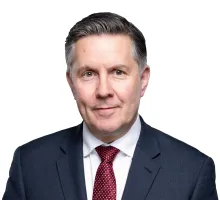
MARK BUTLER, MINISTER FOR HEALTH AND AGEING, MINISTER FOR DISABILITY AND THE NDIS: Morning, everyone. Thanks very much for coming. As you know, this government is firmly committed to delivering a stronger Medicare, and what that means is providing Australians with the highest quality affordable care where and when they need it. And that really underpins our rollout of 137 Medicare Urgent Care Clinics that are seeing people seven days a week for those non-life threatening emergencies. It underpins our commitment to turning around bulk billing, and we’re seeing bulk billing rates increase in every single state and territory, particularly as a result of the investments that started to flow on 1 November. It also underpins our commitment to 1800MEDICARE, which commenced on 1 January, that provides Australians with 24/7 access to high quality nurse advice about potential health issues they’re facing, and overnight between 6:00pm and 6:00am, also access to free GP telehealth appointments if the triage nurse thinks that’s appropriate.
Today though, I’m delighted that we’re able to announce another stage in a mental health response as part of that broader, stronger Medicare program. When Emma and I, Emma looks after mental health and leads our work in mental health for the government, engaged with an expert group early in our first term, they reinforced the advice that we’d been given through a number of reports, including from the productivity Commission, that a missing piece of the mental health jigsaw puzzle in Australia was a support service for relatively mild to moderate and often temporary episodes of distress. This is something very common across other countries, the NHS has had a targeted therapy support for some time called talking therapies.
And as a result of that work, we committed to filling that gap, and the way in which we’ve filled that gap is known as Medicare Mental Health Check In. It kicked off a few months ago, and it’s reached another stage today. And I want to hand over to Emma to talk about this terrific program which, after a competitive tender process undertaken by my department, is being delivered by St Vincent’s. And we’ll also hear from a couple of officials, the Chief Medical Officer and also the clinical lead for St Vincent’s, who will be introduced by Emma as well. I’ll hand over to Emma McBride.
EMMA MCBRIDE, ASSISTANT MINISTER FOR MENTAL HEALTH AND SUICIDE PREVENTION: Thank you very much, Minister Butler, for your leadership and commitment over many years to reforming the systems of support and care available to all Australians free under Medicare. Today is a significant milestone in the access to support and care for all Australians. To Chris Robinson, the national Chief Medical Officer of St Vincent’s Health Australia and your team, including Ivy, a clinical psychologist, who have joined us in Canberra today for the next phase of Medicare Mental Health Check In, for bringing your expertise and experience to this important service that will now be available to all Australians, free under Medicare.
As Minister Butler has said, we all have times of distress in our life; the loss of a loved one, relationship breakdown, feeling overwhelmed by work. And at this time of global crisis and growing financial pressures, more Australians are feeling that distress. As a clinician myself who worked in community pharmacies and in hospitals, I saw that distress escalate to crisis because people simply couldn’t access support sooner and when they needed it. That support, early intervention, is available now, free, quality, under Medicare, without a GP referral, without a diagnosis for all Australians aged over 16. All Australians will now be able to contact Medicare Mental Health and be linked with a service that is right for them and their needs.
Medicare Mental Health Check In provides low intensity therapy that’s internationally recognised and evidence-based and is being used in other comparable countries that has been shown to be effective and safe. And this service will be provided by trained mental health professionals. St Vincent’s have recruited mental health social workers, psychologists, councillors who are being provided with additional training in this new, low intensity therapy to make sure that all Australians will be able to get the support and care they need, free under Medicare.
From Monday, Australians have been able to contact 1800MEDICARE, and after a brief phone assessment have been able to be linked in with Medicare Mental Health Check In, providing quality, evidence-based care guided by a therapist, providing that support that Australians need. I’ll now hand over to Chris from St Vincent’s Health Australia to talk more about the service. And we expect about 150,000 Australians who will be able to benefit from it each and every year, free under Medicare. Thank you, Chris.
CHRIS ROBINSON, CHIEF MEDICAL OFFICER, ST VINCENT’S HEALTH AUSTRALIA: Thank you, Ministers. The first thing I would like to say on behalf of all of St Vincent’s is we truly recognise that this is a momentous occasion within the mental health landscape within Australia. We would like to thank the Ministers, the department and the Federal Government for their leadership in this space. The Medicare Mental Health program will provide early access to those who need it when they need it, and more importantly where they need it. And why does this matter? We know from our experience both with mental and physical health that getting access to preventative care, getting access to help early makes a huge difference to the trajectory of people’s clinical journeys as well as their lives. This program acknowledges that mental health can be hard at times to navigate, and sometimes life gets in the way of getting the care that we need. This program takes away those barriers and provides the support to people early in their journey, which will be transformational for their health. I'm now going to pass to my colleague Ivy, who's going to talk a little bit about the workforce that we have at St Vincent's who will be providing this care, and a little bit more about low-intensity cognitive behavioural therapy.
IVY FELICIANO, CLINICAL PSYCHOLOGIST: Thank you, Chris. Good morning, all. So, as a clinical psychologist in the Medicare Mental Health Check In service, as mentioned already, this service is very, very important. As we know, low to moderate symptoms of depression and anxiety is very highly prevalent in the community. And this intervention really helps to target that in providing practical skills and helping people, help seekers to go through programs that are evidence-based on cognitive behavioural therapy techniques with the support of trained practitioners. And now our trained practitioners are qualified mental health professionals and would have gone through training in the low-intensity CBT model prior to delivering services.
BUTLER: Thanks, Ivy. Happy to take any questions.
JOURNALIST: Just actually on the age,16 and over, just with the prevalence of anxiety, depression among younger people, why not open it up to younger cohorts as well?
BUTLER: I'll see whether either Chris or Ivy want to add to this, but we're also in the process of continuing to roll out youth-specific mental health services. We know, and Australia has been a leader in this respect, we know first of all that prevalence of mental health disorders is highest among young people. That tends to be where mental health issues first emerge. But also that historically we've not had services that cater particularly for young people. When I was young, which albeit is a long time ago, if you had a mental health issue, you were expected to go to mum and dad's GP, and unsurprisingly, a lot of young people didn't take that up. And that's why we've built out headspace, eheadspace, other digital services like ReachOut, some of the specialist services that we're in the process of expanding through the election commitments we made last year.
We think there are youth-specific services for young people who are in distress, whether that's a relatively moderate level of distress or higher, and this service is particularly targeted for people aged over 16.
JOURNALIST: Maybe for Chris, or yourself, Minister, what have we seen during the recent crisis in terms of a spike in demand? What is the picture you're seeing in terms of particularly people who are in periodic distress rather than more chronic issues?
BUTLER: I might see if Chris wants to add but what we've seen really for a long period of time is that levels of community distress do spike with particular events. We saw a very big spike in distress levels after the Bondi terrorist attack. The crisis lines that we fund and have funded for many years, like Lifeline and others, recorded very, very high levels of call rates. We had to provide additional support to those services to deal with the increased demand.
We know, for example, through COVID, before some of the additional payments came into effect, that the cost of living pressures that are placed on households also leads to elevated levels of distress. And that’s why Emma really pointed to the fact that there couldn’t be a better time for this service to come online than right now. We know the global fuel crisis is putting very significant cost-of-living pressure on Australian households, and Chris might have some current data but I would be amazed if that was not translating right now into higher levels of distress. We want to make sure services are ready for that. And when, for example, that level of distress is higher than perhaps we’re catering for through this check in, if it’s a very significant level of distress, maybe even suicidality, then we do have those crisis helplines like Lifeline, Kids Helpline for younger people. We monitor their demand very carefully, and if there are spikes in that demand, we make sure they've got the resources they need to deal with that community distress. Chris, do you have anything?
ROBINSON: Thank you, Minister. Just to reinforce what the Minister has said, we know that one in two of us will experience a decline in our mental health at some stage in our lifetime. We know that one in five of us will experience a decline in our mental health in any given year. They are quite terrifying statistics. In addition to that, as the Minister has already described, we know that crises or pressure in society puts pressure on the system. We see that in our hospitals in Fitzroy and in Darlinghurst every day, and really that is why we're so excited about this program of works and this intervention, because we know working with individuals upstream, working with them with a preventative mindset to keep them well, not just cure them, we're actually not only improving their lives, but we're taking that downstream pressure out of the system.
BUTLER: And can I just add to that? That's the beauty of this program really, because there's a big gap in the system before this program. Either you had to go to a GP and get a diagnosis, a formal diagnosis of anxiety or depression, and then a referral to a psychologist for formal therapy, or you had to have a level of distress that frankly approached suicidal ideation to be able really to access one of those crisis hotlines. Here we're talking about people with mild to moderate distress, not to minimise it, but to say it's something short of a formal clinical diagnosis that can be elevated through what is happening in our environment, a global fuel crisis, terrorist attacks, or it might be driven by those inevitable life events like relationship breakdowns, job losses and bereavements.
And at the moment there's been nothing there to just provide some relatively informal support to people who just aren't able to get through one of those events through the usual supports we get from family and friends.
JOURNALIST: On the workforce, how large is it? And can I ask about the interpreter services? How many of the people on the other end of the phone have language skills other than English?
FELICIANO: In terms of the workforce, we're scaling up quite rapidly to about 150 by the end of the year in terms of practitioners. We are using interpreter services, so we want to make sure that the intervention that our practitioners are providing is translated in the most clinically professional way. Although we do have quite a diverse workforce, we will be using interpreters to make sure that clinical concepts are translated in a way that remains accurate.
JOURNALIST: Is that something that you hope to expand? Because obviously cultural barriers can be an element that prevents people from seeking help and being aware that help is available.
FELICIANO: Absolutely. In the course of us maturing the service and the intervention, we'll be seeking feedback and getting consumer engagement to really make sure we can adapt the interventions in a very clinically sound way to priority populations within Australia.
JOURNALIST: Minister, just a few questions on the NDIS if you don’t mind. You said the other day that price or cost growth is out of control. I mean, that's something that's been known. There is a lot of anxiety, though, about how you address that. You mentioned there are different options on the table around new insurance around the cost growth of individual plans. Would you maybe be able to step out where are the places you are more likely to be focusing on, just given some of this anxiety, is it supported independent living eligibility there? Is it, you know, caps on the cost growth when plans are reassessed? Can you give us a bit of the thinking, even though you haven't made the decision, just to maybe ease some of those anxieties in the community?
BUTLER: That is still a work in progress. I've tried to be as frank and clear as I possibly can be that this is something we're working on as part of the budget preparation through the Expenditure Review Committee, obviously in my portfolio. National Cabinet agreed for there to be an additional growth moderation target of 5 to 6 per cent or lower. Those were the words in the National Cabinet Agreement, obviously I'm now tasked with leading the response or the delivery of that commitment. I tried to be frank the other day to say that there's not one pathway to deliver that moderation in growth. There are a range of different options and we're going through the pros and the cons or the benefits and the downsides to each of those.
JOURNALIST: Just on vaccination rates, they've dropped now for the fifth year in a row. The head of the Vaccine Research Agency has said the national strategy needs more resourcing and to pick up speed. Is your plan failing to address this decline?
BUTLER: First of all, I'd say that this is a decline that is being observed right across the world. There is undoubtedly a legacy of the COVID pandemic that every country, as far as I'm aware, every country is experiencing in terms of vaccine uptake. There's a level of hesitancy, there's a level of fatigue that follows the pandemic, and frankly, there's a proliferation of mis and disinformation online about vaccines as well. I've said publicly that particularly around childhood immunisation, which is probably my greatest area of concern, we do need to look at the information campaigns that we have been running. And that's certainly the advice that we're getting from experts as well. We are trying to make sure that parents have ready access to the best information available through our information campaign, another way to keep them safe. But I'm concerned that vaccination rates have been declining quarter after quarter for one-year-olds, for two-year-olds and the five-year immunisation rate.
JOURNALIST: Has research shown that the ads are not effective or not reaching people?
BUTLER: The ads have been very much targeted not at necessarily those in the community who completely reject the idea of vaccination, they're targeted more at the people who are sitting on the fence at the moment, trying to give them the information, perhaps to counter some of the mis- and disinformation they might be seeing online. That's been our focus right now, we continue to roll those campaigns out. But I have said that it is time for us to have a look at the research and see whether in the future different campaigns might be required because this is becoming quite a structural decline. And it's off very high rates, but we have dropped below herd immunity levels in some very important areas, those 95 per cent herd immunity levels. And if you go to some more granular analysis, there are communities in Australia where that childhood vaccination rate is alarmingly low. And they are quite different communities, they can be some of the hinterland communities that might feature in some of the public commentary, but it's also parts of Western Sydney, the inner CBD in Adelaide, for example. It's quite a variety different communities where we're seeing those very low childhood immunisation rates. But obviously they're a matter of concern for everyone working in health. This is a really important way to keep our kids safe.
JOURNALIST: Minister Butler, you mentioned there that cost-benefit equation in terms of NDIS funding is one of the things that needs to be considered more carefully, some of the funding around social supports, how carers justify the activities that they take out. Would you like to see a little bit more, I guess, evidence-based there, better reporting from carers on some of those activities?
BUTLER: I've said there are a range of disciplines that perhaps don't feature as much in the NDIS as you would see in other health and social care programs. Pricing discipline has been something, I think, we don't see as much of in the NDIS. That's improving but still has a fair way to go to catch up with programs like health and hospitals and aged care, but also the evidence base that is required to attract taxpayer funds for particular services. There is an introduction of a stronger evidence advisory process within the NDIS, but obviously I want to look at that to make sure that taxpayers are getting the best value, and frankly participants are getting the best value, for the dollar that might for example be going to social participation activities or to therapy for that matter.
JOURNALIST: Dr Coatsworth, at the same summit that you were at the other day, suggested that of those top five spending items in the budget; defence, aged care, health, NDIS, most of those were for the whole population, 26 million, but NDIS was only for 800,000. Do you think those were fair comments? Is that something you agree with or do you think that's unhelpful?
BUTLER: First of all, I have a high regard for Dr Coatsworth. He's got a long experience in public health, obviously, but I think he'd recognise that there are degrees to which it's proper to compare different social programs. I've talked about a couple of them, pricing, the requirement for good evidence to ground taxpayer-funded therapy. But there are other areas where there are sort of apples and pears. This is quite a unique scheme in that it provides lifelong support for people with permanent and significant disability. It doesn't provide support for care that might be relatively episodic in the health system. It doesn't provide support in aged care, for example, that is intense, but for a relatively short period of time that might run to one, two or three years, rather than an entire lifetime. Bringing these areas together in a single portfolio was absolutely the right thing to do, because it means that we can compare across systems to make sure that participants, recipients of that care, are getting the best possible care, but also taxpayers are getting the best possible value.
JOURNALIST: Just on pharmaceutical supply chains to Australia, given the continual shutdown of the Strait of Hormuz, can you just give us an update on those suppliers, particularly cold chain pharmaceuticals?
BUTLER: We activated in the health portfolio the National Incident Centre some time ago, as a result of concerns that there may be flow-on impacts from this global fuel crisis. That's been operating for some time. It means that across our portfolio, we're able to monitor supply security, and I'll come to some of those issues in detail. But it also means then that across health and disability and ageing, we're able to feed into the national coordination mechanism as well. Obviously, also we're engaging very closely with states and territories. The chief executives had a meeting on Friday to compare their understanding of where things were at. Health ministers will have a discussion at some time in future as well. But at the end of it, right now, the advice is that the supplies that we need to keep operating a high-quality health, disability and ageing system are secure.
Medicines, for example, are now subject to a minimum stockholding requirement that's still relatively recent, that makes sure that a range of PBS medicines have at least six months’ supply in Australia, and that's working well. There are some areas where there's a particular concern because of supplies from the Gulf, the Persian Gulf in particular. Medical helium is one of the things that we've been monitoring closely because it is a supply for MRI machines. Thank you very much.
Media event date:
Date published:
Media type:
Transcript
Audience:
General public
Minister: