
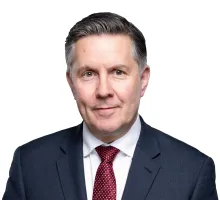
BLAIR BOYER, SOUTH AUSTRALIAN MINISTER FOR HEALTH AND WELLBEING: Good morning all. It's wonderful to be here at the Flinders Medical Centre today with the Federal Minister for Health and my friend Mark Butler as well as the Federal Member of Parliament Louise Miller-Frost. We're also joined by three wonderful South Australians, Ben, Anita and Allan who have all had their own battles with cancer and they will speak to why this announcement that Mark is making today is so incredibly important. Of course, we're here at the Flinders Medical Centre, which is the home to a fantastic joint initiative from the Albanese Federal Government and the Malinauskas State Government. A close to $500 million expansion of this Precinct to make sure that there's more capacity into the future and more services offered as well. But today's announcement is all around adding immunotherapy drugs to the PBS, the Pharmaceutical Benefit Scheme. I'll pass over to Mark in a second to give more detail but we all know that there is a real cost of living crunch at the moment that all South Australians, in fact all Australians are feeling. And I think I speak on behalf of Mark and Louise that we don't want people having to make difficult decisions around getting access to potentially life-saving treatment because they can't afford it. And I think what Mark is about to announce today is a fantastic example of the things that Labor governments do around healthcare and around affordability. And then we'll be able to hear from Dr Sukumaran, who is the head of oncology here at the Flinders Medical Centre, but we'll also hear from Ben, Anita and Allan, who'll be able to share their own very personal stories about what they've been through and how this announcement today will and can change lives. I'll hand over to Mark now.
MARK BUTLER, MINISTER FOR HEALTH AND AGEING, MINISTER FOR DISABILITY AND THE NDIS: Thanks Blair and thank you to Louise for having us in your terrific electorate and to Ben and Allan and Anita for coming along and telling your personal stories. First of all, can I congratulate Blair on his appointment as Health Minister? It is perhaps the toughest job in politics being State Health Minister but also I can't think of a more important one and as someone who's been in the health portfolio for a number of years, a more rewarding one. It really is a terrific job and I think your appointment, Blair, is a reflection of the enormously high regard that the Premier and others hold you in, particularly after having delivered a fantastic funding agreement for South Australian schools. So I look forward to working with you. I want to thank Chris Picton for his time in the portfolio, obviously as the South Australian Health Minister, a very effective Health Minister, but also as Chair of the Health Ministers Group across the country and wish him well in his new portfolio.
This is an incredibly exciting announcement at a very important precinct. I can't think of a better example of the productive partnership between our two governments than the Flinders Precinct. As Blair said, this is the biggest investment the Albanese Government is making anywhere in the country in a capital redevelopment project for a public hospital. Flinders has served the southern suburbs for more than 50 years wonderfully well but it does need some regeneration, it does need redevelopment and the $498 million partnership between our two governments is going to see this hospital deliver terrific services for the southern suburbs for another 50 years at least. But we've also got a $150 million investment that will start construction later this year just up the road at Flinders Hospital which will mean that trainees from this hospital will be able to deliver clinical services again to people on an outpatient basis in the southern suburbs. And I understand we're well advanced in delivering a PET scanner, a publicly available PET scanner here at Flinders with Federal funding which will be the first pet scanner available to public patients outside of the Royal Adelaide. So this is a great place for Blair and I to have our first event together and continue the work we're doing together at the Flinders Medical Centre and the Precinct more broadly.
But this listing is a really exciting listing. Keytruda is one of the most extraordinary drugs available in the country. It's been saving hundreds of thousands of lives right across the globe now for a number of years. And we've now got about 18 different listings of Keytruda on the PBS and I'm delighted to announce another three today. As Blair said, Keytruda is an immunotherapy that helps the body target and then fight cancer cells. It's highly effective but there's been a process of considering evidence with particular cancer types to expand the PBS listing. And today, as I said, there will be three new listings added to the PBS from the 1st of April. The first for locally advanced cervical cancer, the second for a particular type of renal cell carcinoma, and the third, again, for locally advanced head and neck cancers. These listings really for relatively early stage cancers compared to other listings of Keytruda are going to make available this drug for thousands and thousands of patients across Australia at PBS prices. Before the PBS listing this drug, highly effective drug, will cost more than $15,000 for a patient per infusion. Now it will be available at a PBS script price per infusion. No more than $25 or even cheaper than that at $7.70 if you have a concession card. This is going to transform the lives of patients like Anita and Ben and Allan who will talk to us. But it's really another illustration of the beauty of the Pharmaceutical Benefits Scheme, the magic of this Scheme that for eight decades has brought the best medicines available anywhere in the world here to Australia at affordable prices that households are able to extend to. I want to thank the company for the work that we've been able to do to get to an arrangement to have this listing take place on the 1st of April. We're continuing to work to see whether we can have an all-cancer listing for this terrific medicine, this terrific treatment, Keytruda, in the way we were able to do a couple of months ago for Opdivo and Yervoy, and I'm absolutely committed to continuing that work. But in the meantime, this listing, these three new listings, are going to change the lives of thousands of Australians.
BOYER: Over to Dr Sukumaran.
BUTLER: Yes thank you.
Dr SHAWGI SUKUMARAN, SENIOR MEDICAL ONCOLOGIST: The oncology professional community is quite excited about this new listing of the drug Keytruda for three cancers and thanks to the honourable Health Minister Mark Butler for making this possible. Keytruda is an immunotherapy drug which enhances the body's immune system to fight the cancer. So the three new indications that we have just heard about is for locally advanced cervical cancer, locally advanced head and neck cancer, and locally advanced kidney cancer after the operation. Coming to cervical cancer, it is a cancer for which we have made a lot of advances. Screen and the vaccination have brought the incidence down but it's not a cancer battle that we have won. Still over a thousand women approximately are diagnosed with cervical cancer every year. The drug Keytruda, is a new advance, which we have another weapon in our armament against this particular form of cancer. It is one of the advances that we have had- new advances that we have had over the last 25 years. So addition of Keytruda for these locally advanced cervical cancer patients do improve outcomes. The next indication is locally advanced head and neck cancer. Again, a very disfiguring cancer. The cancer as well as its treatment is highly complex and very hard to go through. So having an additional option of treatment with immunotherapy drug, Keytruda, improves outcome for this horrible cancer as well. The third indication that we have is for locally advanced kidney cancers and the addition of Keytruda after operation improves outcome for these patients also. So it's an exciting time in the field of oncology to help us advance outcomes, improve outcomes for these three types of really bad cancers and hopefully we can continue to provide care to improve outcomes for all these patients. Thank you.
JOURNALIST: Can I ask why these three cancers were prioritised?
SUKUMARAN: Yes, so it is a process of going through the evidence, making sure that these drugs do really work and then it is approved for public funding. And as Mark mentioned these three drugs have now come on to the already pre-existing conditions of cancer- pre-existing indications for cancer so this is something new and it's a process which we keep on adding to as the evidence comes in. So based on the evidence that we have for the cancer to make sure it works and then go through the process of public funding and approval through the PBS.
JOURNALIST: And in terms of options for cancer patients, where does this drug sit in terms of ranking for the best options they have out there?
SUKUMARAN: Yeah, so both of- for all these three cancers, this is in fact a major advancement over a number of years that we have had. So we have- the treatment of cancer is always about incremental improvement in outcome. So having these three, a new option available, which has improved outcomes, is a big step forward in the battle against cancer. It's an ongoing battle and we keep chipping away to improve outcomes. I'll be handing over to Anita now.
ANITA MODLINSKI, CERVICAL CANCER SURVIVOR: Hello, so a little bit about my journey. I was diagnosed with cervical cancer stage 3, so it's a locally advanced to my lymph nodes, just after my 41st birthday. I was lucky enough that I didn't need to receive the immunotherapy Keytruda for my cancer. I am now no evidence detected which was extremely lucky after my chemotherapy, radiation and brachytherapy. But this drug, like- when Dr Sukumaran told me it was available and the cost, my heart sunk. I thought, how could this drug that's going to save lives cost so much for women to save their lives? So for it to be on the PBS now is just an absolute game changer for women and young women that are being diagnosed. One of my friends was diagnosed just after my treatment had finished with Stage 2. So for her as well, if reoccurrence does happen for either of us, for this to be available at such a fraction of a cost is just- it's such a game changer and we are just so lucky for that to be happening.
BEN HALE, HEAD AND NECK CANCER SURVIVOR: So I first had an occurrence of cancer four and a half years ago. So that was sort of a one-off occurrence that we thought, okay, who's to say that's ever going to happen again? And now four and a half years later, I've discovered a 30 millimetre lump in my cheek and the scans revealed further neck and lymph node progression so I've gone from going why would this happen to you again to go it's more likely to happen again than not. So it is such a relief to hear that this is now going to be something that I don't have to worry about the financial implications if it does move on to a third occurrence. So I'm in the middle of treatment at the moment, so we'll wait until the dust settles to see where we go, but it is just a huge relief to go. I'm not going to be thinking about the financial aspects of it going forward.
ALLAN BRIDGES, RENAL CANCER SURVIVOR: Just over 12 months ago, I had minimal symptoms that something was wrong with me. I had a bad stitch to one side. I've had some previous health issues before that so at my wife's instruction I took myself to hospital and they discovered that I had clots in the lungs which led them to do some further investigation and discovered kidney cancer. So I was off for surgery at Flinders, they took the kidney out. There was also some post-op issues and due to the nature of the kidney cancer, it had spawned the clots. So in these clots, highly likely there were other cancerous cells about to seed somewhere else within my body. So following surgery, a few months later I had an appointment with an oncologist. He recommended the Keytruda immunotherapy. At the time it wasn't on the PBS system and it was actually quite expensive. So we're going through a process of actually selling our house and downsizing. So my wife and I decided let's use some of that money for paying my treatment. We then commenced every third week we have a cycle of the treatment at Flinders and the staff here have been absolutely magnificent. I did say to my oncologist well what happens to people not in a position such as myself who can't afford the treatment and the answer was basically well, it's just unlucky, they can't have it. Which, to me, that was pretty sad and, yeah, it was a shame. So a few months after, I actually wrote to the Health Minister's office and requesting that people perhaps who can't afford the treatment, that it be added to the PBS system. And coincidentally, I was invited back here this morning and I don't take any credit for putting it on the PBS but I'm very pleased and I think one of the most important things, a, it will prevent the cancer coming back with any luck and, b, it gives people in my position hope, hope for the future and that's the best thing. Thanks.
JOURNALIST: Was it surprising to see that after your emails, to see it actually get on the PBS? Were you expecting it to get to this stage?
BRIDGES: No, I was surprised to get a response and I got quite a detailed response from the Minister's office as to the reasons as to how drugs worked on the PBS system and they'll look at it some time in the future, make representations and I was completely blown away. They said, yeah, it's on the PBS on the 1st of April. That's fantastic news.
JOURNALIST: So how much did it cost to have your block of seven treatments initially?
BRIDGES: It cost me about $14,000 initially. But that was part funded by the pharmaceutical company as well. So they chipped in and I chipped in the rest of them but you pay an ongoing basis you don't just put $60,000 upfront, you pay off each cycle. Thanks.
JOURNALIST: Sorry, can I just ask Ben something?
HALE: Yeah.
JOURNALIST: Have you or are you taking Keytruda or will you go on it as of April 1st?
HALE: So we'll look at it, so I'm in the middle of radiotherapy and chemotherapy. It's the natural next progression. You can't keep hitting the same spots with the radiotherapy and chemotherapy again and again. So it's a natural, probable next step.
BUTLER: Anything else?
JOURNALIST: Minister, yeah, Mark, I might get you just quickly.
BUTLER: On this?
JOURNALIST: Yeah.
BUTLER: Yeah.
JOURNALIST: So you mentioned you're hoping to expand it to all cancers. How many other- I mean we're up to 18 now with Keytruda, so how many more are we hoping to cover?
BUTLER: I had a recommendation from the Pharmaceutical Benefits Advisory Committee a little while ago, I think it was in December, to consider Keytruda as an all cancer listing. We've just done that for another immunotherapy, Opdivo and Yervoy, and that essentially means that it is then up to the clinician to consider whether or not they think a particular cancer will have a good response to the immunotherapy. So having received that, we're now in discussions with the company about a price and I'm very hopeful we'll be able to get a listing for Keytruda that will essentially obviate the need for these cancer by cancer listings that we've been doing for some years now. The cancer listings I announced a little while ago for Opdivo and Yervoy, the other major immunotherapy in the world, was the first of its type in the world. It means essentially that patients and clinicians can have that discussion and if the clinician is going to work for you, then the patient can have absolute confidence the bill will be covered by the PBS. And that's the work that we're doing now with the company about Keytruda. I'm hopeful of a good outcome there. But in the meantime, as I said, these three cancer types are added to well over a dozen cancer types that already appear on the PBS.
JOURNALIST: And receiving emails from patients, from constituents who are interested in something on the PBS, does that help kind of push things along? Does that help tell you which ones are out of the community working?
BUTLER: Obviously it does, but the PBS works because it is thoroughly evidence-based. And as Dr Sukumaran said, since these two, frankly, blockbuster immunotherapies have come on to the market across the world evidence has continued to roll in about their effectiveness with different cancer types. The medicine experts that make up our Advisory Committee consider that evidence very closely. When the sponsor company comes to them and says we think there is now an evidence base to justify an addition to the PBS, for example, for these three cancer types, then the Advisory Committee considers that that very seriously. And as I have said many times before, as soon as we get a recommendation from the Advisory Committee, we have a policy commitment to make that listing on the PBS and we then have to go through some administrative work to agree a price with the sponsor company but we've made, since I've been Health Minister, well over 430 new listings to the PBS to ensure as I said earlier that Australians get access to the world's best medicines at PBS prices.
JOURNALIST: Minister, just on another topic- Minister, do you- does your Government regret being so quick to support the US-Israeli strikes given the resulting energy crisis we're in at the moment?
BUTLER: We made clear from the outset that to the extent the US and Israel strikes were aimed at removing the threat or the potential threat of a nuclear-armed Iran, we supported that. We also indicated we supported Iran essentially having its capability to project a threat to peace and stability, not just in the region but around the world, removed again. And here in Australia, as people know, we have borne the brunt of Iranian-sponsored terror attacks here on Australian soil.
JOURNALIST: So there’s no regrets about- How important is tomorrow’s National Cabinet meeting? What do you expect from tomorrow's National Cabinet meeting?
BUTLER: I expect the same- I'm very confident there'll be the same high level of common purpose we saw at the first National Cabinet meeting. The Prime Minister announced yesterday the new measures we'll be introducing into the Parliament tomorrow to underwrite the elevated risks that private companies obviously now face, getting additional shipments of fuel here to Australia. That's another important step we're taking to ensure fuel supply, to liquid fuel supply to Australia. But I think you'll see a very productive, mature discussion between the premiers, chief ministers and the Prime Minister tomorrow. And that will reflect, I think, what you've been hearing, not just from the PM but from premiers. We want to see the highest level coordination and consistency across the country. We don't want to see state-by-state responses that differ across different borders. And we also want to see the lightest possible touch to ensure that we're very much leaning on common sense rather than top-down mandates. These really are the lessons we learned from the pandemic only a few years ago. I'm confident there'll be that same high level of common purpose and determination to get Australia through this really difficult period that's a result of a conflict, a war on the other side of the planet.
JOURNALIST: Are there any other measures on the table for easing the demand for fuel, work from home, free public transport, that sort of thing?
BUTLER: They may well be discussed tomorrow, but very much through the prism of common sense, as the Prime Minister said yesterday. There's a lot of behavioural change underway in the country. We see now there's much higher rates of usage of public transport. More people where they can are working from home. But I know, as Blair would know, that doesn't work for everyone. It doesn't work for nurses and doctors and staff here at Flinders Medical Centre. You can't work from home if you're a theatre nurse. So we have to think through this obviously in a very common sense way and I'm sure that's what the National Cabinet will be doing tomorrow morning.
JOURNALIST: You mentioned consistency there. Would that mean consistency on cutting public transport fares if something like that were to happen across the state?
BUTLER: That's a matter for the leaders to discuss tomorrow, but we certainly don't want to see very different rules in different jurisdictions in the way we saw too often during the pandemic.
JOURNALIST: Andrew Hastie said on Insiders this morning that Australians are losing faith in the US alliance under Donald Trump. Is that a view you share?
BUTLER: This is still the most important security alliance Australia has. It underwrites a whole range of important projects that we're undertaking together, not just us and the Americans, but with the Brits as well. Here in South Australia none is more important than AUKUS. So this is still, through different political complexions, this has been the most important security alliance Australia has had for decades, and it still is.
JOURNALIST: I mean are you concerned that Trump doesn't have an exit strategy for this war at the moment?
BUTLER: That's really a matter for others to comment upon. The Prime Minister, has made it clear we're not in the business of being commentators about American policy. We've made clear the Australian position. We support the Iranians not having the capability to project nuclear weapons power. We support them really having their capability to pose a threat to peace and stability in the region and more broadly across the globe reduced as well. That's the basis of the announcements we made at the beginning of this conflict. But we've also made very clear we want to see de-escalation. We want to see this thing start to wind down. It's having a huge impact on the entire world. We want to see de-escalation. We want to see Iran in particular stop the attacks on its neighbours who are not involved in this conflict at all, particularly the Gulf states, and get back to a position where the oil can start to flow again.
JOURNALIST: Is the Government putting any pressure on the US to withdraw or de-escalate in this conflict?
BUTLER: I can't answer that.
JOURNALIST: Obviously with the fuel situation at the moment, and we've seen Victoria move on public transport fares and Tasmania on bus fares, is the State Government considering anything on public transport fares?
BOYER: So, we'll watch very closely what other states do, and I've noted the announcement by the Victorian Government but that's not to say that the South Australian Government hasn't changes to the accessibility and affordability of public transport and most recently just before the state election, we committed to some of those things including extending access to the seniors card. I think 80,000 more South Australians will get access to that thanks to the change of the Malinauskas Government made. We've extended the MetroCard to Murray Bridge. That was very, very well received. So there are things we've done. We will watch what other states are doing very, very closely. But I think your question comes back to what we're doing too in terms of cost of living relief, which I absolutely understand. We've touched upon that this morning in the frame of health care. We know how important that is and we know how South Australians are hurting. And in my old portfolios, we've committed to removing the fee to go to public school and that will be an enormous saving to a lot of South Australian families so I understand the impact that fuel costs is having on people. I see that firsthand with the people I represent in north eastern suburbs but my message to them is we will watch closely what other jurisdictions are doing but we are offering relief in a lot of different and really, really meaningful ways.
JOURNALIST: But is free public transport really something we need to look at what other states have- what happens in other states? Is it not really a no brainer? If you build it, people will come, they'll use it?
BOYER: Well, we shall see. And I think that's one form of relief that a government there is offering in terms of Victoria and other states might look at it as well. But relief in some parts of public transport. I spoke about the seniors card and extending the metro card to Murray Bridge. But also, we shouldn't underestimate the cost of providing free public school. From memory, it's something like about $152 million of cost of living relief that the Malinauskas Government committed to before the election just not long ago. So we are committed to cost of living relief. We're just making decisions about how and where we offer it. And we will watch what other states do closely and make decisions based around that. But we are committed to it and I think you can look at our track record including just before the state election around things we committed to that we will now be able to roll out.
JOURNALIST: Thanks.
BUTLER: Thanks everyone.
BOYER: Thanks all.
Media event date:
Date published:
Media type:
Transcript
Audience:
General public
Minister: