
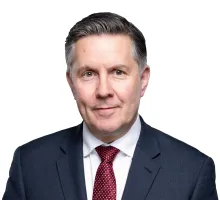
MARK BUTLER, MINISTER FOR HEALTH AND AGEING, MINISTER FOR DISABILITY AND THE NDIS: Thanks everyone for coming along this morning to the One Care Medical Centre in Pennington to provide a couple of really exciting updates on Medicare and also on the Pharmaceutical Benefits Scheme I'm joined by Dr Alawady, who is one of the doctors here at One Care, and also Linda, who is a long-time patient.
I might deal with the PBS first of all. We have made more than 430 new listings to the PBS since we were elected, since I was appointed the Health Minister. And it just demonstrates the magic of the Pharmaceutical Benefits Scheme, a scheme that makes sure that Australian patients get access to the world's best medicines from all around the world at affordable PBS prices. Today I'm delighted to announce the listing this month of a drug called Xeomin, which is a new drug to help patients with cerebral palsy, most of them children, with their very significant symptoms of this devastating disease. It's a new drug which without PBS listing would cost as much $1,400 for every single script at the pharmacy. But as a result of the listing this month, will cost patients no more than $25 a script, if they have a concession card, no more than $7.70. We think there are around 2,300 patients who could be taking this drug. It will significantly improve their quality of life and continue to expand the world-leading Pharmaceutical Benefits Scheme for Australian patients.
I'm also delighted to provide an update on our bulk billing reforms. As I've said a number of times when we came to government in 2022, we were deeply concerned, and I know patients and doctors were concerned that bulk billing was in freefall as a result of several years of a freeze on the Medicare rebate, a freezing effectively of doctors' incomes while their costs continued to rise. In 2023 we made a very big investment in bulk billing support for pensioners and concession card holders which certainly turned around bulk billing rates for those Australians.
But on 1 November we made the largest ever investment in Medicare to extend bulk billing support to every single Australian whether or not they had a concession card and to provide an additional incentive payment for practices like this if they chose to bulk bill all of their patients all of the time, so become a 100 per cent bulk billing practice. And I'm delighted that One Care Medical Centre here at Pennington is one of the more than 1,400 practices across Australia who over the last several months have moved from charging some gap fees to some patients to becoming a 100 per cent bulk billing practice.
The doctor, and Linda and I were having a chat before this press conference about the impact that has on patients and their sense of confidence that they can go to their doctor whenever they feel they need to rather than simply when they feel they can afford to. A confidence that when their doctor says they want them to come back in a couple of months’ time to have another check up, or to come back after their blood test results are in. Again, they feel that they can do that without necessarily facing an impost of a gap fee.
I'm delighted to say that we're now in a position where more than 3,700 general practices across the country are 100 per cent bulk billing. That's almost half of all of the practices in Australia. When we announced this investment we were relatively conservative about quickly we would turn bulk billing rates around. We committed that we thought we could get bulk billing back up to 90 per cent by the end of the decade. And we thought that on that way to 90 per cent, that in two years' time, in 2028, maybe 3,600 practices would be 100 per cent bulk billing. We've already exceeded that target and exceeded it by quite a lot. And every single week, the number of GP clinics that are taking up this offer from government and bulk billing all of their patients all of the time is continuing to increase.
I'm just delighted to be here at a medical centre in my local electorate, One Care Medical Centre, which has about nine GPs here and offers a range of other allied health services, that they've taken up that offer and long term patients like Linda have a confidence they can continue to come back and see their doctor whenever they need to rather than thinking they're going to have to find the money to pay a gap fee. I might hand over to the doctor to say a little bit about what it's meant for their practice.
DR ARABIA ALAWADY, ONE CARE MEDICAL CENTRE: It meant a lot to our practice because of the life expenses of course, like we lost lots of people, continuity of care, because they worry about the amount of the payment, used to be. Now when they come back, we see people coming regular and take their medication regular because it's the consult fees and the medication fees as well. And the young people sometimes can't afford paying the price, and pensioners as well.
BUTLER: Thank you, Doctor.
LINDA DRAKE, PATIENT: It's a big issue to me. I'm ageing so my health issues are increasing. And the fact that it's free, I can come back when I need to and keep my conditions under wraps and that they don't escalate and that I need to sort of go elsewhere or go to the emergency department. I can come here whenever I need to, which is great.
JOURNALIST: Have you been a patient here for a while?
DRAKE: Yeah, over 10 years, yes.
JOURNALIST: And how great has it been now not having to obviously fork out the gap for each appointment?
DRAKE: Oh, it's excellent. The cost of living is very stressful at the moment. People have to weigh up what they can afford. And your health is the most important thing in your life. And if you can't see a doctor, it's very stressful.
JOURNALIST: And do you find back when you were having to pay, were you almost, I guess, kind of putting it off or putting your health on the back burner?
DRAKE: Yes, depending on how sick I was. But yeah, you would choose what's more important. It's very stress-releasing that you know you can come here or any bulk billing clinic and know that you can get seen when you need to.
JOURNALIST: And you find it easy to get in?
DRAKE: Yes. Well, what I do now is I book when I see my doctor, I book as I leave. So that's great, yeah.
JOURNALIST: And can I ask you as well, obviously you've been here I think for a decade, you said, so quite a while, but how easy is it to actually find practices that bulk bill? Have you been able to find a bulk billing practice?
DRAKE: Recently I'm caring for my elderly mother and I've had to find a bulk bill centre for her and I found one at Trinity, and they accepted her straight away which was great because she had shifted from another area, so yeah, I didn't find it difficult.
JOURNALIST: Can I ask the Minister as well? Is there sort of a website where- this bulk billing, that people can go to?
BUTLER: That's right, there is, health.gov.au/bulk-billing has a very clear record of all of the clinics that have registered as fully bulk billing clinics. Now, that's not to say that other clinics are not also bulk billing many of their patients. Often, they're particularly bulk billing pensioners and concession card holders. But for those people who want confidence that they want to go to a clinic that's 100 per cent bulk billing, they can find that very easily online. And also you'll have seen when you came into this clinic that it's quite well advertised that when you're walking in here you're walking into a 100 per cent billing clinic.
JOURNALIST: It's quite an ambitious target, 9 out of 10 by 2030. I guess just kind of talk about how much it's going to cost taxpayers.
BUTLER: We made that very clear. We budgeted for that in the 2025 election and in the associated budget. We have been clear that this is a significant investment. I said at the time that the money we were putting in through this investment, which is around $8 billion over four years, was also the same amount of money that the AMA, the Australian Medical Association, says was effectively ripped out of general practice through that long period where the Medicare rebate was frozen under the former government. Yes, this is an investment, but as Linda says, there's nothing more important than your health as an individual, and from my perspective, there's nothing more important for the nation than the health of the community more broadly. This is a strong investment but an important one.
JOURNALIST: Minister, on NDIS, are you open to conversations around means testing or participant contributions for the NDIS to get some spending growth back towards the government's targets?
BUTLER: As I've said a number of times, National Cabinet agreed several weeks ago to get the growth rate of the NDIS down from its current level to 5 to 6 per cent a year or lower. That would bring it down closer to the growth you see in programs like the Medicare program, or aged care for that matter. We're going through a process now, as we lead into the Budget, of considering a range of different options to get that growth rate down to the target that effectively National Cabinet has tasked me and my colleagues with delivering.
I really welcome the fact that that the community broadly, many of my colleagues across the political spectrum, really are taking part in this debate because I think there's a shared sense of purpose that we want to secure the sustainability of this important program for the future. It is under pressure. Some of its spending is out of control and it needs to be managed. But I really welcome that different colleagues who are putting different ideas on the table. Having said that, we're going through an orderly process internally as we prepare the Budget. I'm not going to rule in or rule out any of the different measures that people are suggesting in this in this debate. I welcome the debate, but I'm not going to comment on one measure or another in particular. We're working through this in a deliberate, orderly way.
JOURNALIST: So, is means testing one of those options that's being considered?
BUTLER: Means testing is one of the options that's been raised by colleagues and being raised more broadly in the community. And I welcome the debate. I'm not going to comment particularly on that idea or on the many other ideas that have been being raised by colleagues at the moment. I just welcome the debate. I think it's an important one to have because Australians, whether they're political leaders or members of the community, are rightly proud of the huge advance in the living standards of people with disability that's flowed from the NDIS. We're all determined to make sure that it's a program that's secure for the future. But as for that idea or many other of the ideas that have been raised in commentary over the last several days, I'm not going to rule any of them in or rule any of them out. I want to see this play out in an orderly proper way.
JOURNALIST: Can I ask what other ideas there have been?
BUTLER: I said in a speech last week or the week before that it's pretty clear that if you are going to manage the growth in the NDIS in the way that premiers and the Prime Minister have tasked me with, there are a couple of pathways you can go down. One, you can constrain the number of people who are on the scheme, so the eligibility for the scheme, or you can constrain the growth or the cost of particular plan budgets or a combination of those two things. And that's really the work that that we're undertaking right now. If there is significant reform to the scheme, and there will likely be significant reform, then obviously that would be conducted in a way that brings the disability community with us. I'm very much committed to the philosophy of this scheme, which is nothing about us without us. Also, we have to take states and territories along with us in a process of co-design. They are partners in the scheme. Indeed, if anything, they've lifted their skin in the game, if you like, as a result of the National Cabinet agreement I talked about earlier.
I want to ensure that this debate and the process that follows it of co-design is one that considers all good ideas. Some of them won't go anywhere. I recognise that. But I want to make sure that as we embark upon this important process of getting the NDIS back on track and securing its future for the long term for the benefit of people with disability and their families, that we're confident as we go through it, that we've thought through all of the potential ways in which we can achieve those goals.
JOURNALIST: I think another idea was co-contributions for Australians on the NDIS. What would that look like?
BUTLER: I think I dealt with that. Means testing, co-contributions is effectively two different descriptions of the same thing. It's not a feature of the NDIS. Never has been since its introduction, unlike the aged care system, for example. But I've already dealt with that in response to the first question.
JOURNALIST: Minister, if I could ask about the ideas here. In the last budget, we saw the 8 per cent growth target put in the assumptions, but not necessarily anything under as to how that will be met. In the coming Budget, we're expecting the forecast growth targets of 5 to 6 per cent to be there. Will there be detail in those budget papers about how that will be achieved? Say, X amount saved through Thriving Kids, X amount through registration of this, that and the other. Or is it about putting that assumption in there and those sorts of details are separate to what we're going to see in those budget papers?
BUTLER: I'm not going to give you a particular insight into the budget papers, Sarah. It's a process we're still going through, as I think the Treasurer said yesterday. It’s still the first half of April. Even in ordinary circumstances, we would still be going through a process of developing the Budget right now as an Expenditure Review Committee, which I'm a part of. But obviously, we're also having to take account of a deeply fluid situation globally given what’s happening in Iran. We're not in a position to answer that except to say, as I said earlier, we are taking this process very seriously. We know that to achieve the growth targets that National Cabinet has set us that we're going to have to look at a range of different measures. I've tried to be as honest and frank as I can be about what the spectrum of those measures will be, and also to be honest and frank with people that we are going through a process as part of the Budget to get to a position where we can outline a direction on this.
JOURNALIST: Absolutely. And regarding the states that you've mentioned, a couple states left to sign on to Thriving Kids. Queensland, in particular, has made some pretty strong comments about these huge concerns that remain and the sort of rhetoric around the Federal Government walking away from Queenslanders with disability. What's your response to that? But how confident also are you that can land that deal, let's say, before the Budget?
BUTLER: I saw the comments from the Queensland Disability Minister. It may have been in one of your pieces, Sarah, this morning. And I'm a little concerned about what that means for Queensland's broader commitment to the National Cabinet deal that that was agreed between the Prime Minister and the premiers, which involves a very substantial investment by the Commonwealth into the Queensland hospital system. This was a package deal. Disability reform deal, as well as a hospital funding deal, and very much one that had the state sign on to the Thriving Kids Program.
I'm not going to conduct negotiations with the Queensland Government through media conferences or in response to their comments in one of your pieces, Sarah. I think you understand that. But I do take the opportunity to remind the Queensland Government that the Thriving Kids Program was part of a broader deal that included a very substantial increased investment by the Commonwealth in the Queensland hospital system.
JOURNALIST: Thank you.
BUTLER: Thanks, everyone.
Media event date:
Date published:
Media type:
Transcript
Audience:
General public
Minister: