
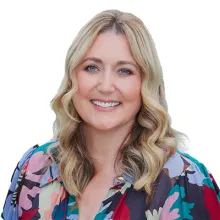
TOM CONNELL, HOST: Let's return to politics. A lot of talk today, obviously, around spending, inflation, how we got to the position we're in right now with inflation way above expectations. Another rate hike this week, another one expected. Joining me live now is Assistant Minister for Mental Health and Suicide Prevention, Emma McBride. Thanks for your time.
Voters do like to hear politicians in government admit when mistakes have been made. So, has it been a mistake to be such a high spending government amid now sustained high inflation?
ASSISTANT MINISTER EMMA MCBRIDE: Tom, people are doing it really tough right now. I'm home in my electorate office in Wyong, and it's really tough in communities like mine and right around the country, and all governments have a responsibility to do their bit to rein in spending. We've done that, we've got it down to two per cent. We didn't choose a war in the Middle East, but we're feeling it at the bowser and in petrol prices and across the economy.
The RBA Governor Michele Bullock has said this, what we're doing as a government is taking responsible decisions to put downward pressure on inflation, and making sure we can invest practical cost of living relief that helps people in communities like mine - investing in PBS, investing in bulk billing.
CONNELL: Michele Bullock called out specifically as the first thing, domestic capacity. When you talk about bringing spending down the measure- the best measure to use, according to economists, is the percent of spending compared to GDP. It's 26.9 per cent, it’s higher than it's been outside of COVID for 40 years. That's high spending, isn't it?
MCBRIDE: Tom, we are a responsible government. I recognise the Treasurer Jim Chalmers, the Finance Minister Katy Gallagher, the Expenditure Review Committee for the conscientious work that they have done in cutting government spending, in reining it in, in making sure that we can then invest in things that matter to people and cost of living relief, including tax cuts, an increase in the minimum wage for people working in places like aged care or early childhood education. And as I mentioned, strong investments where it matters for people's household budgets, particularly in health and Medicare.
CONNELL: Okay. But you say reining in spending - it's going up under that measure as a percent of GDP It's not going down, is it? It's gone up, even in the last budget. Even in the last budget outcome, it's gone up again.
MCBRIDE: Tom, I've sat in whole of ministry meetings where the Prime Minister and the key ministers for the centrals are asking for us to find savings. We are working conscientiously across the whole of government to find reasonable savings at the same time as providing practical cost of living relief, keeping unemployment low, increasing the minimum wage, providing tax cuts, making practical assistance for working people, particularly in communities like mine in the outer suburbs and inner regions who are really feeling the pressure.
CONNELL: Right. But when you- All these different measures and you say, here are the savings we've found and this percent of extra revenue. The inarguable measure, again - this is not me, this is what economists say - spending as a percent of GDP, the highest it's been outside of COVID for 40 years. That measure matters, doesn't it?
MCBRIDE: Tom, I think what matters is people being able to get the practical support that they need. When I hear from people in my community it's being able to afford medicines for their children. It's being able to go to a doctor for free. It's aged care workers having a boost in their wage that means that they can put a roof over their head and food on the table. That's what matters to people in the outer suburbs and the regions. They're not looking at national spreadsheets or tables or reports. What they're looking at is their bills sitting around the kitchen table. And that's what we're focused on and that's what I'll remain focused on with my responsibilities.
CONNELL: Isn't the point of this too, if you’d help people out on cost of living, as Labor keeps saying, you are just putting more money in the economy. That's going against a rate rise. So, the RBA says we need to actually make things a bit tougher, and Labor says here's some money because things are tougher - that's going against what the RBA is doing.
MCBRIDE: Well, the RBA has said that, principally, the increase in inflation is due to a war in the Middle East and that people in Australia are feeling that at the bowser-
CONNELL: [Interrupts] Did it say principally? Did Michele Bullock say, principally, the war in the Middle East? I didn't hear her say that this week.
MCBRIDE: The RBA Governor has said that the war in the Middle East has had a significant impact in Australia, and that is undeniable. What I'm focused on as the local MP in a community that's really doing it tough with a lot of older Australians, people who rely on the support from the pension, where indexation has increased. Where people who rely on the minimum wage, where minimum wage has increased for aged care workers, for early childhood educators. What my community is focused on is those household bills sitting around the kitchen table, and that’s what will get my full and ongoing attention.
CONNELL: So, even within the medical element - you mentioned free trips to the doctor. So, the changes to bulk billing, the estimates on the way that was done - because it went to every single person including those already bulk billing – was less than half of that was effectively being spent on patients. The rest goes to doctor's surgeries, and that's money in the economy, isn't it? Isn't that that an example of more money going out into the economy because of government saying, here's cost of living relief, but actually a lot of that ends up in inflation?
MCBRIDE: Tom, as a pharmacist who worked at a local regional hospital for nearly a decade, I saw people delaying or avoiding care because they simply couldn't afford to pay. When we came into government, bulk billing was in freefall. It was at record lows. And people were also avoiding or delaying filling prescriptions because they couldn't afford to pay. What our investment and this measured investment in bulk billing and primary care means is that people can access care sooner, which helps them and also saves the budget bottom line. They're not ending up with long inpatient stays in acute care, which is far more expensive to the budget and avoidable for them.
CONNELL: You have announced paid pracs for clinical psychologists today, and on the face of it, it makes sense. If you’re out there doing a placement and a lot of hours, getting some money means you can survive. Wouldn't it- is it going to be the point that eventually it's just extended to anyone that has to do extensive hours for no pay, that they'll all end up with government money? And is that sustainable?
MCBRIDE: I was with the Education Minister, Jason Clare, at the Campbelltown Medicare Mental Health Centre now, which has offered more than 6,000 hours of free mental health care and taken more than 1,000 referrals from a local community where there was little or no psychologists practicing in the community. What the paid prac has meant that in Australia today, 90 per cent who hold a psychology degree don't go on to practice as a psychologist.
What this pathway to prac investment has meant is that students who have finished their master's degree or their university studies can then have support, paid prac. And the support that we're providing through this scheme means that they can have their supervision provided for free, which would otherwise cost students up to $20,000. An hour and a half a week with an accredited supervisor was something that students simply couldn't afford to pay, so it meant that we had graduates who'd finished their university degree who couldn't then go on to register to practice.
So this is making it easy to become a psychologist and easy to see a psychologist.
CONNELL: Wanted to ask as well about Thriving Kids. So it begins today in the ACT, but from what I can tell, it's not clear still what it means. So somebody right now that has a kid with low to moderate behavioural needs in some way, if they're on the NDIS they get their plan money and maybe they see an OT or a psychologist and they do it how they want. So on Thriving Kids, will they pay out of pocket? Will they have private appointments? Will it be through a school instead? I can't see anywhere where this is made clear. Is this just still totally up in the air?
MCBRIDE: Tom, this is something for me as a Labor MP and in my community on the Central Coast, it's estimated about 13,000 local people have found support that they didn't have before through the NDIS. This, and I've heard from personal stories, has made such a real difference to people and families. All of the states and territories have agreed with the Commonwealth that we will introduce Thriving Kids. It'll be done in a gradual way. So families and your listeners won't see any change until 2028. We're doing this in a very careful way, working alongside the states and territories and people with their own experience of disability, to make sure that no child or no family doesn't get the support that they deserve.
CONNELL: But it's all up in the air, from all the different things I said. There's no clarity at all on any of those questions for now?
MCBRIDE: Minister- our senior minister, Minister Butler, has been very clear, as has Minister Jenny McAllister. We're very proud of the NDIS. It’s something that enables-
CONNELL: [Interrupts] Sorry, clear on those questions that I asked?
MCBRIDE: They've been very clear about that we will make sure that every child and every family will get the support that they need. Tom, I've heard, like you and your viewers would have heard, of the rorts and rip-offs. No one wants to see public money not going to the people who need it most. These changes, the reforms to the NDIS, will mean that people with severe and permanent disability will remain on the scheme. And working with the states and territories with Thriving Kids, other supports, will be introduced that better meet the needs of children and families.
CONNELL: Okay.
MCBRIDE: I’ve heard from teachers who’ve had multiple-
CONNELL: [Interrupts] Yeah, no. And- Okay. It was just I was going to say, I know it's something that- a lot of people say it’s unsustainable, but it's still up in the air until- I mean, we've got Thriving Kids started. We still don't know what it means.
MCBRIDE: Well, I think what we've seen is that there's a strong commitment for our government in the NDIS to make sure that it's sustainable for the future so that people with permanent and severe disability have the support that they need. And we're working with the states and territories around Thriving Kids for children who need early support, and that will be introduced in a way that makes sure that no child or family doesn't get the support they need and deserve.
CONNELL: Emma McBride, thanks for your time.
MCBRIDE: Good to be with you, Tom.