
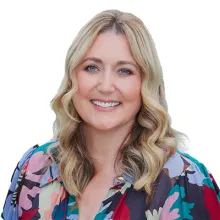
GARY HARDGRAVE, HOST: Look, I'm joined in the studio right now by a bona fide blue, somebody from New South Wales, the Federal Assistant Minister for Mental Health, Suicide Prevention, as well as Rural and Regional Health, Emma McBride. Nice to see you, Minister.
ASSISTANT MINISTER EMMA MCBRIDE: It's very good to be here, Gary.
HARDGRAVE: Member for Dobell, so the beautiful central coast, Wyong, all those areas around there.
MCBRIDE: That's my hometown.
HARDGRAVE: You'd have Copacabana. Would you have the Prime Minister's residence in there?
MCBRIDE: I can't claim that. That's in the neighbouring seat of Robertson and it belongs to Dr Gordon Reid.
HARDGRAVE: Okay, well, that's close anyway.
MCBRIDE: [Laughs] No, your geography's right on.
HARDGRAVE: Well, pretty close anyway. So you're in Brisbane today. What have you been doing today?
MCBRIDE: Today I was able to join headspace's National Forum. It brings together young people, clinicians from the 175 headspaces across the country. And Gary, I think what is particularly will be of interest to your listeners is when Headspace was introduced 20 years ago, about one in five young people experienced a mental health challenge in any 12 months. That's now doubled.
HARDGRAVE: Gee whiz. Are they finding people easier, faster, or have kids got more problems?
MCBRIDE: And this is what we want to understand better, and that's what the forum's about and also the money that we're putting into introducing Australia's first National Youth Mental Health Institute to understand what the different drivers of distress are. And for young people it is unique, but there are some common themes that are emerging. Social media is one of those, cost of living, so all different pressures. But what we want to make sure is that those young people can get support when they need it, which is why at the last election - you said you were elected at the same time as the PM.
HARDGRAVE: I was.
MCBRIDE: We stood with the PM at the local headspace in Ashfield in his electorate to announce the biggest investment in mental health that a Commonwealth government has made, because we take this really seriously and we want to make sure that wherever you live, you mentioned my hometown of Wyong, whether you live in the outer suburbs or the regions or Brisbane, that you can get the care that you need when you need it. Which is why I've put a big boost of funding into headspace and also introducing a new model, headspace Plus, because the needs of young people are evolving and we need to make sure that we continue to meet them today.
HARDGRAVE: There's no doubt about it. And kids, you talk about social media. I personally didn't like banning social media. I was happy for the devices to be banned, as in parents take them off their kids. But that was my take on it. It seems around the world everyone wants some sort of oversight of social media content. But I've been talking today a lot about values, culture and stuff after Senator Hanson's speech yesterday. And just saying, I think kids need to sort of understand some of the old pearls of wisdom from previous generations just to realise that, you know what, it's okay. Everybody's kind of been through some rough moments. So don't bottle it up inside yourself. Is that a reasonable tactic, Minister?
MCBRIDE: I think it is. And what we want to really encourage young people to have these conversations, to be able to have a conversation with their footy coach, to be to talk to their teacher. To have open conversations about how they're feeling, how they're coping, so that they can be linked into support when they need it. And as you mentioned, teenage years can be really tough for people.
HARDGRAVE: They're meant to be tough, Minister.
MCBRIDE: They can be really tough for people. I mean, I grew up with five brothers. But what we want young people to know is that there is support if they need it, and that it is available, and to know that they can have trust and confidence in that support.
HARDGRAVE: But you're looking after the remedial aspect of this, the triaging of problems, I guess, through this work. And we always support here at this radio station the terrific work of Lifeline, 13 11 14, for instance. But headspace is targeting younger people in particular. How do we get ahead of this? How do we give kids some confidence that they don't need to feel the anguish, the hurt, the loneliness that may come?
MCBRIDE: Genuinely listening to young people. And when I was at the headspace centre today- at the forum today, they have what they call youth reference groups. So they're groups of local young people that can share their own experiences and that can use that to contribute to the services, but also to support for other young people. So I think in my role, genuinely listening to young people and them feeling heard is the best start to any kind of open conversation about mental health and wellbeing.
HARDGRAVE: Okay. But how do we get the resources? Let's talk about professional resources. And I know you're a pharmacist by profession, and so you're used to listening, which is good. I get that. But I got told, again, anecdote a couple of years ago, that outside of Toowoomba, so west of Toowoomba, north of Adelaide, east of Perth, south of Darwin, right? The real middle part of Australia, big regional and rural areas, there's like about three or four, maybe five people with psychiatric experience or abilities to actually help people. So in other words, people are isolated by distance. How do we fix that up?
MCBRIDE: And in a vast country like Australia, and I've had the opportunity in this job. I was in Katherine in the Northern Territory last week, visiting them after the devastating floods and hearing from young people there, to Broome in Western Australia. But you don't have to go far out of a major city to find people that for too long have found it hard to get support. I was the specialist mental health pharmacist at our local hospital in Wyong, in my hometown. And I worked there for nearly 10 years in that role. And I saw people where distress escalated to crisis simply because there wasn't support sooner. And that's really driven a lot of the work that we're doing in this space, to make sure that support is available. Whether it's in schools, or in playgrounds, on the footy field, that support is available sooner. So young people don't end up in distress and needing this sort of more acute care.
But it's a big national conversation that we're having, and I'm sure so many of your listeners have their thoughts on this as well. And one of the things that we've done as a government is listen to people's own experiences – particularly in mental health, we call it lived experience – or peer workers. And I spoke to a bunch of parents today who are parents sometimes who had tragic consequences, but wanted to make sure that their views were heard so that we could genuinely change and improve the way we offer services. And I think listening genuinely, including to parents and grandparents, is a way that we can really see change and improvement.
HARDGRAVE: I'm glad you said that, because I think that intergenerational knowledge support factor, it’s not- it doesn't work for everybody, but it doesn't have to be your biological parent or your biological grandparents. It's got to be somebody who fills that kind of void. And for blokes, for boys, actually having a trusted mentor that's not your father for a period of time is important. Girls are a little harder because they tend to sort of overanalyse and overtalk some things, with the greatest of respect. And I know that sounds like an overgeneralisation, but I'm told that. So I just think everybody's a little different. You just need to have sort of a village helping to raise the child, you know?
MCBRIDE: You do. You absolutely do. I was talking to one of my nephews last weekend and he's in his mid-20s and he's a rugby coach, and he was talking to me about the conversations that he has. He was coaching the under-13s, and the kind of conversations that he was having with the young men in the team. And the role that you can have in that example as a 25-year-old footy coach, the relationship and rapport, in addition to what they can have from a family member or a friend. And I think those are things that we really need to encourage and support and we're doing that. We're investing with the Movember Institute, and we're making sure that there is more support available, including to coaches or those kind of adult figures in young people's lives, to make sure that there is a trusted person that they can have a confidential conversation with.
HARDGRAVE: But it's a pretty confusing time for older people. I mean, you surely must concede that government changes, policy changes, tax changes, uncertainty in rural and regional areas is causing a distress. We're getting too many people who are self-harming in regional Australia because they're feeling like, I don't know, what I thought was going to be my future is not my future. Surely government has got to take some responsibility for that?
MCBRIDE: And we are. I- The community you mentioned, Wyong, where I grew up.
HARDGRAVE: [Interrupts] That's like an outer suburb of Sydney. It's that close.
MCBRIDE: But in terms of older people, one in five people in my community are aged over 65, and a greater portion of those are living on an age pension. And one older person said to me once, he said, I will never earn another dollar. And that really explained how he felt about his circumstances, about his finances, and about his future. I mean, I lost my dad. He had young onset Alzheimer's and he became sick in his fifties, and I got thrust into the aged care system much sooner than I had anticipated. And I can understand why people, you know, it’s- there's lots of challenges and hardship in that time of life, and we need to make sure that there is support available to older people.
But to your point or your question about self-harm or suicidal ideation, we know that in Australia today, nine Australians die by suicide each day, and 150 experience suicidal ideation. This is something that is confronting as a society, but it's something that we all need to contribute to understand better, to offer more support. We know that when someone is experiencing suicidal ideation, there's normally three or four things, Gary, that have happened in their life. A relationship breakdown, a loss of job, financial pressure, and it's when someone feels that there's no way out. That's often when someone experiences this. And you mentioned Lifeline before, and we're really proud to support services like Lifeline to help people when they are in distress so that they can get help immediately.
HARDGRAVE: I mean, let's face it, everyone can have a bad day, but tomorrow should be better. That's how I always handle it. And it's an easy thing to say, but it's how I feel. But I'm just saying to you, I think government policy changes and so forth, kicking a few people around. One very quick question, if I may. The Fraser Coast Hospice, it's in Hervey Bay. It's now sort of rebounded from a closure a week or two ago as a result of community donations. I don't know whether- seriously, this was a problem I had as a Queensland federal member, so it's not a Labor-Liberal thing.
I don't think anybody in Canberra understands how big Queensland is. Seriously, I mean, we are as far from Cairns as Hobart is from Brisbane. It's a big place. And north of Cairns is the entire landmass of Victoria. It's a big place. How does Government deal with that?
MCBRIDE: And you've been dealing with that more than 30 years ago in your role as a local MP. And in the last four years in my role being responsible for rural and regional health, I've got to visit some of the most rural and remote parts of Australia. And one thing I want to say is the attitude of Australians there, I am just always so impressed by people who will just get on and have a crack.
HARDGRAVE: [Interrupts] Well, you have to because you're not waiting for anybody to help you. That's the problem.
MCBRIDE: In regards to the hospice, it shouldn't have come to that. The local community shouldn't have to kind of come together to- but I'm so relieved that they did.
HARDGRAVE: Yeah, they were real champions.
MCBRIDE: [Talks over] Absolute champions.
HARDGRAVE: But look, good to meet you, Minister. Thank you so much for your time. Look, that number again, you've mentioned Lifeline, Emma McBride, I'll do it again, 13 11 14. Look, if you've got a tough time, tomorrow can be better. That's all I'll say to you. Go and talk to a friend. Find a mate. Tell them you're feeling down in the mouth. The Minister will do what she can resources-wise with the taxpayer funding. But good to see you anyway. Emma McBride, the Minister who looks after mental health and suicide prevention.