
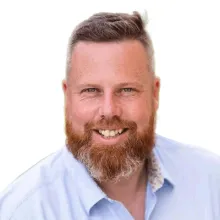
JAMES GLENDAY, HOST: On average, women live about five years longer than men, but they're also more inclined to see their doctor. That is something all Australian men and boys are being encouraged to do more often with the start of Men's Health Week today. And the Government Special Envoy, Dan Repacholi, joins us now from Sydney. Dan, welcome back to our programme
DAN REPACHOLI, SPECIAL ENVOY FOR MEN’S HEALTH: G'day James, how are you?
GLENDAY: I am very well, thank you. Can we start- I know you've spoken about it, can we start with your health journey? We saw you during the Budget Week recently and you were looking very, very fit. What convinced you to go and see a doctor?
REPACHOLI: Well, I went past a mirrored window in Cessnock, walking down the main street and had a look at myself. And I won't use the exact words on TV today, but it wasn't nice, the conversation I had with myself. And I went and had that conversation with my GP, finally after being convinced by a couple of other medical professionals to go and see my GP and try and do something about my weight. And now I'm down 35 kilos and feeling much better. I've got about five more kilos to go, but we're getting there. But seeing that GP really made that that difference for me and it's honestly changed my life.
GLENDAY: You're a former Olympian, so you're no stranger to strict training regimes, you know, really being committed to something. But how hard has it been for you to maintain? How hard is that journey? Because I reckon a lot of people watching are like, oh, I've tried, I've struggled, it's a real battle.
REPACHOLI: It is a real battle and it is a hard journey along the way. And for me, as you said, I'm a former Olympian. I've had at my fingertips the best professionals in the country who help look after athletes. And I couldn't keep on top of what I was trying to do. And I just didn't listen to them. But I really needed that kick in my butt to make me pull my finger and start to put my health as a number one priority because if we're not healthy and not here enough and being able to look after our health, how can we expect to be doing the best for our families and our friends as well and the community?
GLENDAY: Is that what you tell people? I don't know about you but I find that is like a real motivator for men in particular, when it's like, hey, if you're not doing it for you, do it for your family. Do it for the people that rely on you to be around for the long term. How do you have those conversations with maybe with your colleagues who admire your new slim physique?
REPACHOLI: It certainly is, James, and we need to be having these open, upfront conversations because if we can't talk about it as people out there in the public eye, how do we expect George or Chris or Colin walking down the street to be able to put this front and centre. So we need to be up there talking about it and making sure that we are getting people to realise that our health is important because we want to be around for our loved ones. And as you said earlier, men on average pass away just under five years younger than our female friends in the city areas. But if you go out to rural and regional Australia, that's up to 13 years younger blokes are passing away than our female friends. And we need to change those statistics. So we need to get men living longer. And this is the start of that with Men's Health Week. We'll be getting out there talking about all men's issues, but definitely talking about 101 reasons why we should be seeing a GP, not why we shouldn't be. But bowel cancer, talking a lot about bowel cancer as well, will be high on our agenda also.
GLENDAY: I wanted to ask about that, because you get these free tests, right? I mean, there's a big screening programme What does the data show? Are enough men doing that?
REPACHOLI: No. To be perfectly honest, there is not enough men doing this. And we need to get more blokes out there and making sure that they are doing that test rather than just putting it in the drawer or chucking it straight in the bin. And this is the only time, right, you get to send back something back to the government, which is not always the greatest thing. So people should get on board with this and send that straight back to government because people say that we've been doing that to them for a long time so they should be doing it back.
GLENDAY: I don't know what your mail's like but there you go. Yeah it's a very serious message. Hey another focus is First Nations men's health what sort of work is being done to get more Aboriginal men to see a doctor?
REPACHOLI: So every statistic out there is Aboriginal and Torres Strait Islander men top the chart and we need to see those charts change and get less. So we've got a big emphasis on Aboriginal and Torres Strait Islander men's health and just getting them to make sure they're getting their 715 checks and going through and having these conversations with their GPs and getting a full health check and making sure that it's okay and culturally sensitive for them to be able to go and do that. We need to make sure that we're looking after all blokes in this country and they're a good way to get going too.
GLENDAY: Just before I let you go, a question that you might not be able to answer. What is it about men that just makes us less inclined to see a doctor, to put off that next appointment?
REPACHOLI: For me and for many other blokes just like me, it was the fact that we associate seeing a medical professional or health professional as being broken. Because when we were younger, we only ever went to the doctors when we had a broken bone that we'd been complaining about for two or three days, and then we finally got to see the GP, or when we were really, really sick. And with our female friends, they've been seeing GPs and having the conversations with health professionals over many different things, not just when they're sick. And this is where we need to be getting more like our female friends and being able to have conversations with our GP. If we can just get 10 per cent more Aussie blokes out there seeing a GP every year and getting a blood test, we will save literally thousands of lives in this country just by doing an oil and service on ourselves rather than waiting until something goes wrong. We service our cars every 10,000 k's. It's time we serviced ourselves as well.
GLENDAY: It's a great message. Dan Repacholi, thank you for your time this morning. Thank you.