
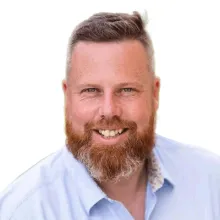
PATRICIA KARVELAS, HOST: Dan Repacholi, welcome to the program.
DAN REPACHOLI MP, SPECIAL ENVOY FOR MEN'S HEALTH: Pleasure to be here, PK.
KARVELAS: It is, of course, Men's Health Week. There's been a bigger focus, I think, from this government, even in appointing you on men's issues. That's clearly been a very deliberate attempt to engage men. Have men felt left out of the conversation by governments and the health sector?
REPACHOLI: PK, let's get excited because it is Men's Health Week, and Men's Health Week is so important. That's why we're putting a massive amount of work into this to make sure the blokes out there do know that we do care about them and do know that it's okay for them to put their health front and centre.
Because if they're putting their health front and centre, that means so much for people all around this country. If we can get blokes just to be able to go and see their GP, book in to their GP, get a blood test and have that conversation, we will literally save thousands and thousands of lives in this country.
That's what we want to see more men looking after their health so they're around for their loved ones for a lot longer, and around for their communities as well.
KARVELAS: And do you think there has been a shift? Are men engaging more with doctors and health practitioners?
REPACHOLI: I think they're starting to, PK. They're starting to put an emphasis on their health and making sure they're putting their health front and centre.
But there's still a lot of work to do and that's why this role is here. That's why we do have a Special Envoy for Men's Health. This is the first time any government has ever done this and it is so critical that we keep the ball rolling in this area to make sure that men are really looking after themselves.
KARVELAS: Do men report that they feel ignored by the system?
REPACHOLI: Look, I don't know whether they report that they feel ignored by the system, but I do get lots of men talking to me just saying that they're not comfortable going in and talking about their health. They're not comfortable to have these conversations.
I have these conversations in workplaces, especially blue-collar workplaces or high-vis workplaces, all the time. What I emphasise to those blokes is that you'll spend thousands and thousands of dollars on your car every year servicing it and keeping it up to date, or you'll be fixing your tractors, fixing your houses, whatever it is. You spend lots of money on all those sorts of things to keep them going really well, but you won't spend the time on yourself.
So we need to make sure that blokes know that it is okay for them to reach out, for them to have a conversation and for them to look at their health a different way. For a long time, as blokes, we've been told to have a teaspoon of concrete and harden up. It's weak to cry. Blokes don't cry.
It is okay for blokes to cry. It is okay for blokes to put their health front and centre to make sure they're around for their loved ones and their communities for longer. That is really important.
KARVELAS: There has been language that's been used that's been really critiqued, for instance language around toxic masculinity. Do you think that's been a mistake?
REPACHOLI: Look, masculinity is a great thing for blokes to have. There's no doubt about that.
But as I said earlier, it is okay for us to cry. It is okay for us to go on the footy field and really go hard. It is okay that blokes are out there working hard on the footy field, but then coming off the footy field and putting themselves front and centre, having the conversations where they're being vulnerable.
Honestly, what a good, healthy, strong male is, is somebody that can talk about their feelings, talk about the issues they're having and be able to communicate them. This is what we want to see more Aussie blokes doing.
KARVELAS: We're seeing a rise at the moment in polling for One Nation. A lot of that's coming from Gen X men. Are Gen X men particularly angry? Is that what you've picked up?
REPACHOLI: Look, what I pick up, PK, is that blokes for a long time haven't put their health front and centre. They have not used the tools that are at their fingertips to look after themselves.
It doesn't matter whether polling says One Nation this or something else. This is about blokes' health and about how blokes think a system can be used best for them or what needs to be done to make it a little bit different.
That's why myself, my team and Ged Kearney are touring around the country talking to men and women about men's health issues to see what we can do to genuinely make a difference so that we can save more blokes' lives in this country.
One stat I'll give you, PK, is that as blokes we pass away just over four years younger than our female friends. If you go into rural and regional Australia, we're passing away up to 13 years younger than our female friends.
If that doesn't tell us there's a difference in our health literacy compared to our female friends, I don't know what does. That's why we're out there working hard all the time to make it normal for men to have these conversations.
KARVELAS: But some of the anger that we're seeing from men, I'm just zooming out now outside of the health space, is economic grievance, with the direction of the country. You are in a seat that's being stalked by One Nation. Are you feeling that kind of pressure? I'm talking about what voters are telling you.
REPACHOLI: Voters are doing it tougher in the area. There's no doubt about that, PK. That's simply the way the world is right now.
We know fuel prices are high. We know inflation's much higher than it needs to be. We know people are genuinely doing it tough. You can understand why a group over there saying everything's wrong in the world is getting a little bit of traction.
But in the Hunter we've been against One Nation since the early 2000s. For the last two elections I've been told I'm going to lose my seat to One Nation.
The only polling that matters is the polling on the day when people cast their vote. I'll continue to work hard. I'll continue to push how good our Medicare Mental Health Centres are, our Medicare Urgent Care Clinics are, and what we're doing with projects like the Singleton Bypass. We'll continue to push those things because they're making a massive difference in the Hunter.
KARVELAS: But do you think they're getting a bit of a free run? They must be attracting voters who are disappointed with what the major parties are offering, including the government, right?
REPACHOLI: Look, that's not what I'm hearing on the ground, PK. We're door-knocking, we're phone-banking, we're talking to people all the time in the Hunter electorate.
Sure, some people are not happy with the institutions right now. Sure, they are doing it tough. But a lot of people are also saying, "You're doing a good job, Dan. You're out there talking to us and having these conversations."
We'll continue to do that as a Labor Government. We'll keep delivering for Australians. We'll keep making sure they can get to Medicare Urgent Care Clinics, that we can get more bulk-billing doctors and that every Australian worker receives a tax cut.
These are all things that were voted against by One Nation.
KARVELAS: Do you think, though, voters in the Hunter hear about performance statistics and attendance records, or are they simply wanting to tell the government they're sick of going backwards economically?
REPACHOLI: That's a very valid point, PK. But to be able to make a difference in this country, you've got to show up. You've got to show up every day.
We see the Prime Minister showing up every day. We see the Opposition Leader showing up every day. We see Labor and Liberal-National members showing up every day.
Where do we see One Nation? They're not showing up at all. What they're showing up for is being a mouthpiece and not actually delivering anything for the Australian people.
The Australian people are very good at what they do. In two years' time we'll go to a vote and they'll get to have their choice. But I can promise you that the likes of myself and many other members of the Labor Party will be out there working hard, showcasing all the things that we're doing for the Australian people to try and make their life a little bit easier.
KARVELAS: Thank you so much for your time, Dan.
REPACHOLI: Thank you, PK. Cheers.