
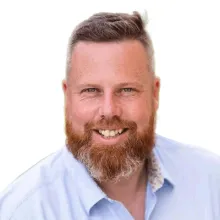
KYLIE MORRIS, HOST: The Federal Government has committed $3 million to a new centre called WellMen. It's designed to tackle mental health among men and boys at critical life stages and in places including sports clubs and the workforce. The country's Special Envoy for Men's Health, Hunter MP Dan Repacholi, joins us now. Hi, Dan.
DAN REPACHOLI MP, SPECIAL ENVOY FOR MEN'S HEALTH: G'day, Kylie, and g'day, listeners.
MORRIS: Lovely to have you along, Dan. Tell us about WellMen. Why is the government investing millions in it?
REPACHOLI: We're investing $3 million into WellMen to support the mental health and wellbeing of boys and men. It's a research program that will examine the latest issues, including problems with the manosphere, and aims to develop new mental health strategies in schools, sports clubs, online and in the workplace. This is led by Flinders University Professor James Smith, who is a ripping bloke, may I say. I've met him many times and he's doing some really good work in this space. I couldn't be prouder to be giving $3 million to this because we know young men, and older men as well, are sometimes struggling with their health and with what they see online, and it's affecting them personally. To be able to get out there and see what we can do better in schools, sporting clubs, especially online, and in the workplace is a great thing.
MORRIS: Dan, we'll come to the manosphere and some of the politics around that in a moment. But in terms of the WellMen initiative, is it designed to fill particular gaps that we know aren't being filled right now?
REPACHOLI: Gender norms around what it means to be a man are changing, and there's a lot of work happening in this space right now. We really need to dive down and see exactly what will work for young men right now. A lot has been done in the past, but we're in a new time now. We've got the algorithms, we've got the influencers and we've got the platforms that are feeding kids, and a lot of people are cashing in on this, especially the influencers. We need to work out how to really target these groups and make sure we're getting this information to them so they can look after themselves the best they can into the future.
MORRIS: Dan, you get out and about to lots of events in the Hunter, in your electorate, and I wonder, now that people know you're well established as the Special Envoy with a role in deciding how to better and improve men's health, what do voters tell you? What do ordinary people tell you about their experiences and their fears?
REPACHOLI: Many young men are telling me they are concerned about where social media is taking them, to be perfectly honest. I'll speak mainly about young men right now, that 30 and below group. The algorithms are taking these people into places they weren't even thinking of. Once they get on there, they start to have a look around. They see this, they see that, and it is a really big problem for these young blokes. That is one of the big concerns they're talking about. They're also talking about the addiction to porn that some young men are experiencing. Unfortunately, Kylie, this is quite often the only thing that leads them into their first sexual experience, by looking at porn. It is really scary, some of the things these young blokes are telling me.
MORRIS: We're seeing the impact of that too for some young women. There's more of a conversation now about strangulation in early sexual experiences without consent and the terrible health risks associated with that. Dan, I understand that the centre is going to focus on the manosphere, and yesterday we heard from consent advocate Chanel Contos. She addressed the National Press Club and talked, as you have been, about the harm that can be done by these algorithmic feeds on social media. We had a chat to Dr Simon Copland. He's a sociologist at the ANU and researches online misogyny. I asked him how likely he thinks it would be that the government would take a step to rein in the reach of the algorithms. Here's what he had to say.
DR SIMON COPLAND: I'm really hopeful. I think the Federal Government at the moment is taking a proactive stance in trying to rein in tech companies. It's a really hard thing to do, but this conversation about opting into algorithms is not just one that's happening in Australia. It's not a new idea, and there are explorations of it in other parts of the world. I think we have an opportunity to do something here and, given the history of the government, I think there's a chance that we could achieve this.
MORRIS: Dan, what is the likelihood that the government might respond positively to this call by Chanel Contos?
REPACHOLI: I like Simon's views there, and I like Chanel Contos's views too. We all know how big a part these algorithms play in the way young men and young women are seeing their social media feeds right now, and something needs to be done about it. We need to hold these large companies to account for what they're feeding our young kids. I've got two beautiful daughters, an 11-year-old and a 13-year-old, and they're not on social media. But at some stage they will be, and I don't want them, in that first half an hour they're on social media, to be smashed by algorithms that will pretty much dictate how their feed will be. We will be having conversations on this. As Simon said, many people around the world are looking at this right now, in many different countries and jurisdictions, and we're one of them as well. These are conversations we're having with our backbenchers and our ministers. We'll keep having loud conversations on this and see where we get to. But we are the first government in the world to bring in age restrictions for these social media giants, and that was a major step forward. Don't get me wrong, there's always more to do, and we'll continue to look at what we can do to make sure we're looking after young men and young women in this country.
MORRIS: Dan, there are lots of listeners here who also want to be part of this conversation. When we spoke to Simon yesterday, Paul in Newcastle wrote to us. He said: 'Is it possible that the media's relentless depiction of young men as menacing and predatory is having an unintended effect? That hearing nothing positive about themselves, or any recognition that they too live in a complicated, violent, competitive society, they're seeking out something, anything, which gives them answers.' I thought it was such an interesting and powerful opinion. Dan, do you recognise that too? That maybe this conversation is happening in a way that might feel detrimental or damaging to younger men?
REPACHOLI: People take things on board in all different ways. One thing we have in this country, which is a great thing, is the fact we all get to have an opinion. The media certainly doesn't help sometimes, there's no doubt about that. Words matter, and what comes out of people's mouths really does matter.
MORRIS: I don't know whether you heard Matt Canavan's comments around this, but he was talking about how tired he is of the feminisation of the school curriculum, and says that he thinks that's a big reason why boys are attracted to this, because they're sick of getting lectures about how bad men are.
REPACHOLI: I think they're pretty disgusting comments from a senior member of the National Party. I really do. We've got to stop blaming teachers, stop blaming women and stop pretending algorithms aren't doing this. A real bloke respects others, looks after his mates, calls out crap behaviour and actually has the guts to ask for help when he needs it. That's what a real bloke is. To have Matt saying the words he's saying on this, words really do matter. We need to make sure, as elected leaders within our areas, that we're doing the best for this. I genuinely don't believe his comments were anywhere near what is acceptable from a federal politician.
MORRIS: Dan, thanks for joining us on ABC Newcastle Drive today.
REPACHOLI: Thank you, Kylie. Thank you, listeners. Have a great day.