
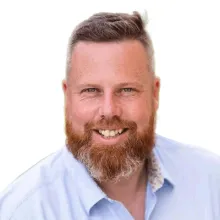
DAN REPACHOLI MP, SPECIAL ENVOY FOR MEN’S HEALTH:
G’day, all. It’s an absolute pleasure to be here with you today.
I’d like to thank all my colleagues behind me from all sides of politics, because it shows just how important this issue is. Men’s health matters, and having support from across parliament sends a really strong message.
I’d also like to thank Assistant Minister for Social Services Ged Kearney for being here today. Ged’s doing fantastic work in this space to support stronger families and stronger communities.
Today we’re here with Movember to launch More Than a Provider, a report about dads, families and modern fatherhood. Movember has done incredible work highlighting what it’s really like to be a father in Australia today and the challenges many blokes face while trying to support their families.
This report is something I’ll be taking back to the Minister, and I know many of my colleagues here will be doing the same.
Some of the findings are really significant. Three-quarters of fathers say fatherhood matters more to them than career success. Seventy-two per cent say they are more involved in raising their kids than their own fathers were. That tells us expectations around fatherhood are changing.
But just as importantly, 1 in 4 fathers reported poor mental or physical health during that first year of parenting. That’s a reminder we still need to do more to support dads.
I’m a dad myself. I’ve got 2 beautiful daughters, Zoe and Asher, and becoming a father changed my whole perspective on life. Like a lot of blokes, I felt pressure to work harder, provide more and make sure my family was looked after.
But becoming a parent also made me realise I needed to look after my own health too. Too often, men put themselves last because they want to be there for everyone else.
Sometimes we think we have to carry the whole load ourselves, but we don’t. Sometimes the most important thing is simply being present, having conversations and asking for help when we need it.
That’s why this report matters. It shows dads are changing, and it shows there’s a real opportunity to support men earlier and better.
Because if we have strong families, we build strong communities.
Now I’ll hand over to Ged to say a few words.
HON GED KEARNEY MP, ASSISTANT MINISTER FOR SOCIAL SERVICES:
Thanks, Dan.
I’m Ged Kearney, the Assistant Minister for Social Services and Assistant Minister for the Prevention of Family Violence.
I want to congratulate Zac Seidler, Movember and the whole team on this important research.
You might ask what fatherhood has to do with preventing family violence. The answer is simple: fatherhood matters.
Young boys today are exposed to a lot of different influences, but we know one of the biggest influences in their lives is still their parents, particularly their father or a father figure.
One really important statistic shows that if you have a strong relationship with your father or father figure, you are nearly 50 per cent less likely to use intimate partner violence as an adult. That is incredibly significant.
This report shows fatherhood is changing. Gone are the days when dads were expected simply to work, put food on the table and not be emotionally present in family life.
Today, fathers want to be more involved. They want to tell their children they love them. They want to be there for their kids.
From my perspective as a policymaker, we should be asking how government can better support men to be good dads.
This report gives us a real opportunity to understand how we can connect with fathers, support them through challenges and encourage the positive generational changes we are seeing.
Thank you again to Movember for this incredibly important research.
I’ll now hand over to Zac Seidler.
ZAC SEIDLER, GLOBAL DIRECTOR OF MEN’S HEALTH RESEARCH, MOVEMBER:
Thank you, Ged.
It’s a privilege to be here with MPs from across the political spectrum to talk about modern fatherhood, because this conversation really isn’t getting enough attention.
Men today are navigating dual expectations. They still feel pressure to be providers and breadwinners, but they also want to be nurturers and caregivers. They want to be present beyond bathtime and bedtime.
That creates enormous pressure, often with very little support.
Our report talks about this idea of 'new fatherhood'. I’m a new dad myself. I’ve got a 5-month-old son at home, little Artie, and I’ve experienced firsthand how becoming a parent completely reshapes your priorities.
What we know at Movember is that fatherhood is one of the greatest opportunities to engage men about their health and wellbeing.
Men are already in the system during pregnancy and early parenting, but too often they are not being spoken to.
Three in 5 dads in our report said nobody asked how they were coping during pregnancy or in the first year after their child was born.
It’s a simple question, but it matters enormously.
Supporting fathers does not take attention away from mum and bub. In fact, healthy fathers help create healthy families.
We often hear that men do not seek help, but dads are telling us they are ready to engage. They care deeply about being good fathers, and they want support.
This is about suicide prevention, violence prevention and supporting the wellbeing of children and families.
Men are willing to talk. We just need to create the space and support for those conversations to happen.
ALLEGRA SPENDER MP, FEDERAL MEMBER FOR WENTWORTH:
What I love about this report is that it recognises how modern Australian men are taking on new responsibilities in parenting and family life.
It also acknowledges something we don’t talk about enough, which is that having children transforms men’s lives too.
We rightly ask mums about their wellbeing and mental health, but too often we ignore the other parent sitting beside them holding the baby.
This report highlights a real opportunity to better support fathers while also supporting families.
This is not an either-or conversation. It is about recognising the important contribution fathers make and making it easier for them to navigate parenthood.
Congratulations to Movember for this incredible work. Now it’s time for government to act.
GAUTAM RAJU, GLOBAL ADVOCACY DIRECTOR, MOVEMBER:
Thank you to all the MPs here today for supporting this work.
Today we are calling for 3 things.
First, greater investment in grassroots community programs that support dads where they are, including dad groups and programs like DadFit.
Second, better training and upskilling for health workers so they can properly support fathers when they seek help.
And third, routine mental health screening for new dads during pregnancy and the first year of parenting.
Those are the changes we are calling for, and we hope to see them supported by parliament and government.
Thank you very much.
JOURNALIST:
There’s already support for young mums in this space. Is there much we can learn from that when it comes to supporting dads?
REPACHOLI:
We absolutely do not need to start from scratch.
Dads consistently tell us they do not want to take attention away from mum and bub. Often, all they want is a brief check-in and acknowledgment.
There’s a huge amount we can learn from the work already done around postnatal depression and maternal mental health.
We’ve normalised conversations about motherhood. Now we need to normalise conversations about fatherhood too.
Many dads simply don’t yet have the language or space to talk about these experiences, and we need to help create that.
JOURNALIST:
It’s great to have these conversations, but what is the government tangibly doing to address these mental health concerns?
REPACHOLI:
The first step is listening and having these conversations.
This is the first time Australia has had a dedicated Special Envoy for Men’s Health, and my role is about travelling around the country, speaking to people in cities, rural and remote communities, and hearing directly from men and families about the challenges they face.
From there, it’s about working with government, the Health Minister and departments to identify practical ways we can create long term generational change and support healthier, happier men in this country.
Thank you, everyone.