
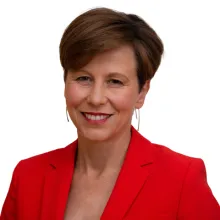
NIC HEALEY: The Federal Minister for the NDIS is Jenny McAllister. Minister, a really good morning to you.
JENNY MCALLISTER: Good morning Nic.
NIC HEALEY: People living with a disability in regional Victoria, they already face limited access to services, higher out of pocket expenses. I'm not even talking about sort of things like travel time. Is there a worry that these reforms could make that even harder.
JENNY MCALLISTER: Our every purpose in making the reforms that we've announced is to secure this scheme for the long term. As you indicated in your introduction, this is incredibly important for people with disability, including in the regions. You will hear from your listeners that it literally changes lives, but it's not on track at the moment, the Australian public thinks that we agree with that, and we are trying to get this back on track. I think from the perspective of a person living in country Australia, it'll mean getting rid of the fraud and the poor performance in the sector, which unfortunately is a feature of some aspects of the provider market. It'll mean making the access arrangements and the planning arrangements more transparent and predictable. It won't depend so much on how many expensive reports you can gather for you and your family, it will be a much more consistent experience for people right across the country, and we think that some of the other interventions that we are making will improve the quality overall, in particular requiring registration so that people with disability can be confident that the service providers that they are using for some of the most sensitive services, have the qualifications they need and are appropriately managing their operations to deliver a safe service that operates with integrity.
NIC HEALEY: Minister just back to that fraud. Having spoken to a number of service providers who work regionally, the sense seemed to be that they think there is a bigger perception or reputation of fraud, then there actually is fraud happening. Do you have numbers? Do you have genuine sort of concerns with hard data?
JENNY MCALLISTER: We see really troubling examples of fraud, some of which is presently being prosecuted through the court system. Prior to coming to government, there was no fraud or compliance capability built in the previous government really let this go. And so the data and the examples that we see give me genuine cause for concern, but I'll say this. There are so many wonderful, beautiful providers doing the right thing every day, it must be immensely frustrating for them to hear these stories and see some of the examples that I know that they see, and many of the worst stories that are brought to me are actually brought to me by the good providers.
NIC HEALEY: When we talk about the cost though, Minister is that fraud a genuine contributor to the cost blowout of this scheme?
JENNY MCALLISTER: It's not the main contributor. So we shouldn't imagine that tackling fraud will. Tackling fraud alone would be sufficient to deal with the sustainability challenges. When we see people seeking to defraud the scheme, what they are usually doing is taking resources that should be being spent on a person with disability and pocketing them. And so when we disrupt that, it's a better outcome for the disabled person, they are using their plan to the full and in the way it's intended, but it doesn't necessarily generate a saving to government. It's still important, though, right this scheme has to operate with integrity, and my bigger concern is that often when we see fraudulent behaviour, we also see risk and harm to disabled people, and that can't be allowed to continue.
NIC HEALEY: No. And I don't think you'd find many disagreements with that at all. Jenny McAllister, is the Minister for NDIS, I know one of the big plans, and you touched on it before, making sure that the number of providers who get mandatory registrations is increased significantly. I know there's been a concern that that could potentially mean fewer providers harder for regional areas. When we talked about this a week ago, one of the community concerns that came up was making sure that that mandatory registration was easily accessible and not particularly prohibitively expensive for providers. Have we got a sense of how that's going to work out?
JENNY MCALLISTER: That's a really good and sensible point. Nick since we came to government, we've spent quite a lot of money doing some of those basic investments with the quality and safeguards commission, mostly to do with upgrading their IT system so that the user experience, from a provider perspective, is better. It shouldn't be incredibly difficult to become registered. But to be fair, it shouldn't be really easy, either. At the moment, anyone can offer disability services without really sufficient screening, or without providing the reassurance that they have the skills and the systems that are necessary to truly protect people with disability. I don't think that's acceptable, and that's why we're taking the steps. We are to make registration mandatory for those services which are the highest risk, not all services, but the highest risk services. At the same time, we will require all providers to enrol with the NDIA to register their basic details so that the government has visibility about the payments we're making and who's receiving them. These are basic integrity functions. They should have been baked into the system during that 10 years that the Liberals administered it, they didn't do that work, and we're taking the steps that are necessary to do it now.
NIC HEALEY: Minister, very final question. A lot of the changes do put a bit of an onus of the scheme or concern care, I should say back on the states. Are they ready? Some states are saying there's been a lack of consultation.
JENNY MCALLISTER: Two years ago, First Ministers and the Prime Minister agreed that together, we would invest $10 billion to stand up systems outside the NDIS. The NDIS was never intended to be the only service system for people with disability. There are more than 5 million Australians living with disability, less than a few, less than a fifth of those on the NDIS. We actually want to have services that are available for all people with disability across the community, we've committed 4 billion together on thriving kids. That means there's a remaining $6 billion and we'll work with the states and territories to stand up those service systems together.
NIC HEALEY: Minister, thank you so much for your time this morning. I know we've run a little late, but I appreciate it.