
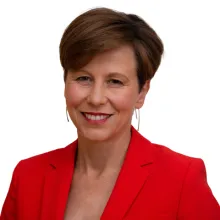
RYK GODDARD: The Minister for NDIS Jenny McAllister joins us now. It's seven to 8. Minister, good morning.
JENNY MCALLISTER: Good morning Ryk, thanks for having me on.
RYK GODDARD: Who are the 160,000 people who will be removed from the Scheme?
JENNY MCALLISTER: Ryk, this is a really important set of reforms that we've announced and there's a whole range of changes that we've talked about yesterday. Our goal is to make sure that the NDIS is here for the long term for the people who need it and that will mean putting in place some of the ordinary guidelines and boundaries that are usually in place for social programs. Describing who will be eligible, describing the kinds of services they'll be eligible to receive, and dealing with some of the waste and fraud that unfortunately we know permeates the system at the minute…
RYK GODDARD: Minister, sorry we have such little time. I really want to get the questions that we've had come through answered, if possible, this morning. Why were those safeguards and accountability not in place already?
JENNY MCALLISTER: Great question. This Scheme was set up with some initial trials that took place under the previous Liberal Government. It is actually unclear to me why they didn't act to set this Scheme up with the normal boundaries that you would expect in a social program. But they didn't, and we've come to Government determined to resolve these questions. We've worked really hard in the first term. We've got Scheme growth down from 22% a year to 10%, but we accept that there is more work to do. And yesterday was about levelling with the Australian community about what we've done so far and the work that we think still needs to be done.
RYK GODDARD: Jenny, so back to that original question, who are the people who are going to be removed from the Scheme and what will be in place to support those people?
JENNY MCALLISTER: We think the Scheme needs to be targeted at people who have significant and permanent disability and over time it's expanded beyond that. The NDIS Independent Review recommended we put in place a functional capacity assessment. It would mean that every Scheme participant, new or existing, will be assessed for their functional capacity so that people with significant capacity, significant functional support needs will be the ones who are supported on the Scheme. The threshold for that will be worked through in the coming months with a Technical Advisory Group and importantly with people with disability.
RYK GODDARD: Minister, how do you not set up yet another system where the bunch of people who are assessing functional capacity then start to overcharge for their services?
JENNY MCALLISTER: Those are really important implementation questions that we'll work through with the disability community and on the basis of expert advice. But the important thing here is that we do need to put some clear guidelines around this program. It matters for people with disability. You should know with confidence who is and who isn't eligible for this kind of support and you should also know that there are other supports available in the community. The NDIS was never intended to meet all of the needs of all Australians with disability. It was always intended for the group of people whose disabilities were most significant and permanent. And that means that we do need to be attentive to the way that the other service systems in the community are responding to disabled people and their needs.
RYK GODDARD: Jenny, a lot of people are talking about clients saying, look, could you take my Mum out instead of me today? How are you going to monitor that sort of repurposing of the system outside of its intention?
JENNY MCALLISTER: Great question, Ryk. We do unfortunately see sharp practise fraud, and in the worst cases, criminal exploitation of the resources available in the NDIS. There's three really important things that are happening that we announced yesterday. The first is registration, for people offering high-risk services, we'll require them to be registered, and 90% of the Scheme's funds will ultimately be passed through to registered providers instead of unregistered providers. We're going to set up a payment system so that the NDIA has a visibility on the payments. We don't have that at the moment and finally, and this is really important for the example you provided, we will reform plan management. The plan managers play this really important integrity role. They monitor on behalf of participants, how they're spending their plans and who is receiving the funds from their plans. We think those plan managers need to be more accountable than they are at the moment. There's some great ones out there, but we'll commission plan managers and require them to actually monitor those funds and expend them as they're intended to be allocated, not in the way that you described in your example.
RYK GODDARD: One minute to eight. Jenny McAllister, Minister for the National Disability Insurance Scheme. Minister Mark Butler said it’s become an ATM for shonks, grifters, fraudsters and crooks. Does that erode trust and respect in the system to talk about it like that? I think most reasonable Australians would understand that it does need some work without labelling people like that.
JENNY MCALLISTER: Unfortunately, this Scheme has become a soft target and those descriptions are accurate. There are some very bad people who have targeted this Scheme. There are wonderful people, providing services in this scheme and I meet with them and they give me so much hope and heart. But there are some bad people and we've got to get rid of them. We cannot tolerate it.
RYK GODDARD: Well, Jenny McAllister, thanks for speaking with us this morning. What I want to find is the ATM for really nice worthy people who are kind and good. Where's the hole in the wall where we can go and take our money out? Thank you for your questions and comments today. I really appreciate it.