
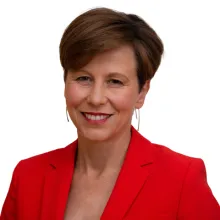
HOST: Good morning to you Jenny McAllister
JENNY MCALLISTER: Good morning.
HOST: Let's first get to the 160,000 participants in the NDIS who will no longer be eligible for the Scheme. What happens to them?
JENNY MCALLISTER: That was a great summary you gave earlier in the intro, because I do just want to say that this is a scheme that Australians are proud of, and should be proud of, and it is a great human rights achievement. Our approach is to make sure that the scheme delivers as intended, that we clean up the fraud, and we make put in place some of the ordinary boundaries that are normally in place for a good social program. One of those is eligibility. The scheme was originally designed for people who have significant and permanent disability, and a test for that was never really clearly established. We want to move away from the diagnosis process towards a clearer framework for assessing what your functional capacity is and what kinds of support you need, so that the scheme can deliver to the people that it was designed for. Of course, there are other people with disability who will have support needs, and the NDIS was always intended to be complemented by other service systems. Over the last year, we've worked with states and territories to start standing up the Thriving Kids model for their younger children. There is an existing pool of money that First Ministers and the Prime Minister have agreed ought to be directed towards establishing additional supports. And one of our tasks over the next couple of years, as we work through these changes in a really deliberate way, will be to work with States and Territories on designing the way that that money will be spent.
HOST: So can you guarantee that for those 160,000 on the current numbers that will no longer be on the Scheme or no longer be considered to be eligible, there will be other systems that they can fall back into?
JENNY MCALLISTER: There already are some systems, of course. And the broader point I would make is that the NDIS was never supposed to displace the obligations on all of the other social service systems that are supposed to support the entire Australian community. Hospital systems, health systems, school systems, transport systems, childcare systems are all supposed to be inclusive at the moment. But yes, we do believe that there do need to be investments in additional systems for people who will not be in the Scheme. I think we've shown good faith and our willingness to co invest with the States and Territories through the way that we approach Thriving Kids. We'll take the same approach in working with the States and Territories on any future investments that that we together decide we need to make.
HOST: Senator, on that, were the States and Territories consulted ahead of yesterday's announcement?
JENNY MCALLISTER: The announcements we made yesterday follow a long period of consultation and discussion about the approach to Scheme reform, and the most important element of that was the Independent Review, which spoke to thousands of disability people with disability and their families. States and Territories and the Commonwealth received that Review back in 2023 and since then, we've been working through implementation arrangements. This is a really important next step. It makes clear for the disability community, for the general public and for States and Territories, the Commonwealth view about the next steps, the most important reform priorities.
HOST: Jenny, watching the speech last night, many Australians, I have to say, including myself, were shocked at, you know, the misuse of the Scheme by bad actors and organized crime, and shocked that you could become a provider without being registered, shocked that 90 percent of invoices weren't checked, shocked at the fact that any Government could be so cavalier with taxpayer money. How did it get to that point?
JENNY MCALLISTER: You know, I was shocked by these things when I became a Minister, too, and it's been a very strong focus for me since coming into the job about a year ago. This system has to operate safely. It has to operate with integrity. We've made really important investments already. We've established the Fraud Fusion Task Force. We've established proper integrity systems within the NDIA, we now examine as many claims every day as the former Government used to examine in a year. But there is a lot more to do. You cannot have a service system at this scale without appropriate checks and balances, and there are some really important interventions yesterday that will clean up this Scheme. It is currently a soft target that cannot be allowed to continue.
HOST: You're listening to 891 ABC Adelaide. With us is Jenny McAllister, the Minister for the National Disability Insurance Scheme, Sonia, Jules and Rory. Minister when it comes to providers. We know now that there's going to be extension of the number of providers who will be registered. Now we heard earlier on our program today that the costs associated with that are not insignificant, either for sole providers or larger providers. Will the current system of registration remain, or will that change?
JENNY MCALLISTER: We're already in the process of reforming the registration approach. We want it to be efficient. We don't want to overly burden providers, but we also want this Scheme to offer quality services to people, and for those services to be safe.
It's not reasonable for the providers who offer really high quality services, and there are lots of them to be competing with providers that offer very low quality services and are consequently able to generate a significant profit. We actually want this scheme to deliver real value for the people who use it, and registration will be part of that.
HOST: So will a sole provider still have to pay four or $5,000 to be registered for the Scheme?
JENNY MCALLISTER: People do need to establish the quality control systems that are necessary to provide services where people are providing high risk services, such as personal care, care in closed settings where there are a few other people observing the worker or the provider. We do want those people to be registered, and the approach that we're taking is requiring registration for the high risk services. We will also require universal enrolment. By that, I mean that every single provider will need to be enrolled with the NDIA so that, for the first time, we'll have proper visibility of where the money is going and who is receiving payments. It's a key integrity measure. It will require investment, and it's a feature of yesterday's announcements.
HOST: Minister, I want to bring it back to participants, if I can, what do you say to participants and their families on the NDIS who would be listening to what's been announced in the last 24 hours, and they might be sitting there worried about what their future might look like, and worried about being left behind. What do you say to them?
JENNY MCALLISTER: A couple of things. I want this Scheme to be here for the long term, and for that, it needs to be sustainable. It needs to deliver quality, and it needs to operate with integrity. Most importantly, it needs to maintain the trust of the community. And the reforms that we've put in place in the last term and the reforms we intend to put in place are all targeted towards that objective, that the Scheme will be here for the long term. At an individual and personal level, I know that change is challenging and can worry people. We will work closely with the disability community as we implement these reforms, but I also say this. What is more worrying is the prospect that there is a collapse of community trust in this Scheme, and we have to prevent against that, and that does mean making some of the decisions that we've signalled yesterday.
HOST: Well, on the community trust, and you know, a lot of that is to do around, you know, crime, and you know, mostly around the budget, you know, costing as much as Medicare and the PBS stats like that. Obviously, you know, they do resonate with people. Are you confident that you can really reduce the growth of the scheme from 10 percent to 2 percent. I mean, it's like turning around an oil tanker, isn't it? And you've got to do it in a couple of years. Are you confident that that is even possible?
JENNY MCALLISTER: We announced, yesterday a significant set of reforms, and they are ambitious, but they're necessary. The Scheme is presently on track to grow to include 900,000 people by 2030. That's not a pathway that I believe is consistent with the original intention of the Scheme. I don't think it's consistent with a sustainable Scheme, and we do need to make these changes. Yes, implementation will be challenging. We'll have to work very closely with the community of providers. We'll have to work very closely with people with disability, and will have to demand a lot from our public sector agencies.
HOST: Jenny McAllister, one of the areas that Mark Butler said that he was very aware would have a very significant and obvious impact on people's lives is these cuts to social and community support, and that could be quite widespread. We've already had a text saying this makes such a difference to the mental health of young people who and older people, those with disability who are going to visit family members or going to the theatre doing things more than just surviving. Is there a risk that these kinds of savings could come at an additional cost to other areas of the health system with people suffering more depression and those sorts of things.
JENNY MCALLISTER: We've thought really carefully about these changes. This part of the NDIS budget is one of the fastest growing parts. It's $12 billion a year at the moment, and for context, that's about the same amount as we spend on the PBS nationally.
We've determined that we will reduce the level of expenditure in that area back to where it was a couple of years ago. We recognize that this will have impacts on participants, but we do believe that this is a change that we can make safely, and we do think that it is consistent with our goals for Scheme sustainability. At the same time, we want people to have quality community experiences. And one of the things that we announced yesterday is the establishment of a Community Inclusion Fund. I want some of the mainstream community organizations, many of whom have big aspirations in terms of inclusion and disability inclusion. I want them to be able to stand up good programs so that people with disability can actually connect in real ways to the community organizations in the places where they live, and that's one of the projects that I'm really excited about. We'll work with the disability committee on the design for that Fund.
HOST: Jenny McAllister, thank you very much for your company this morning.
JENNY MCALLISTER: Thank you so much for having me on.