
Fact sheets
Download and share factsheets to understand the changes.
-
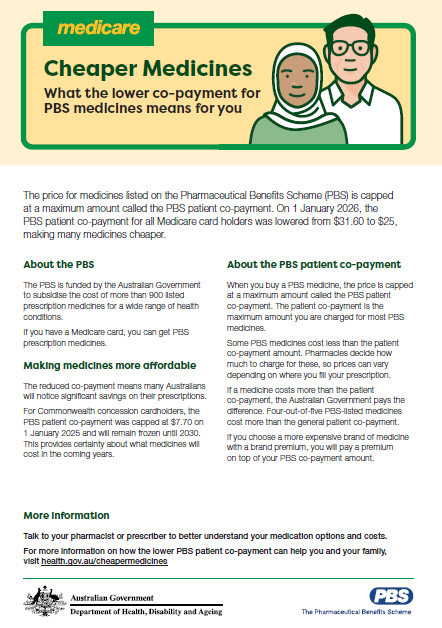
PBS price reduction: What the lower co‑payment means for you – Fact sheet
This fact sheet explains the reduction of the PBS patient co‑payment to $25 for Medicare card holders and the continued $7.70 cap for concession card holders. It outlines how the PBS works and how the changes make medicines more affordable. -
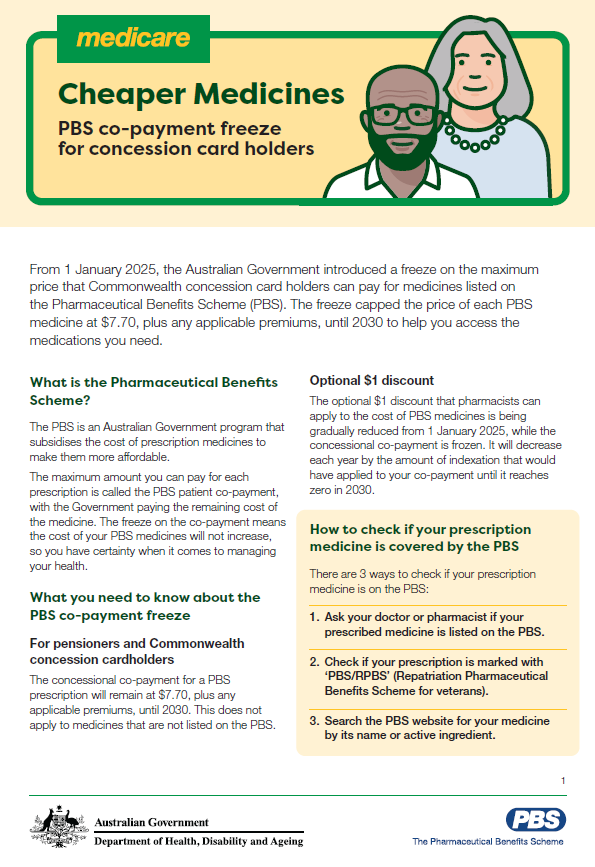
PBS co‑payment freeze: What it means for concession card holders – Fact sheet
This fact sheet explains the PBS concessional co‑payment freeze, keeping medicine costs capped at $7.70 until 2030. It outlines how the freeze works, ways to save on medicines, and where to find more information.
-

Cheaper Medicines: FAQs about the lower PBS co‑payment
This FAQ explains how the reduced PBS co‑payment helps Australians save on medicines, what the changes mean for general and concession card holders, and how costs, Safety Net thresholds, and brand premiums may affect what you pay. -
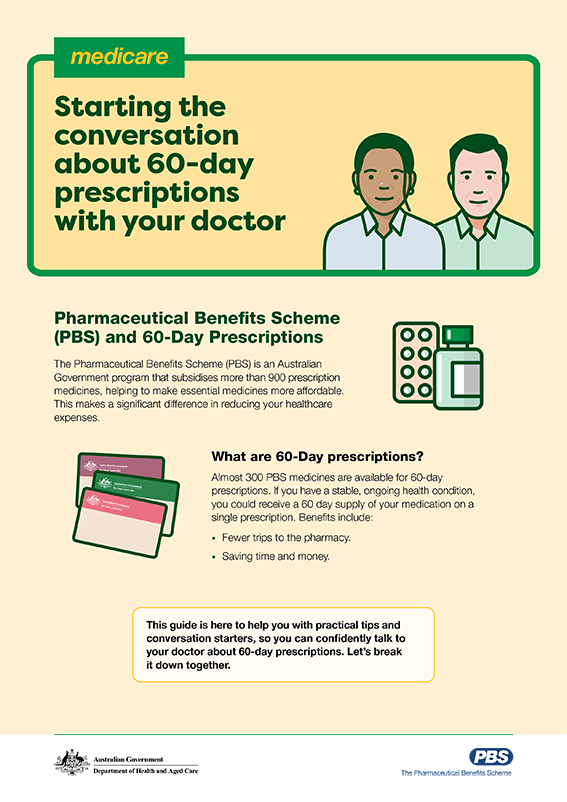
Starting the conversation about 60-day prescriptions with your doctor
This guide can help you to have a conversation with your doctor to see if 60-day prescriptions are right for you. This guide contains tips, key discussion topics, resources and next steps.
Posters
Download and share posters with information about Cheaper medicines and how to access them.
View all posters
-

PBS price reduction: Lower prescription costs for Medicare and concession card holders – A3 Poster
This poster highlights PBS medicine costs dropping to $25 for Medicare card holders from 1 January 2026, with concession card holders continuing to pay $7.70. It promotes savings on prescriptions through the PBS. -

PBS co‑payment freeze : Cheaper medicines for concession card holders – A3 Poster
This poster highlights that concession card holders will pay no more than $7.70 per PBS medicine until 2030. It promotes access to over 900 subsidised medicines through the PBS.
-

Cheaper Medicines: PBS price changes for Medicare and concession card holders – Postcard
This postcard highlights PBS patient costs dropping to a maximum of $25 for Medicare card holders from 1 January 2026, while concession card holders continue to pay $7.70 until 2030. -
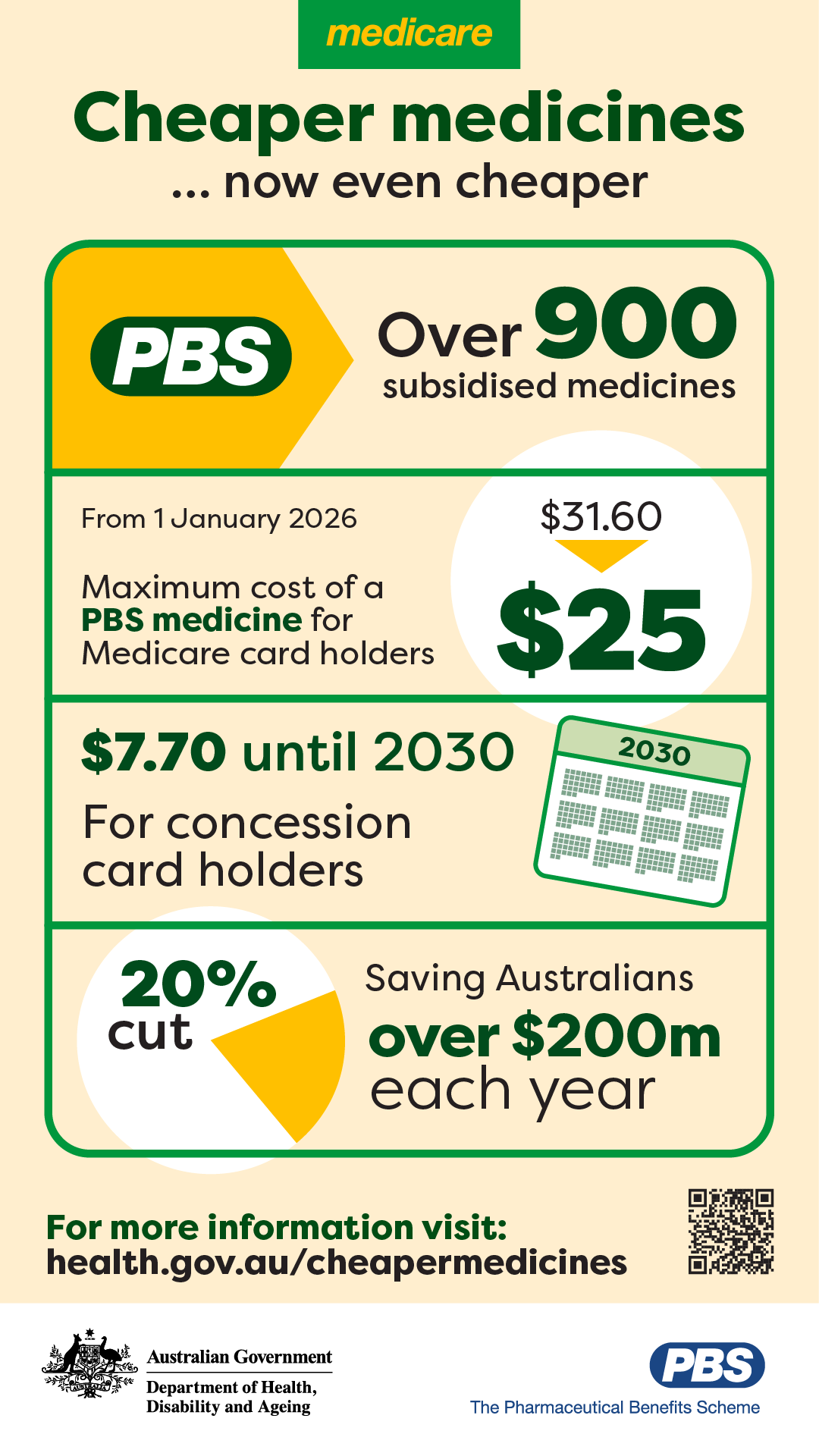
Cheaper Medicines: Key facts about lower PBS medicine costs infographic
This infographic highlights changes to PBS medicine costs, including a $25 cap for Medicare card holders and co-payment freeze for concession card holders until 2030, applying to more than 900 subsidised medicines.
Videos
Check out advertising videos from the Cheaper Medicines campaign.

Medicines are now cheaper for more people.
From January 1st 2026, PBS medicines will cost no more than $25, down from $31.60, for everyone with a Medicare card.
For concession card holders, prices remain frozen until 2030.
So you can spend more on life and less on medicines.
Visit health.gov.au/cheapermedicines for more information.
Authorised by the Australian Government, Canberra.

From January 1st 2026, PBS medicines will cost no more than $25, down from $31.60 for everyone with a Medicare card.
Authorised by the Australian Government, Canberra.

For Australian concession card holders the maximum cost of PBS listed medicines remains frozen at $7.70 until 2030. Visit our website for more.
Authorised by the Australian Government, Canberra.
Cheaper medicines explainer videos

The Pharmaceutical Benefits Scheme, otherwise known as the PBS, enables Australians to have access to more than 900 subsidised prescriptions for a range of health conditions. This program ensures that everyone has affordable and timely access to medicine. When you buy a medicine that's listed on the PBS, the amount you pay is called the PBS patient co-payment. Some PBS medicines will cost more because they have a brand premium, while others will cost less.
Anybody with a Medicare card can access medications on the PBS. If you have a Commonwealth Concession Card, you can access these medications at a concessional rate. The maximum out-of-pocket co-payment has been reduced from $31.60 to $25. This means that you don't have to pay more than $25 for PBS listed medications. The maximum co-payment for concession rate has been frozen to $7.70. And while that normally goes up with inflation, it's going to stay frozen until 2030. The PBS patient co-payment has been lowered to $25 to make medications more affordable. So if you were paying $31.60, you now save $6.60 per prescription. So you don't need to wait to fill your prescription.
The Concessional Card rate has been frozen to help families and individuals plan their medication costs because the rate is going to stay the same until 2030. If your PBS medication costs less than $25, the price will stay the same. The price of medicine could still vary from one pharmacy to another depending on where you go. And if you are not sure, you can always ask your pharmacist about the cost price of PBS medication. Some medication suppliers do charge extra for their medications, and this is called a brand price premium. Chat to your local pharmacist about other alternate brands that don't have this brand price premium. These are known as generic medications. The PBS subsidy will be applied automatically. You don't need to do anything else. Ask your pharmacist to help you keep track on how much you spend on PBS Medicine. Individuals and families that spend a lot of money on PBS medications may be eligible for a Safety Net Card, which makes medicines even cheaper or free. For more information, visit the health website.
From the first of September 2023, 60-day prescriptions are available for nearly 100 common medicines listed on the Pharmaceutical Benefits Scheme, or PBS. Health professionals can prescribe a 60-day supply of these medicines if they think it is appropriate for your health condition.
In many cases, a 60-day prescription means you can buy 60 days’ worth of medicine for the cost of a single prescription.
It also means you won't need to visit your doctor or pharmacy as often to fill or renew a script for that medicine. This will save time and reduce travel costs for some people and will free up GPs for more urgent appointments.
The money saved by the Government as a result of this change will be reinvested back into community pharmacies.
To check if your medications are available for a 60-day prescription visit health.gov.au/cheapermedicines and talk to your doctor to see if it's right for you.

My name's Jeanette. I'm 52 years old and I live in Melbourne, Victoria. In 2019, I was diagnosed with rheumatoid arthritis, and that was after I'd experienced joint pain for around two years. It had taken so long to diagnose because I have a type of arthritis that doesn't show up in blood tests. At the same time, I was also going through menopause, which can have some similar symptoms to rheumatoid arthritis. So after diagnosis, I then spent about two years trying lots of different types of medications to see which would work best, and that obviously also was quite costly as I was changing the medications every few months to see what would work. I'm on four medications to manage my health conditions.
All of the medications that I take are listed on The Pharmaceutical Benefits Scheme or the PBS and two of the four that I take, I pay the $31.60 for the monthly prescription. So the lowering of the co-payment to $25 will make quite a significant difference to me. For my four medications, I could save nearly $30 each month. It's really making a huge difference to my finances. I think these changes to the co-payment will really have a big impact on some people that might have had to delay filling a script in the past for financial reasons. I would really encourage anyone that's worried about the cost of their medications to talk to their pharmacist. For more information, visit the website.
Case studies
-
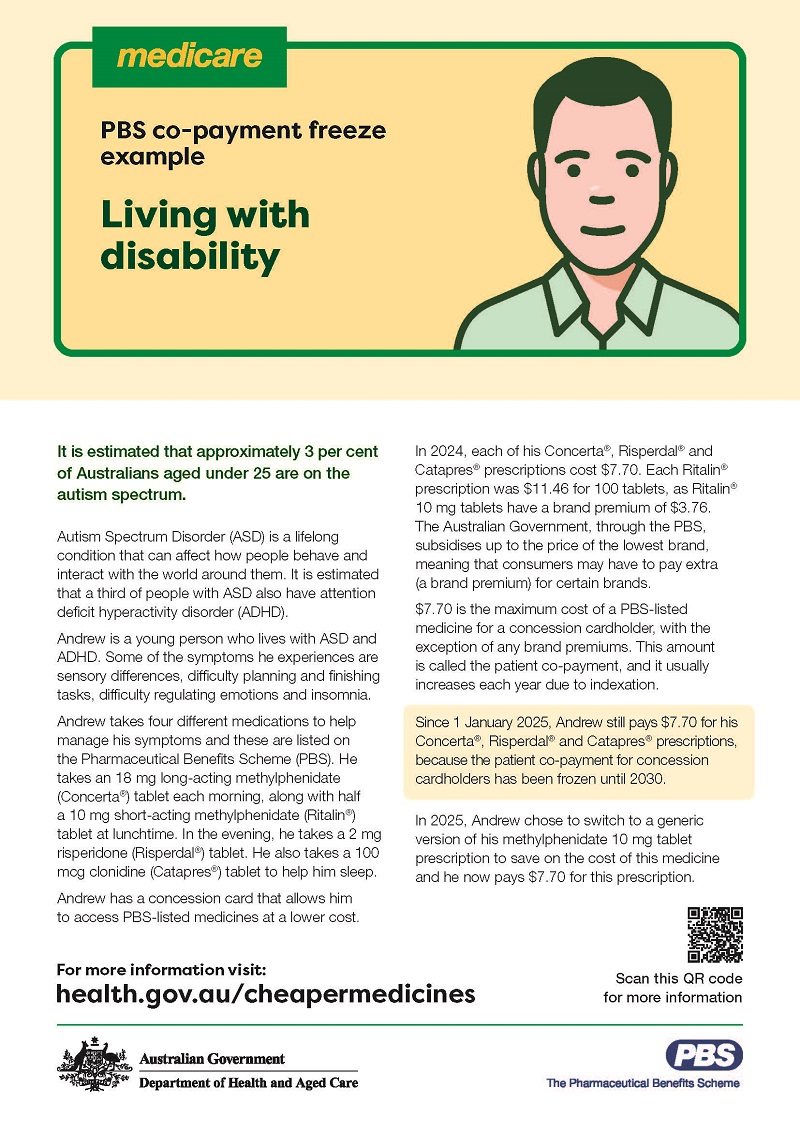
PBS co-payment freeze case study – Andrew
A fictional case study on Andrew, who is saving time and money on PBS medicines from the freeze on the patient co-payment and by switching to a generic medicine. -
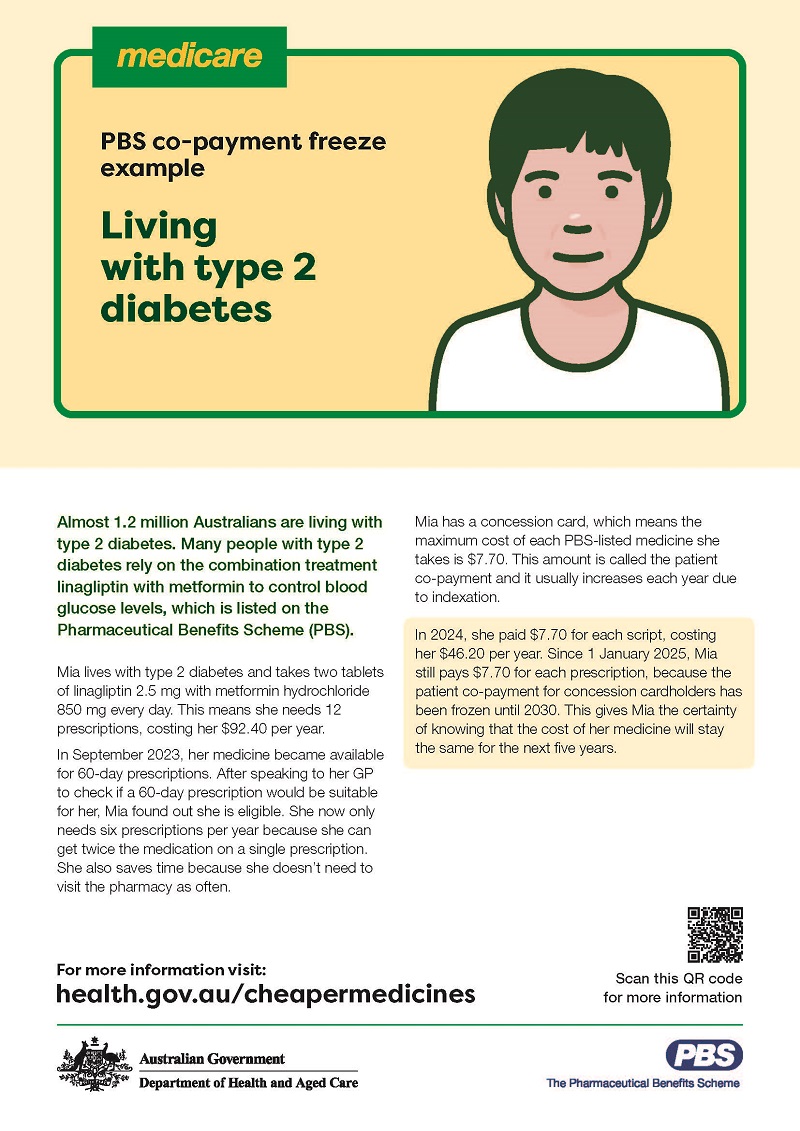
PBS co-payment freeze case study – Mia
A fictional case study on Mia, who is saving time and money on PBS medicines from the freeze on the patient co-payment.
-
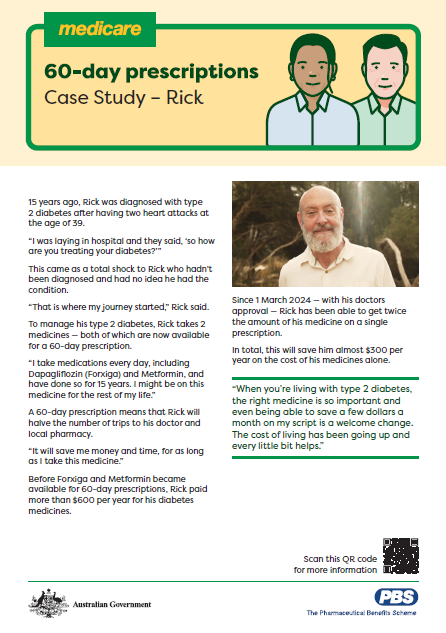
60-day prescriptions – Rick case study
A case study from people who are saving more on their PBS medicines. -
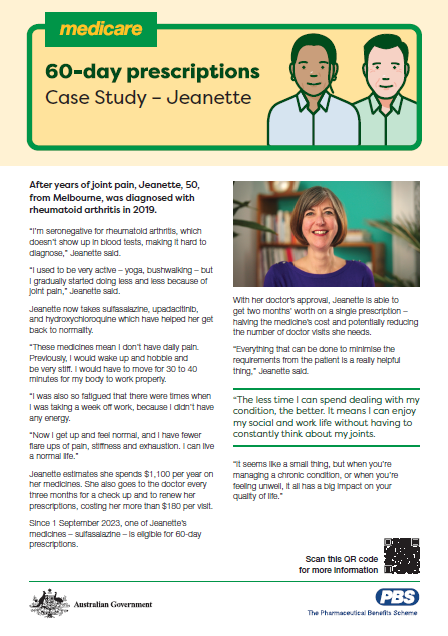
60-day prescriptions – Jeanette case study
A case study from people who are saving more on their PBS medicines.
Social media
Social media
-
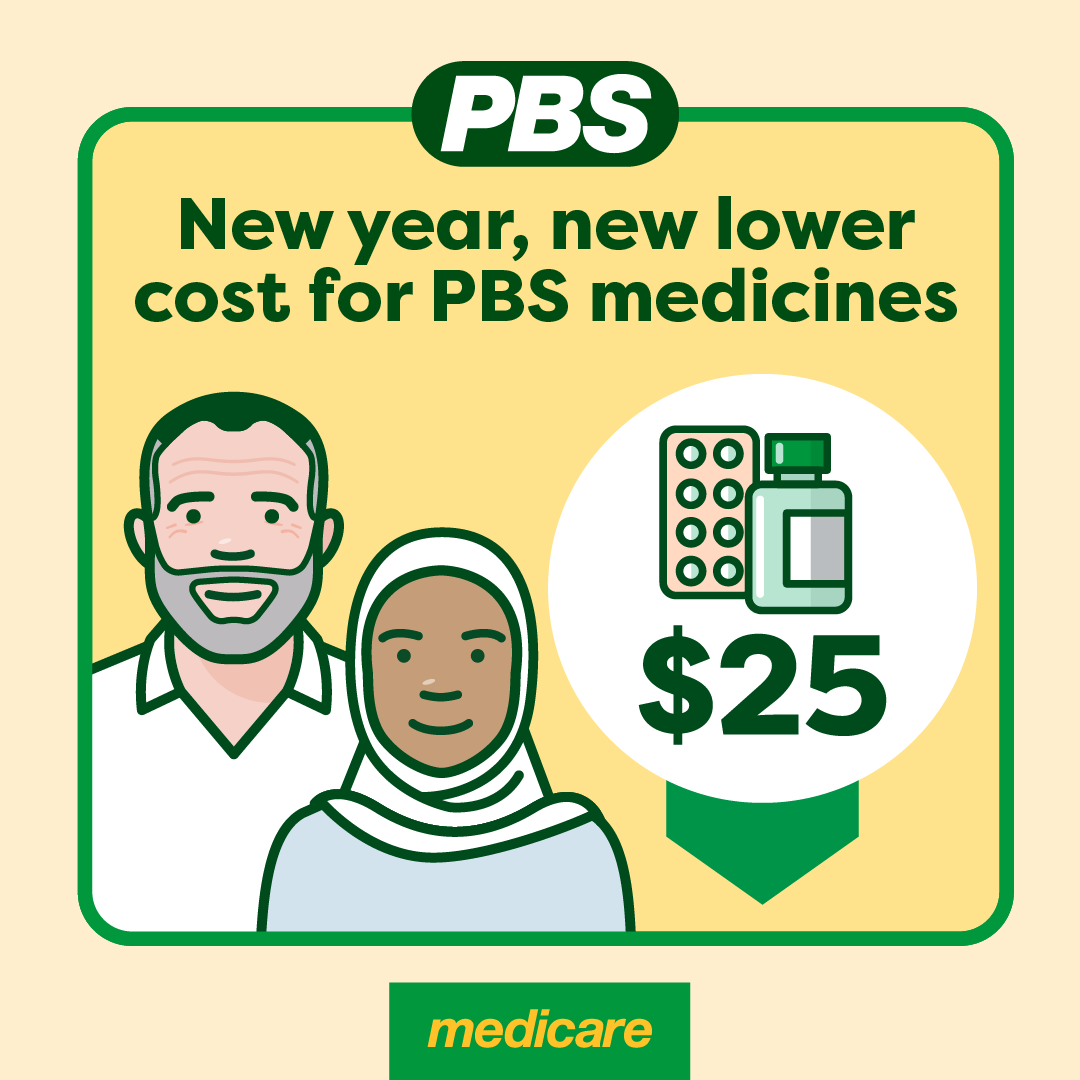
Social media tile – New lower PBS medicine costs
Download and share this tile on your social media channels to help raise awareness about lower costs for PBS medicines and how Australians can save on their PBS prescriptions.
-
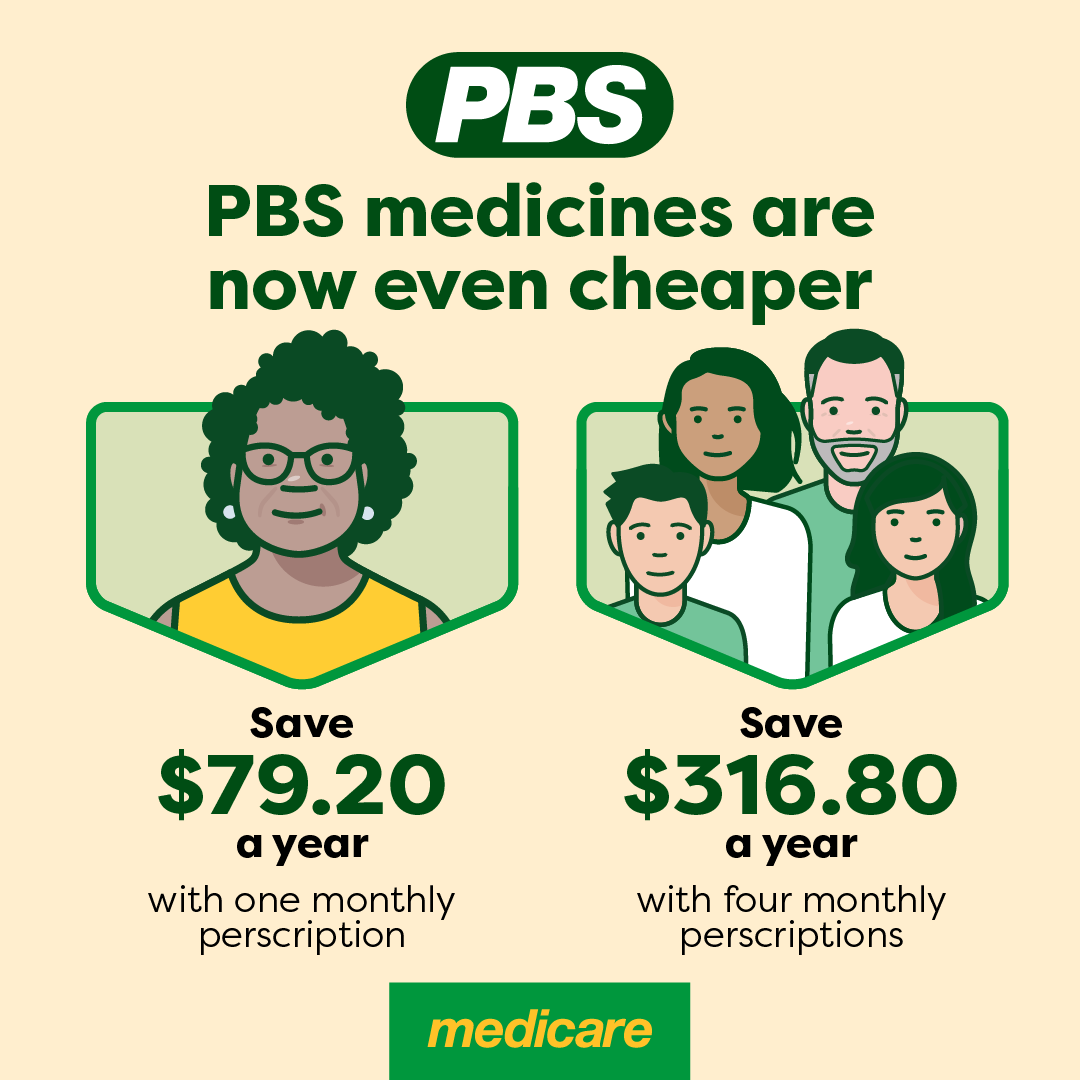
Social media tile – Even cheaper PBS medicines
Download and share this tile on your social media channels to highlight how Australians can save more each year with reduced PBS medicine costs. -
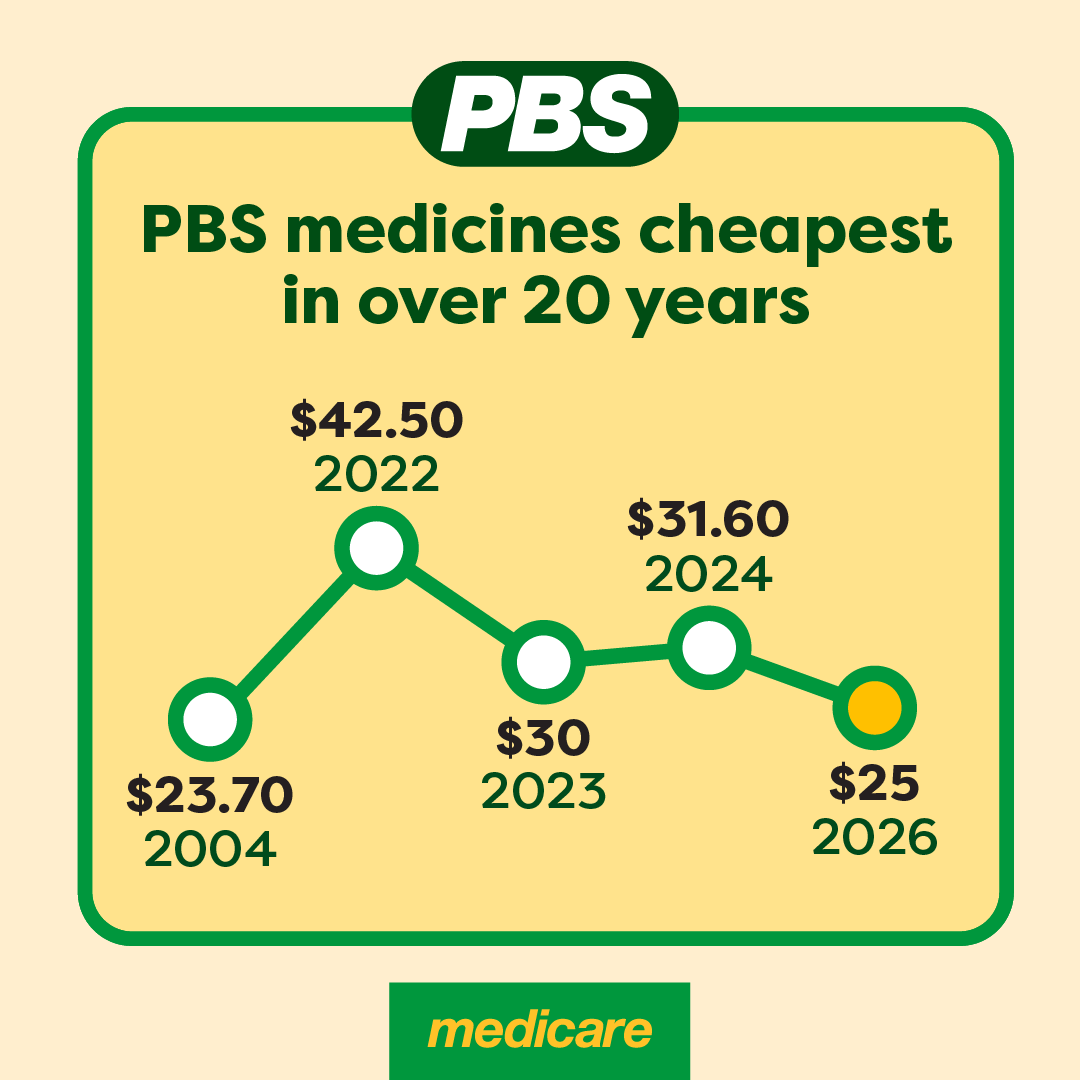
Social media tile – PBS medicines cheapest in over 20 years
Download and share this tile on your social media channels to highlight that PBS medicine costs are now the lowest they’ve been in more than 20 years, helping Australians save on PBS prescriptions.
Social media
-
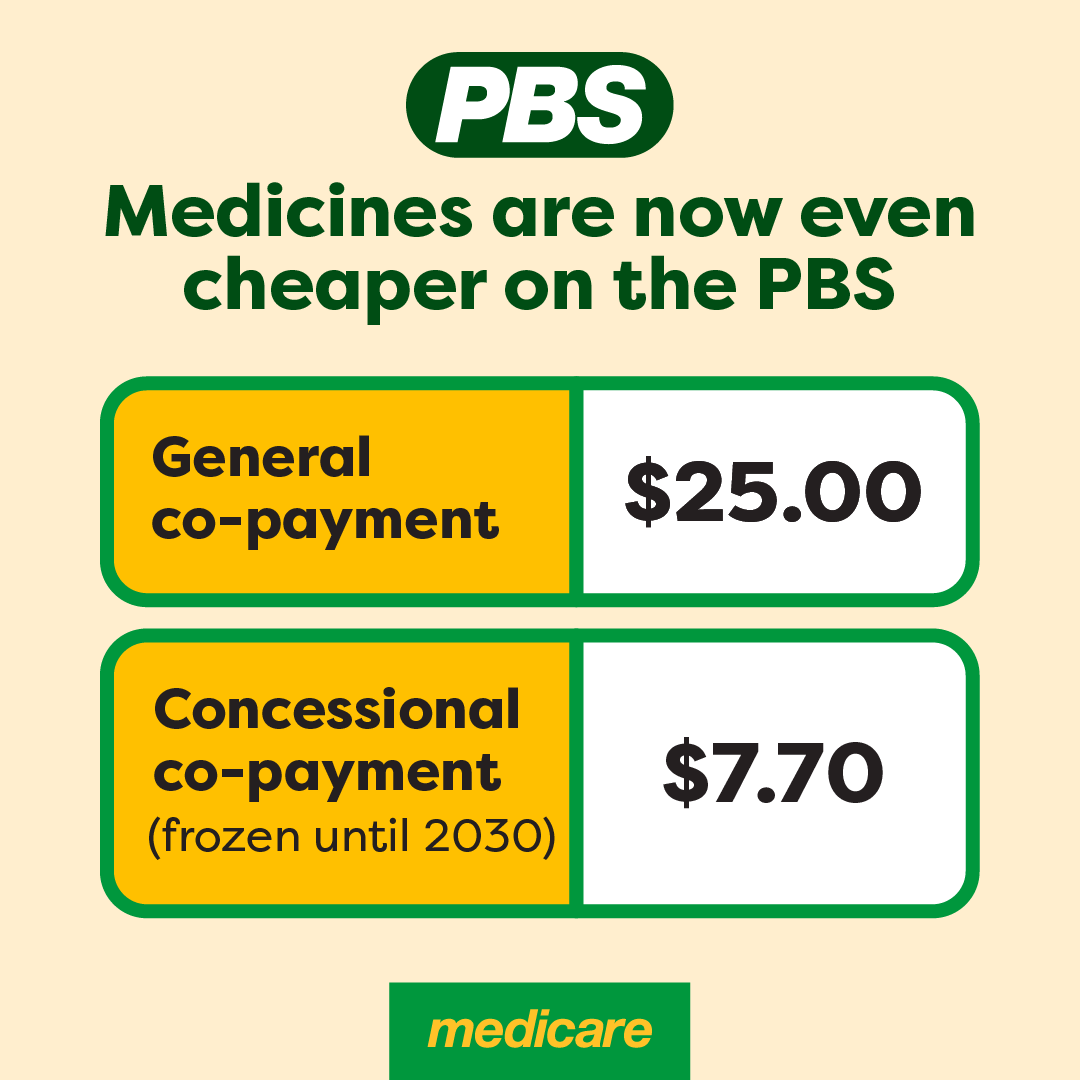
Social media tile – Cheaper PBS medicine costs
Download and share this tile on your social media channels to raise awareness of the reduced PBS co‑payment and how Australians can save on their PBS prescriptions.
-
Social media tile – Cheaper PBS medicines for concession card holders
Download and share this tile on your social media channels to help raise awareness that concession card holders can access PBS medicines at more affordable prices until 2030.