
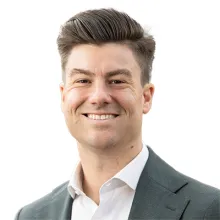
KATIE WOOLF, HOST: This morning, the federal government have announced that they're going to be building on the initial $60 million investment to deliver 120 beds at this new purpose-built home in Holtze. It's actually now going to be an extra $20 million investment and another 30 beds. Joining me on the line to tell us more about this is the Minister for Aged Care and Seniors, Sam Rae. Good morning to you, Minister.
SAM RAE, MINISTER FOR AGED CARE AND SENIORS: Good morning, Katie. Thanks for having me on.
WOOLF: Lovely to have you on the show. Minister, you're in Darwin announcing the expansion of this project. Can you tell me why the Federal Government have decided to invest further and expand the scope with these additional beds?
RAE: Well, if we take a step back for a second, Katie, Luke Gosling announced this important project a short time ago. And as you said in your introduction, that was a project that would have $60 million of investment from the Federal Government to deliver 120 beds in partnership with the Northern Territory Government, who are donating the land and doing the headworks on the site. Through the work that we've been doing together in that partnership, the Territory Government, the Federal Government, as well as Ozcare, who is the provider who are going to be delivering the actual project, we've identified this opportunity where for another $20 million we can take it up to 150 beds and get even better outcomes for older Territorians. That's what we've announced today. Construction's going to start mid next year, and we're looking to get people into the facility at the end of 2028.
WOOLF: All right. So the end of 2028. That is good news. I'm so glad that we now have a bit further detail and we've got that timeline. Minister, I guess if you've got a loved one that's currently in a bed at Royal Darwin Hospital and is struggling through, it really can't come soon enough.
RAE: Yes, I totally agree, Katie. And we know how challenging it is for older people when they’ve got health challenges, and of course for family members, it can be really heartbreaking. It's why this work that we're doing in the aged care sector and here the Territory to increase capacity is so very important.
One of the things that keeps people in hospital for protracted periods of time is complex dementia-related conditions, where care in the mainstream aged care system can't be provided either safely or appropriately with dignity for those people. One of the aspects of this new build next to Palmerston Hospital that we're talking about today is that it will have multi-layered dementia care options from an entry-level dementia care right through to what we call our Specialist Dementia Care Units, where people who have very challenging dementia-related behavioural issues can be cared for with dignity.
WOOLF: Minister, I know that we've been contacted in the past as well about dementia patients, and people quite concerned, a few of our listeners, in a really terrible situation where their family members have actually got earlier onset dementia. They're under the age of 60, and they're not really able to get the same supports that somebody that is a senior is able to receive. With the– you know, with this new aged care facility being built and it having dementia specialised beds, do you think that will mean that there may be greater support for younger people with dementia? Because unfortunately, we've got a situation across Australia where people are being diagnosed much younger than what they were previously.
RAE: You're very right, Katie. We're actually facing a nationwide challenge here. Dementia is now the leading cause of death in Australia. And people should reflect on that. We have 450,000-odd Australians who are living with dementia, and the research shows us that perhaps half of those cases could either be delayed or avoided entirely.
The body of medicine and care related to people living with complex dementia conditions is growing very rapidly. In order to meet that challenge. These investments that we're making in Darwin, in Palmerston, are about making sure that we've got the infrastructure and the care systems in place while we try and reduce the incidence of dementia in our community – so, nevertheless, care for those that are living with dementia with that level of dignity that we believe they should be.
WOOLF: All right. I know that you've said construction's going to start for this new facility 2027, mid-2027, with the facility opening in late 2028. How confident are you that those deadlines can be met?
RAE: Look, I don't want to gild the lily here, Katie. As you and I both know, construction this complex and we're talking about a $100-million-odd facility that's being built here. But we've got this partnership between the Territory Government and the Federal Government, and the provider Ozcare, to try and get this going as quickly as possible. These projects, on average, normally take between five to seven years from the point of inception to the time that we start moving people into beds. We're trying to expedite this project very rapidly, and we're able to do that because of that partnership arrangement.
Look, I'm not going to pull the leg and tell you with 100% certainty how it's going to go. And I'm a Victorian, but I watch the weather forecasts up here in the Territory, and as we all know, anything can happen. But everybody is working hand-in-hand to try and get this delivered for Territorians as quickly as possible.
WOOLF: And look, it is good news. I do know that there will be families listening this morning, though, of older Territorians and those who maybe have dementia, and they're wishing that work was already happening. What is your message to them today?
RAE: To all older people, I want them to know that our Government, the Federal Government, is absolutely committed to every older person, no matter who you are, where you are, what your financial or personal circumstances are. We believe that every older person should be able to live in safety, with dignity, and with joy. That's what our aged care reforms are focused on. It's what all of the health changes that we're making across the system for seniors are focused on. And I'm really appreciative of this partnership arrangement that we've got here in the Territory with the Territory Government to deliver such an important project to move us forward in that direction.
WOOLF: Minister, before I let you go, I do note that it's being reported this morning in The Australian newspaper that the New South Wales Labor Government is appealing to the Federal Health Minister, Mark Butler, to reconsider cutting the more generous private health insurance rebate for over-65s, warning that the state hospital system can't deal with a sudden shift of patients moving away from private healthcare. Is this a done deal? Is this going to happen regardless? Because I know that we've got a lot of seniors in the Territory that are worried about this as well.
RAE: This was a really difficult decision, Katie, that we had to take in the last budget. Because we're investing so much money in the aged care system - in fact, the federal aged care budget will go past $50 billion a year in the next couple of years. Because we're making such significant investments, we have to do that responsibly. We have to use taxpayers' dollars as responsibly as possible. So we had to take this really difficult decision to return the rebate back to its original setting so that all Australians were treated equally, regardless of their age, and that those rebates would be determined based on their income rather than their age. And we've taken that money through that, and we've invested it straight into the aged care system.
The reality is here, we've got to make hard decisions as a community. We can't pretend otherwise. We want people to get the care they deserve. We want them to live with dignity. We've got to find ways to fund that sustainably.
WOOLF: Are you worried though that it's going to have an impact? I understand what you're saying, and that it's being invested back then into aged care. And even when we look at what's being announced this morning for the Northern Territory, it is good news. But are you concerned that what you might end up with is seniors no longer paying for their private health and them winding up in that public health system? And goodness knows, here in the Northern Territory, it is already having a big strain.
RAE: In making this decision, we of course modelled what the impact of the decision would be and took that into account. The decision that we've made is about how to get the best outcomes for older Australians, and this is the balance that we think is right. And we acknowledge that it will be frustrating and difficult for some people, but we are investing that money straight back into our health and care systems, so that those people can be cared for with that dignity that every Australian deserves.
WOOLF: All right. Federal Minister for Aged Care and Seniors, Sam Rae, I know that you're pressed for time, as are we. I really appreciate you joining us on the show this morning.
RAE: Thank you so much for having me, Katie.