
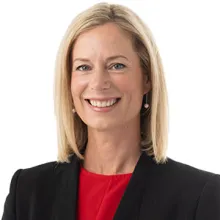
LEON COMPTON, HOST: Rebecca White, Assistant Federal Minister for Health, good morning to you.
REBECCA WHITE, ASSISTANT MINISTER FOR HEALTH AND AGEING: Good morning, Leon.
COMPTON: Rebecca White, let’s start with that issue first and then we’ll move onto the Cygnet situation. How concerned should Tasmanians be that money that you've contributed to fund hospitals for five years has effectively been cut out of the state budget?
WHITE: Well, this is a very concerning state budget, I think, for Tasmanians who rely on our health system. We've provided record funding to the state Liberal government. Our big increases of 15 per cent this year, 20 per cent next year, 11 per cent the year after that, hundreds of millions of dollars, rising to $1.1 billion over the forward estimates. And to learn about the budget handed down last week, which does have cuts in it, it will impact on the state's ability to service our community. Even if you assumed inflation was running at about 3 per cent, and over the past five years health spending in Tasmania has been on average about 8.6 per cent, these are significant cuts in the budget for health.
COMPTON: In other words, in sort of absolute pure number terms, the health budget will increase but not the cost that health inflation has been running at over sort of recent history. Are you concerned?
WHITE: Yes, I mean, next year it's only half a per cent. They've only forecast increased funding by half of 1 per cent, and on average over the last five years health spending has risen by an average of 8.6 per cent. It cannot be described any other way than a cut.
COMPTON: Is it reasonable to ask, have the state government just looked at the money that you've given them, $700 million over five years for hospital funding, and said, great, we'll cut the system by the same amount?
WHITE: Well, it's a coincidence, isn't it? You've got a number in cuts proposed by the state government of around $700 million over the forward estimates that matches the uplift in funding the federal government's providing. That's not what I think Tasmanians were hoping to see because they finally had, you know, record funding from the federal government and a deal with the state government that even the Premier had described as a fantastic outcome for the health of Tasmanians and our public hospitals. That's a direct quote from Premier Jeremy Rockliff, and now in this budget, there's a massive cut.
COMPTON: When you did this deal back in January, did you receive guarantees from the state that your funding won't just replace cut funding, that it'll actually result in improved hospital services to Tasmanians?
WHITE: There's certainly an expectation that it produces improved hospital services for all Australians, including in Tasmania. The funding deal itself was negotiated individually between the Commonwealth Government and the State Government. I'm pretty confident there would have been an expectation, if not specific guarantees explicitly written in their document, but certainly would have been an expectation that this would have resulted in improved hospital outcomes for Tasmanians.
COMPTON: 936 ABC Hobart, ABC North Tas, Rebecca White is our guest this morning, our Assistant Federal Minister for Health and Ageing. You were on hold and I think would have heard Kerrie Duggan. It looks like her Cygnet Family Practice after hours offering on Thursdays, Fridays, Saturdays will end from the new financial year. I mean, is there anything the federal government can do to help?
WHITE: I did hear Kerrie and I've been to visit that practice and they provide an excellent service to that community. I note that this is the first example of frontline health services being cut by Treasurer Abetz, because this is a direct grant from the state government for their after-hours services. I'm pleased to hear they'll continue their regular services because I know the community do rely on them. This is the first I've heard of it, Leon, so I'll have a conversation with my colleague, Julie Collins, and reach out to Kerrie and understand what else might be possible.
COMPTON: ABC local radio around Tasmania, 936 ABC Hobart, ABC North Tas. Rebecca White, your government, through the budget process, announced that they'd be cutting subsidies to over 65s who hang on to their private health insurance. I want to play you some of what our listeners have told us since that announcement was made.
[Excerpt]
CALLER 1: I simply can't afford that anymore. I've got to give it up. I've been struggling to keep it.
CALLER 2: I wouldn't be able to afford it either. I'll just have to cancel.
CALLER 3: And I would go without food or fuel in my car to keep it.
CALLER 4: I will have to cancel.
[End of excerpt]
COMPTON: That was some of what we heard from our audience around Tasmania. Do you accept that some of our listeners will go without food or fuel to keep their private health under the cuts that you announced in the budget?
WHITE: So there are some things here for context that I think are really important to explain. So everybody who pays for private health insurance will continue to receive a rebate of between 8 per cent and 24 per cent, and that’ll be based on income rather than age. So what we're essentially moving to is everybody is treated the same who purchases private health insurance. And the estimate for the average impact on those who are over 65 years of age is that it could be less than a dollar a day change, about $250 a year, which I know for some people is a significant amount of money, but it's also why we have significantly boosted access to GP services and increasing bulk billing rates. We've rolled out eight Medicare urgent care clinics and we have made medicines cheaper. So we are intervening in the primary healthcare space to make sure people can access preventative and primary healthcare.
COMPTON: [Talks over] Sure. But do you acknowledge, Rebecca White, that it'll also mean thousands of Australians and potentially hundreds of Tasmanians will say, I can't do this anymore. I'll have to drop out of private health. Do you acknowledge that has been one of these consequences? Your own modelling shows that.
WHITE: Well, it may be the case that people make a choice to do that, but we've also done the modelling, as you would expect when making a decision like this, that shows that we don't expect to see a number of people drop out. And so we don't also expect to see a significant impact on the public health system. But it's also why we've put an extra 700 million dollars into Tasmania's public hospital system so that we can support people who need to access the care there. This is why this conversation you and I have been having this morning is so critical because things shouldn't be seen in isolation. We've invested significantly in Tasmania's health system, whether it's in their primary care sector or in their hospital sector. And the other thing to note about this change is that the entire amount of funding is going to be redirected into aged care. So an uplift of $3 billion a year, which will fund 10,000 more places. And that has been a real pressure point, point, not just in Tasmania, but across the country to support older Australians’ care.
COMPTON: Just back onto this issue for a moment. Are you still absolutely committed as a government to push ahead with charging $250 or more- what could be more in some cases for private health insurance to Tasmania's over 65s? Are you still determined to push ahead with that change?
WHITE: We are determined to make sure there's equality in the system because it doesn't matter how old you are, if you're paying for private health insurance, your rebate should be based on your income and your capacity to pay for that. And that is how the system will be structured from here on out. It's also important to note that the Minister ultimately signs off on any increases in the private health insurance premiums, and that'll take effect from 1 April next year. And I can assure you that he'll be watching very closely to make sure that the industry isn't unnecessarily increasing prices.
COMPTON: Okay, appreciate you joining us as ever this morning. Thank you.
WHITE: Thank you.
COMPTON: Rebecca White, Assistant Federal Minister for Health.