
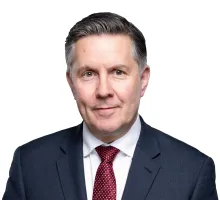
PATRICIA KARVELAS, HOST: For a response from the Government, I want to bring in the Minister for Health and Ageing, Mark Butler. Welcome to the program.
MARK BUTLER, MINISTER FOR HEALTH AND AGEING, MINISTER FOR DISABILITY AND THE NDIS: Thank you, Patricia.
KARVELAS: Why reintroduce the bill unchanged? David Shoebridge made the point, he's the new Greens Leader, that the Senate was the same yesterday as it is today. It's a good point. Nothing's actually changed. What makes you think that it's worth reintroducing in the same form?
BUTLER: The Senate's responsibility today is the same as yesterday, and that is to do its job and debate bills, not just discharge them from the paper. There was a long inquiry here where hundreds of submissions were made, people attended public hearings, a report was delivered last week, and I think we had the reasonable expectation that we'd have a debate about this. Now, we recognise we don't have the numbers in the Senate, we wouldn't get our way entirely without a debate. But at least I think give this measure, an important measure, the respect of a debate. These are important issues. I think everyone understands they're not easy, but they are really important ways to fund an expansion of aged care services that I thought right across the Parliament, people understood the necessity of.
KARVELAS: We're in a cost of living crisis and the big concern that's been expressed, the Greens specifically, are talking about pensioners. Now, not everybody who benefits from this is a pensioner, but surely pensioners deserve a different treatment. Are you thinking about carving them out?
BUTLER: I'll come back to why we're doing this and the things we need to fund through a responsible savings measure like this. But what we're doing is this, we're returning the design of the private health insurance rebate that's been around now for about 25 years, effectively a taxpayer subsidy for people's private health insurance bills, to its original design which was not to discriminate according to age but instead to pay households a level of subsidy relevant to their income not distinguished by the age of the household. We think that's the right thing to do. People‘s households on $50,000 or $70,000 or $90,000 or $110,000 will still get a quarter of their private health insurance bill paid. But we have gone through a process where we just need to find responsible savings to direct new funds into aged care.
When I was first made the minister four years ago, or thereabouts, the Commonwealth was spending $24 billion that year in aged care. This year, it will be $44 billion, I mean, $20 billion in just four years additional. And we still know we need much, much more by way of aged care, and there's got to be a way to fund that.
KARVELAS: Okay, I get that. But on the question I asked about pensioners being carved out because you obviously, there's different categories within it is it something you're prepared to look at or have you modelled how, the saving, I think, is $3 billion over four years?
BUTLER: Yeah.
KARVELAS: If you were, for instance, to exempt full pensioners, what would that cost?
BUTLER: That wasn't the proposal by the Greens as I understood it, and I had to really surmise what it was because we didn't get a chance to look at an amendment and have a debate in the Senate. And unfortunately instead, I'm having a proxy debate with you today -
KARVELAS: Well, they’re watching it all.
BUTLER: and had one yesterday afternoon at a press conference with journalists rather than having one with elected senators who you'd think were going to do their job. Full pensioners is in the hundreds of thousands of people. All the pensioners, including some people on higher incomes, they might have super or savings or some other way of earning an income but only getting a part pension, you're talking about 1.2 million people. That would eat into the saving very significantly.
KARVELAS: How significantly?
BUTLER: Well, 1.2 out of 3, so sort of 40 per cent or thereabouts.
KARVELAS: Right, so 40 per cent reduction.
BUTLER: Yeah. And I make the point also that the aged care expansions that are funded here are very much targeted at pensioners. Because we know that the aged care beds situation for people who don't have the ability to pay big bonds, and those are usually pensioners who only own their own home, are in very short supply indeed. And we were being told we need to expand that part of the market, and that is what would be funded by this saving.
KARVELAS: Okay, so full pension though, is that something, you said it was in the hundreds of thousands, wouldn't cost as much as the 40 per cent change, is that something worth exploring?
BUTLER: I'm not going to have that debate as much as I think this is a really useful conversation. I want to have that debate in the Parliament, in the Senate. That’s what I -
KARVELAS: So you are prepared to have it, though, is what you're saying to me.
BUTLER: Of course, we recognise the reality, we don't have a majority in the Senate. We need a constructive debate that determines whether or not we can find a path forward that has majority support from the Senate. And that’s, I think, the disrespect that yesterday's motion involved, not even having a debate about a really important measure, about which I recognise there are very different views. I wish I didn't have to bring this measure to the Parliament, but at the end of the day there's not a money tree out there to fund the huge expansion that is needed in aged care in particular. It's needed in health and a bunch of other areas, but I think the Parliament needs to appreciate the degree to which we are at an inflexion point in aged care demand. As those baby boomers born in 46, 47, 48, as the soldiers were coming home and having families, they're turning 80 and 81 and 82 right now, and that really is the inflexion point for aged care demand. There's a desperate need to expand services to look after those people.
KARVELAS: So if you can't get this through, right, a couple of questions on that, does that mean you can't expand the aged care beds because that's part of the deal? Is that also what you're saying?
BUTLER: We're in the process of rolling out these changes. We’re not going to -
KARVELAS: So you have to find the money somewhere else?
BUTLER: We've got to find the money somewhere else. And this is what I object to, particularly from the Opposition. And I find the whole position of the Greens unusual because they've had it as a policy platform for decades, really, to abolish the private health insurance rebate entirely and put that money into public services, which is effectively what we're proposing to do in part. But from the Opposition, I still haven't heard whether they have an opposition to the expansion of these aged care services. I mean Dan Tehan, in his motion in the Parliament this morning, called it “wasteful spending”. Or do they have another idea to fund this? Or do they think it should just go on the credit card?
KARVELAS: Well, their argument is that the budget is in structural trouble and that the government's not spending money in the right areas and you shouldn’t -
BUTLER: What, so just double down?
KARVELAS: You shouldn't be making cuts that affect pensioners, that's their argument. You should find other cuts.
BUTLER: What's the alternative? Do they, I still haven't got an answer from them about whether they support this expansion of aged care services. And then the follow up would be, how do you think we should fund it? What's your idea for funding this? Do you just add to the deficit or do you find an alternative save?
I take the responsibility as the Portfolio Minister for Health and Disability and Ageing that at a time where we do have to find additional services across those areas I also have a responsibility to bring what are often difficult saves to the cabinet to fund that expansion.
KARVELAS: So, is the timing part of the question here? We're in a cost-of-living crisis. If pensioners essentially have to pay a few hundred dollars more a year, that's obviously pretty meaningful for a pensioner. Do you accept that timing is everything and the timing is terrible?
BUTLER: The timing reflects activity that was happening well before you and I were born, Patricia. When both of my grandfathers’ came back from war and so many others -
KARVELAS: Sure. Well, we can't control that everyone had the babies at that time.
BUTLER: We knew this was coming, we knew this was coming. Not enough was done over the previous decade. We've had to cram probably a decade's reform -
KARVELAS: But there is a cost of living crisis though.
BUTLER: But we cannot afford to waste any time in the expansion of aged care services. Even with, even having increased expenditure in our short time in government, from $24 billion to $44 billion a year, still we're not keeping up with the level of demand that is spiking right now.
KARVELAS: Have you reached out to David Shoebridge, the new Greens Leader, to try and talk to him about, as you said, aware that you don't have the numbers, a different version of this where you have to give a bit. And clearly, they've mentioned pensioners is in the group you're concerned about?
BUTLER: Yeah. Usually those leader to leader discussions happen between leaders. We've been engaging with the portfolio senator responsible for that, and we've always had good constructive discussions with him and his office.
KARVELAS: But did you know this was coming this way? Did you know that they were going to team up with the coalition to push it off?
BUTLER: No. No.
KARVELAS: Did you expect heads up?
BUTLER: The discharge was a surprise to us. I think we knew the Coalition would try that stunt and it is really a stunt rather than a debate that then they get to vote against. But the fact that the Greens Party supported that was a surprise, I think, to all of us.
Now, reintroducing the bill gives us another opportunity to have a debate. Now, we know we're not going to get our way simply by bringing it to the Senate, that's not how the Senate works. But I hope that yesterday was a rush of blood to the head and that now over the next several weeks we're going to be able to have a reasoned debate. And at the end of the day the numbers will fall where the numbers fall. But I want the opportunity for us to be able to go to the Senate and make these really difficult but important arguments.
KARVELAS: And do you accept that because you can't get your whole way that you might not get the $3 billion saving? Any saving is worth it if you can adjust it.
BUTLER: We're not, we don't raise the white flag before we have the debate, but we recognise the reality of the Senate numbers. This is not the first bill I've had to take to the Senate. We know we need to negotiate, we know we don't always get everything that we want, but we expect the right to put the argument and have a vote.
KARVELAS: I have to talk to you about aged care because there are a lot of problems in the rollout. You've announced a review of the aged care classification and prioritisation assessment mechanisms. That's a back down on the algorithm-based assessment tool for aged care. Why was it necessary?
BUTLER: I don't see it that way at all. The new tool has been in place now for almost a year and having a review of it, given its centrality to our new support at home system, I think is just a sensible thing to do.
Just to recap how this thing came about. The Royal Commission recommended that there be a single assessment system for aged care that would be underpinned by an independent assessment tool. Having worked in this area for literally decades, since the home care system started in the early 1990s, I very much know that assessments across the country could be wildly variable essentially, depending upon the assessor that you happened to be working with. That's why we wanted an independent assessment tool that would provide more consistent outcomes. It's made assessments for literally hundreds of thousands of older Australians. The review rate by older Australians is less than half a percent. But it's so important. It's not uncontroversial. Nothing is uncontroversial in aged care. I think it is a good time to have a review.
KARVELAS: Okay. I want to ask you also about a couple of other things. Aged care was a signature election promise that got Labor back into power in 2022. Your aged care reforms are struggling. There's been a lot of reporting about this. Ageing Australia says more than 106,000 older Australians are waiting for ongoing home care funding. What's actually improved for older Australians? That's a lot of Australians just languishing in a waiting line. Does that concern you? And what's the strategy to reduce it?
BUTLER: Yeah, of course it concerns me. It goes back to my earlier point that we're sort of chasing a runaway train in terms of demand right now. The number of home care packages has tripled in the last six years, and still we can't keep up with that demand. As I said, when people turn 80 or thereabout, that’s really when their need for health and aged care services starts to spike significantly. We are going to see, not just for the next few years but for the next 20 years, a very, very significant increase in demand for aged care services.
KARVELAS: And therefore an increase in the waiting list?
BUTLER: We want to keep that waiting list manageable. And what we would’ve seen- have seen since we introduced the new Support at Home scheme late last year is wait times, particularly for assessments that we're blowing out, come down quite significantly. Really quite -
KARVELAS: But is 106,000 just too high in your view?
BUTLER: Yeah. The numbers are obviously important. But what’s particularly important is how long they’re waiting for. You're talking about a population of millions, so 100,000 is a big number. What I'm most worried about is how long they're waiting for and getting those assessments down in terms of waiting. And then once they're assessed, getting the package to them is the really critical thing. We've seen those wait times come down, but I don't want to give anyone a sense that we're going to get through this easily. This is going to be something that occupies governments long after you and I are sitting here doing this job.
KARVELAS: Yeah. We might need one of the packages by then.
BUTLER: I'm hoping.
KARVELAS: That's the truth. If we get lucky, that's right.
BUTLER: I'm hoping I get that old.
KARVELAS: Aged care residents are facing bills for TVs.
BUTLER: Yeah.
KARVELAS: Hot breakfast, soft drinks, Wi-Fi, phones. Is that fair?
BUTLER: I said to a bunch of providers I met a couple of days ago, I've been going to aged care facilities regularly since the early 1990’s and TVs have been there forever. Like, on what planet are you charging an extra service fee for a TV? It has been a basic entitlement for people in aged care facilities.
KARVELAS: In their rooms.
BUTLER: As long as I can remember.
KARVELAS: Because there something in, the free ones in the collective areas, but they’re charging you in your room.
BUTLER: That's right. Now when the new, there's been extra service charging in place in aged care for a long time, and usually that's for glasses of wine, additional hairdressing, physio and things that are genuinely additional to what you'd consider a basic service. I do not consider TVs extra services and -
KARVELAS: How about Wi-Fi?
BUTLER: I made that really clear to them. Well I'm not going to sort of do a rule in, rule out, but TVs are pretty basic, they've been there for a long time. Now maybe additional streaming services are or something like that, but the story I read was about -
KARVELAS: But even Wi-Fi is so basic.
BUTLER: Yeah, I think that is too. But the story I read about free-to-air TV is a no-brainer for me, it's a no-brainer. I've asked, and Sam Rae the Aged Care Minister, has asked the Commission to investigate this. And I said to providers, look, the new arrangements provided a level of discretion or not a determined service list about what could be charged for and what couldn't be. But if providers are going to, basically, abuse that responsibility, we'll have to change our approach on this. And so we've asked for advice from the department this week about that. I've asked the commission to investigate these providers, or Sam Rae the relevant minister has, because that's just not good enough.
KARVELAS: Minister, always great to have you on. Thank you.
BUTLER: Thanks, Patricia.
KARVELAS: And that is the Health Minister, Mark Butler, on the government's private health insurance changes, aged care and more.
Media event date:
Date published:
Media type:
Transcript
Audience:
General public
Minister: