
SALLY SARA, HOST: But first up, returning to the Federal Government's sweeping reforms to the National Disability Insurance Scheme. The Government yesterday unveiled its planned changes in a bid to rein in costs, crack down on fraud and maintain the scheme's social licence. The changes also mark a move away from diagnosis-based eligibility, with about 160,000 people expected to be removed from the scheme by 2030. Sixteen-year-old disability advocate Patrick Saunders was one of the thousands of NDIS participants watching the address yesterday from Mark Butler at the Press Club. Patrick is an autistic non-speaker. He uses a spelling board to share his response, and this is his message for the Minister.
[Excerpt]
PATRICK SAUNDERS, NDIS PARTICIPANT: My name is Patrick Saunders. I'm a 16-year-old autistic non-speaker and have ADHD, apraxia and developmental coordination disorder. I spell to communicate on a letter board. I'm the first autistic non-speaker and the youngest person ever to be on the South Australian Disability Minister’s Advisory Council. Support workers are so important for me to access the community. The Government plays games with our lives, keeps moving the goalposts and makes people with a disability scared, anxious, depressed and vulnerable. I already do not receive the funding required, placing strain on myself and my family. Please tell me I am not going to be receiving less support. Minister Butler, are you going to keep us better informed? I am happy to meet you because it's obvious you don't understand what life is like for someone like me.
[End of excerpt]
SARA: That's 16-year-old disability advocate Patrick Saunders from South Australia. He's an outspoken advocate. A couple of years ago, he took part in a teen parliament in South Australia and gave a very moving address.
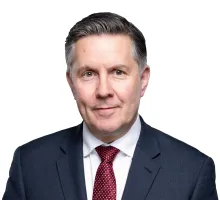
Well, listening in to those comments is Mark Butler, the Federal Minister for Health and Ageing, Disability and the NDIS. Minister, good to have you back in the studio.
MARK BUTLER, MINISTER FOR HEALTH AND AGEING, MINISTER FOR
DISABILITY AND THE NDIS: Thanks very much.
SARA: What do you think of those comments from Patrick, and also that question that he's asking you?
BUTLER: To the question about involvement and listening, I tried to make very clear yesterday there's a lot of work for us to do over coming months with the disability community. I'm meeting with disability organisations later this morning to start that work. We know that the philosophy of this scheme, ‘Nothing About Us Without Us’, is really critical to the confidence that people with disability, NDIS participants and their families have, and I'm utterly committed to that.
But I also understand that change, particularly significant change, is confronting to people. I wish I could say that change is not needed or not much needed, but that wouldn't be the truth. The truth is that this scheme is at real risk in terms of its sustainability. We've not been able to get spending growth under control. The scope of the scheme has expanded well beyond the original intent, and it is riddled with poor practice and fraud and rorts that I think the community, including participants themselves, are increasingly impatient about us cleaning up. And so yesterday, I did announce a plan to do that. It will be a significant reset, but the intention behind that plan is to secure the future for people like Patrick.
SARA: Would you take the opportunity to meet up with Patrick and have a chat?
BUTLER: Well, it sounds like he's from Adelaide -
SARA: Yes.
BUTLER: So that would be a little easier than my meeting requests usually are. I'd be more than happy to meet with Patrick. I'm sure I'd get a lot out of it, and I hope he'd value the opportunity to talk to me directly. I've talked with a lot of people on the NDIS. I started going to disability institutions way back in the early ‘90s, back before deinstitutionalisation. I have a deep sense of the degree to which this genuinely has transformed lives of hundreds of thousands of people. And I want the NDIS to be there for years and decades to come. I want it to continue to be a source of national pride rather than what I fear it is becoming, which is a source of national concern. That's what the plan yesterday was all about.
SARA: There are a number of different cohorts of NDIS participants and some participants, it's almost like a Venn diagram, they're in several cohorts at the same time. What's your message to those people who may have disabilities which are regarded as more moderate, who may be removed from the scheme and the plan is to be supported by other services. What's your message to those people who are listening this morning?
BUTLER: Before I answer that, I'll just go back to the original purpose of the scheme. The scheme was set up to support people with permanent and significant disability, and it has gone well beyond that. There are hundreds of thousands of people beyond what the original intention was, and in no way do I blame those people for that. The fact is that too many of the support systems that used to exist for those people were dismantled or at the very least, wound back significantly so that the NDIS has been the only port in the storm for those Australians.
But as we have done with kids under nine through the Thriving Kids process, we have tried to work through this challenge in a way that makes sure and gives confidence to parents that there will be appropriate support systems in place. Frankly, support systems that are much better suited to people with those more mild to moderate support needs than the population that the scheme- the NDIS was originally built for.
SARA: The states have a part to play in all of this, these big shifts. Some state governments are questioning the shift of responsibility and cost. Let's have a listen to the Queensland Health Minister, Tim Nicholls.
[Excerpt]
TIM NICHOLLS, QUEENSLAND HEALTH MINISTER: On NDIS today, the Federal Health Minister announced devastating changes to supports for our most vulnerable, those requiring aged care and disability services. And he did this after no consultation with states and territories, but with the expectation that the states and territories take, and I use the quotes, greater funding responsibility for the scheme.
[End of excerpt]
SARA: What do you think of those comments and that criticism?
BUTLER: The quote that Tim Nicholls just made reflected the National Cabinet Agreement that his Premier Crisafulli signed a couple of months ago, where they agreed that they would take greater funding responsibility from 2028. I have Premier Crisafulli's signature on that agreement. It wasn't a: this is a good proposal I'd like states to consider. This was a reflection of the agreement that the Queensland Government and every other government signed onto.
SARA: But the details of what was announced yesterday, there wasn't consultation with the states on that?
BUTLER: This was a budget announcement, and no level of government consults with other levels of government on budget announcements. We kick in about 40 per cent of the cost of hospitals. Tim Nicholls does not consult with me about what the Queensland budget will look like before it is announced. That's the way governments operate.
But what I have said very clearly is that things like the eligibility rule changes that will roll out over coming years need to be co-designed with states and territories. They have the legal authority to agree to those changes. I simply can't implement them without the agreement of people like Tim Nicholls and all of his colleagues around the states. But also, even more importantly, they've got to be designing in consultation with the disability community themselves. And that's the process I outlined to take place over the coming months.
SARA: One of the key terms that we've been hearing is functional capacity. How soon could a functional capacity tool come online? This will play a big part in determining who's in and who's out.
BUTLER: What I outlined yesterday is this wouldn't take effect before January 2028, so the year after next. There's a reasonably long runway there, but we've got a lot of work to do. I said over coming months, hopefully by the end of this calendar year, we could bring the disability community, states and territories together to do that work. But it will also have to be the subject of support from a technical advisory group. This is a big job of work to do.
It was always the intention that this would be the way into the scheme, not the diagnosis list that was supposed to be there for a short period of time, but have frankly become the gateway onto the scheme in a way that's pretty highly inequitable. It really depends on your ability to access a specialist, maybe a paediatrician or a psychiatrist, and probably pay a couple of thousand dollars to get that report in the first place after a couple of years of being on the waitlist.
The current system is not working well. It's not working in an equitable way and it's meaning a whole lot of people are ending up on the scheme that it wasn't built for.
SARA: Minister, on a separate issue, Australians aged over 65 will soon have to pay hundreds of dollars more per year for private health insurance after a decision to bring the rebate for older Australians in line with that paid by younger Australians. Earlier in the program we heard Anne Ruston, the Shadow Minister, criticising that decision and putting forward the argument that it will cost taxpayers more in the long run if those Australians go into the public health system. What do you believe?
BUTLER: Our modelling indicates that there will be a very, very small reduction in private health insurance membership as a result of this, maybe about 0.4 per cent of membership. And this is in a scheme that's been growing at about two per cent a year. It's had 22 quarters of consecutive growth, so private health insurance membership is on the up and it has been for several years.
I just think this is an inequitable scheme. John Howard introduced it in the 2004 election period. It was frankly an election sweetener. There is no policy rationale for paying a higher subsidy to older Australians than for the rest of the population. And frankly, at a time where we have to find every dollar we can for aged care, I think if the taxpayer is paying money for older Australians, it should go into aged care rather than what is, frankly, an unsubstantiated, inequitable private health insurance rebate system.
SARA: Yesterday, we spoke with the Aged Care Minister Sam Rae about changes for people having put forward co-payments for things like continence care, showering, dressing and so on. But that won't come into effect until October. If these are core services that older Australians receiving care need, why wait?
BUTLER: As I understand, it takes some time to change the systems here, which are operated by Services Australia. But to the more important point, after we rolled out this new Support at Home program that is working well, it's delivering more packages, higher level packages, so better quality packages. We also have been listening to the community about the impact of that. When we hear the sorts -
SARA: Why didn't you hear them before adequately?
BUTLER: The system's only been going several months.
SARA: But there was dissent before this announcement, wasn't there?
BUTLER: There was dissent before the announcement. And to be clear, we decided that no person, no matter their income, should have to make any contribution to clinical care, really consistent with Medicare principles. But there was always a debate about whether showering and hygiene should fall into that category of clinical care, or is more like an independence activity. And frankly, I think it is the one area that sits on the boundary of those two concepts.
Clinical care was designed to be something delivered by people with university qualifications, like nurses and doctors and such like. But we've heard the message from the community and we've acted on that, and that's what a good government does.
SARA: Mark Butler, we'll need to leave it there. Thank you for coming into the studio this morning.
BUTLER: Thanks, Sally.
Media event date:
Date published:
Media type:
Transcript
Audience:
General public
Minister: