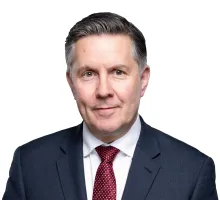
SALLY SARA, HOST: Well, to federal politics now, and the government has again delayed a key element of its aged care reforms. It says a price cap on services for in-home care will not be ready to start on 1 July, deferring it indefinitely. Mark Butler is the Minister for Health and Ageing and the Minister for Disability and the NDIS and joins me now. Minister, welcome back to Breakfast.
MARK BUTLER, MINISTER FOR HEALTH AND AGEING, MINISTER FOR DISABILITY AND THE NDIS: Thanks, Sally.
SARA: You're now announcing a series of measures to ward off higher costs in the absence of a price cap, saying you're acting on feedback from recipients of care. Why weren't these measures in place to begin with?
BUTLER: We put in place a requirement for prices to be reasonable. We were worried about reports of price gouging in this sector, and we've been monitoring that over the relatively short period of time still that that new legislation has been in place. And that's why Sam Rae has outlined a comprehensive package of price protections for consumers this morning that will really crack down on any price gouging by providers and make sure that that the Aged Care Commission is able to make those providers pay back the prices but also get more information to consumers about the sort of prices they should be expecting to be charged for particular services. We'll be publishing that so that they can see what sort of prices there are, in the market and working with consumer groups to get more robust guidelines around reasonable pricing.
SARA: When will the price caps be ready? Why won't you commit to a timeline?
BUTLER: We're worried about the sort of volatility that you see around prices right now. You see that right through the world. And we've got experience of programs that set price caps that effectively lead to price inflation. I mean, frankly, I've seen that in the NDIS where pretty much everyone charges at the price cap in spite of that being something that was intended to drive competition in the sector. We don't want to set in place a price cap that really leads to unintended consequences, particularly that see prices go up. We'll do some more work, particularly through a period that hopefully sees this price volatility, much of which is connected to the war in Iran, start to essentially sort of flow through the system.
But in the meantime, we know how important it is to protect consumers. This builds on the removal in the Budget last week of co-contributions for showering and hygiene, and we want to work with consumer groups to provide even more protections.
SARA: On Radio National Breakfast, I'm speaking with the Health Minister, Mark Butler. On private health, older Australians on disability pensions, some are concerned that reductions in their private health rebates will mean that they can't afford their private health insurance or will have to go without meals or other essentials to afford it. These changes are raised regularly by our listeners concerned about the implications. Are you open to reconsidering this push, or is the door closed?
BUTLER: I recognise this is an unwelcome change for many older Australians. But at a time where we need to find every dollar we can to plough into aged care services, I think continuing to pay people a higher subsidy for their private health insurance not on difference in income, but difference in age, was just difficult to sustain. As you know, Sally, this was a measure put in place by John Howard at a time where the Budget was literally sort of flooding with cash coming in from China, and you didn't have the sort of pressure on the aged care system that we have now. So we've taken this hard, but I think responsible, decision to re-equalise, if you like, private health subsidies based on household income rather than household age and putting every single dollar we save there back into aged care.
SARA: So will you reconsider it, or it's done?
BUTLER: No, this is a Budget decision we considered carefully. I know it's unwelcome to many, but at a time of real challenge in our Budget and the need to put every dollar we can into aged care, we just took the view that where there are 2 households next door to each other on the same income, paying them a different subsidy for their private health insurance simply based on age was not sustainable going forward.
SARA: Let's talk about tobacco. Earlier in the program this morning, we heard from David Allen, who's a publican from regional New South Wales. He's opted not to renew his licence to sell tobacco because of the dominance of the illicit market. Let's take a quick listen.
[Excerpt]
DAVID ALLEN, PUBLICAN: Now, the federal government, Mark Butler, Jim Chalmers, Anthony Albanese, Tony Burke and these characters, they're just saying, you know, we're going to raise this tax up, we're going to invite the black market in and the cops are going to solve the problems. It's not happening.
[End of excerpt]
SARA: Has the government lost control of the cigarette market, and is there a way to turn it around?
BUTLER: Well, first of all, I'll just point out that the vast bulk of the increases in excise happened under the former government, well over 200 per cent. I mean, we've increased the excise by a fraction. But leaving that point aside, I think we all recognise that we've got a very, very serious problem in the tobacco market here in Australia. We see it in many other countries around the world where the flood of cheap illegal tobacco through the global market has really spurred a big increase in an illegal market. Not only is that a very serious problem around crime, but it's also probably the biggest threat we have to our most important public health program, which is to drive smoking rates down.
I know there's a Senate inquiry underway right now. It was taking evidence yesterday. But I think that inquiry is hearing what I've been saying for a while, and that is that there's no simple answer to this. Enforcing criminal laws against bad people is the most important thing to do, and we've lifted our efforts at the border and state governments have certainly lifted their efforts dramatically on the ground. But look, if there are other ideas from this Senate inquiry, of course, we'll look at them.
SARA: So you don't have ideas yourself how to bring it under control, effectively?
BUTLER: Enforcement. We've been saying that. We've dramatically increased our response at the border, and the amount of illicit tobacco being seized at the border over the last few years is dramatically different to what was happening before then. And state governments have shifted their behaviour after discussions with us as well. You see stronger laws and stronger enforcement of those laws, which sees some of these retailers who are selling illegal tobacco being shut down with no notice. I mean, we've just got to get serious about treating this as a criminal activity.
Now, some people say: look, drop the excise. But no-one has put a particular amount that would see legal tobacco being able to compete with criminal product. And until there's some more work on that, frankly, I think this is just really tilting at windmills to say you can just reduce the excise. At the end of the day, this is a legal product. It's coming in from overseas. It's being sold illegally. It's bankrolling the criminal activities of serious organised crime, and it's got to be treated as that.
SARA: A couple of other issues briefly. Diphtheria in the NT and Western Australia – how concerned is the government about the number of cases and now this first death as well?
BUTLER: We're very concerned about this. This is probably the biggest diphtheria outbreak we've seen, certainly for decades. I was up Alice Springs a couple of weeks ago meeting with the Aboriginal Medical Service for the Northern Territory. They're obviously deeply, deeply concerned. Almost all of the cases are Indigenous Australians. We've lifted our efforts around vaccine activity there. You've got to get a booster probably every 5 years if you're an adult. We're working with the NT Government and the Aboriginal-controlled sector to get more vaccines there. But we're also working with the NT Government about other things that we can do to help them.
There has been a report of a death, although the NT Government is still investigating that. We're waiting to see the advice of that investigation, but there's no question this is serious. It's serious in the NT. It's spreading across other parts of the Top End. It's crept below the South Australian border into the APY Lands. So we're working very closely with the NT Government, but also with the Aboriginal-controlled sector.
SARA: Just finally, the World Health Organization has declared the Ebola outbreak in the Democratic Republic of Congo and Uganda a public health emergency of international concern. How is the Australian Government responding?
BUTLER: The Centre for Disease Control has been working with the World Health Organization to monitor this. And late yesterday, all of the chief health officers of the jurisdictions – so, of every state, territory and the Commonwealth – met to consider the work that the CDC is doing. The risk to Australia is still low, but we're monitoring it very closely because, first of all, the case numbers are increasing almost every day there. The number of deaths, as I think one of your reports said, there’s now over 100. And it's a rare strain that's not responsive to vaccines or treatments that we have, so we're monitoring it very closely. We'll be working with the Department of Foreign Affairs and Border Force to see whether any change to travel advice and border screening arrangements needs to take place. But obviously, for those communities in Africa, this is a very serious outbreak.
SARA: Mark Butler, thank you for joining me this morning.
BUTLER: Thanks, Sally.
SARA: Mark Butler is the Federal Minister for Health and Ageing.
Media event date:
Date published:
Media type:
Transcript
Audience:
General public
Minister: