
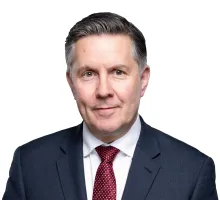
CATHIE SCHNITZERLING: More Urgent Care Clinics, more bulk billing GP’s and cheaper medicine - it sounds like we should all be feeling better. Federal Health Minister Mark Butler is in Brisbane today and he's popped into the studio. Welcome, Minister.
MARK BUTLER, MINISTER FOR HEALTH AND AGEING, MINISTER FOR DISABILITY AND THE NDIS: Thank you for having me.
SCHNITZERLING: You've been visiting some of the Urgent Care Clinics in Brisbane today. How many do we have in Queensland?
BUTLER: We have 25 here in Queensland, with the 26th to open in Caloundra next week. So that will be the last of the 137 Urgent Care Clinics around the country that we promised to open. They'll all be up and running in the timeframe that we committed to, which was the end of June this year. And they're delivering just a terrific service to people.
SCHNITZERLING: How much did it cost?
BUTLER: Well, those costs are all in the Budget - it's a couple of billion dollars over the years that we've been running them. But I have to say, this is an essential missing part of the jigsaw puzzle in what is otherwise one of the best healthcare systems on the planet. Something situated between a standard general practice that your listeners would be familiar with on the one hand, and a fully equipped hospital emergency department on the other.
These Urgent Care Clinics are open seven days a week. They're open extended hours. They're available for walk-in, so you don't have to have a relationship or even an appointment with the clinic. And importantly, they're fully bulk-billed. Already over three million people have gone through these clinics, everyone free of charge, getting high-quality urgent care. Often the doctors and the nurses who are working in there are former emergency department professionals who want a change of pace and a bit of change of lifestyle because they may be getting sick of night shifts or it doesn't really work for them and their family.
And they're really enjoying the work, even the doctors and nurses I spoke to at the three Urgent Care Clinics I visited today are. But now the network is pretty much up and running fully, they'll see about two million patients every single year across Australia. And that not only is giving great quality urgent care to people, particularly the kids who are a very big part of the patients going through - you know, breaking their wrist at footy on weekend, falling off a skateboard, all those sorts of things. And parents out there would know, at the moment if that happens on a Saturday afternoon your only alternative is to go to a hospital ED and potentially sit there for hours and hours and hours in what can be a pretty unpleasant atmosphere for young children. So, it's not only giving great quality urgent care to people, but it's taking that pressure off the hospital ED’s so that they can focus, really, on those life-threatening emergencies - the heart attacks, the serious car crashes - that they were built for.
SCHNITZERLING: And do you have the stats to back up how it's taking pressure off the emergency ED’s?
BUTLER: It's a little patchy and depends on the degree to which state governments share those data with us. And the national reporting of those data have a little bit of a lag in them, so they're looking back to a period where we didn't have huge numbers of Urgent Care Clinics in the program.
But where particular hospitals have reported on their ED presentations, say take Logan Hospital where there's been an Urgent Care Clinic for some time, they're reporting a very significant reduction in what they call semi-urgent or non-urgent presentations - so the broken wrist. I mean, yes, you need your wrist looked after, but you don't need to be attended to at the same level of urgency that a heart attack does, for example. So, we've seen that at Ipswich as well, a substantial reduction in the order of 10 to 20 per cent in those presentations.
It certainly doesn't mean that our hardworking ED doctors and nurses and staff have nothing to do. They're still enormously busy. But it is one of those pressure points that we're starting to relieve from hospitals across the system. And having 137 now up and running, or the 137th from next week, we're starting to get some scale in this very new model of care that we only promised at the 2022 election and only started rolling out in 2023. Very common in other countries. New Zealand's had this for decades. They have very significantly lower presentations to hospital ED’s because it's such a significant structural part of their healthcare system. We see it in the US, we see it in Europe as well.
We've permanently budgeted for it in the future. I'd love to see the network expand again in the future. But at the moment, we're focused on really bedding down these 137 clinics.
SCHNITZERLING: When you do have them bedded down and they are seeing two million people a year, do you anticipate that there are going to be waiting time hotspots as well for an Urgent Care Clinic? Because I've previously anecdotally heard that in some areas you can walk in, as you say, straight away and you'll be seen within half an hour. But in other Urgent Care Clinics, you might go there and have to sit and wait for quite some time because they're in such demand. Is that a problem that you have to anticipate or overcome?
BUTLER: I think that's a problem right across the health system that is going to be with us forever and a day. There will be parts of the day and parts of the week andalso parts of the year where wait times are a little longer - whether you're talking about going to see your GP, going to see your physio, going to hospital, or, going to an Urgent Care Clinic.
Because it's a relatively new model of care and a new staffing model as well, we're adjusting it as we identify these hotspots. Some of the clinics across the country are busier than others, so in some areas we have supplemented the funding so that they can put on a second doctor - maybe not for the entire day.
SCHNITZERLING: So it's nurses, nurse practitioners who do most of the work, is it?
BUTLER: No, it's doctors.
SCHNITZERLING: Just one a day?
BUTLER: There will usually be one on shift, but in some of the busier clinics we're putting a second doctor for, not the whole day, but for busier parts of the day. Nurses are playing a really critical role, they're triaging at the front desks; they're obviously playing a role in the delivery of care. A couple of the clinics I visited today and a number across the country are also using paramedics in a really interesting way. Your listeners may have experienced paramedic care in an ambulance. They are terrifically skilled, particularly in this type of healthcare, and we don't use them enough outside the ambulance services across the country.
And we actually train a hell of a lot of them - we train more than the ambulance services take on. So, it's one of those very rare areas where we have more graduates coming out than the traditional areas of work can actually take in. Alot of paramedic graduates are going and seeking work overseas. So, finding them work in the Urgent Care Clinic network is a really exciting opportunity for them. Whenever I talk to them, they love the work. They love the slightly different type of work practice to being on an ambulance mobile all the time.
This is something we'll adjust to. I expect it to get busier as more people become aware of it. Although, I've got to say, the news of it has spread like hotcakes a bit, particularly among school-aged children parents who've had a kid fall off their skateboard and get very good, high-quality, quick care at an Urgent Care Clinic. You know what things are like for school parents. So just word of mouth spreads very quickly, whether it's at the school gate or on social media. But that'll increase, and I'm pretty confident we'll have to adjust the staffing arrangements over time as well.
SCHNITZERLING: Will we have enough doctors? Because as you say, New Zealand, it's embedded into the system- into the health system there, and I imagine that's exactly what you want it to be here - you want it to be embedded. Will we have enough doctors to work in Urgent Care Clinics?
BUTLER: I'm delighted there's 137, but that's in the context of maybe 7,000 general practices across the country – so, it's still a relatively small part of primary care. We're not building new buildings, if you like. What we're doing is going out to communities, to existing general practices, and saying, do you want to take your practice to a new level?
SCHNITZERLING: But you're working in conjunction with GP clinics.
BUTLER: Yes, very much so. And every time we go out, we get a greater level of interest from general practices in the south part of Brisbane, for example, who want to take their practice to a new level, obviously with funding support from the Government.
We need more doctors in Australia, there's no question about that. We've been working very hard on doing that. And in particular, what I've been really clear about in my time as Health Minister, we need more of those doctors choosing general practice as their preferred career. It used to be maybe half of the country's medical graduates several decades ago would go into general practice so the other half would go into other specialties. That got down as low as one in seven. From one in two to one in seven. Now, we've started to turn those numbers back around. This year, we're training more junior doctors in general practice than we ever have before in this country. Last year was a record, this year's another record. That pipeline obviously takes a little while to translate into actual practice - it takes some years to train them. But we're going back in the right direction.
I think that reflects the fact that we've been really, really determined to lift the profile of general practice again. Because we know, and anyone working in healthcare knows, your listeners as patients know, well-functioning general practice is the backbone of a well-functioning healthcare system. If general practice starts to slide, and we had seen those signs, then the impact reverberates through the hospital system, through poor health in the community.
SCHNITZERLING: Minister, could I just ask you one more question which is about over-65’s and removing the private health rebate for people of that age group. Do you expect to get more heat about that, particularly tonight as you're going to the Everald Compton Community Champion Medal? You're about to award someone who is in his 90’s. He might have something to say about removing private health rebate for over-65’s.
BUTLER: First of all, it's going to be such a pleasure to be with Everald Compton, who many of your listeners would know. I mean, he's not just a great Queenslander, but a great Australian. You and I were talking off-air while the news was on - he founded National Seniors when he was about 44.
SCHNITZERLING: Young to be a senior, yeah.
BUTLER: Very young to be thinking his priority should be setting up an aged advocacy organisation. But it's been such a valuable addition to public discourse in the country, and Everald’s just a champion. I want to be really clear. We are not removing the private health rebate for over-65’s.
SCHNITZERLING: Because I'm nearly there and I'm concerned.
BUTLER: We all want to be there, and I'm nearly there too. But I want to be really clear - the rebate will still be in place for over-65’s. What happened some years ago though was that the Howard Government added a premium for over-65’s. So, instead of getting the same rebate that a household on a particular income would get- who happened to be in their 40’s or 50’s, you'd get a slightly higher one - not based on your income but based on your age. At a time when budgets are really constrained.
SCHNITZERLING: Including that for over-65’s.
BUTLER: Yes. I'm talking as a minister at a time when government budgets are really constrained, and particularly, we need to find more funding, pretty much every budget for aged care in particular, it's very difficult to justify a policy that pays two households living next door to each other, different levels of support for their private health insurance, not based on their income because they might be on exactly the income, but based on their age. And at a time where we have to prioritise investment into aged care, because aged care demand is skyrocketing at rates we've never seen before.
SCHNITZERLING: Waiting lists are terrible, yes.
BUTLER: All of those babies from the 1940’s, including my parents, are turning 80 right now.
SCHNITZERLING: So you're taking the premium away
BUTLER: We are taking the premium away and investing every one of those dollars...
SCHNITZERLING: Into aged care.
BUTLER: Into more beds, more home care packages and better support for older Australians. We can't just continue to find money from essentially nowhere to invest in aged care at the rate we need to invest in aged care. I've said publicly before that the rate of ageing is so fast right now because of those baby boomers hitting that critical age of 80. We need to open a new aged care facility in Australia every three days.
SCHNITZERLING: To keep up.
BUTLER: For the next 20 years, not for a little period. That's going to take enormous investment. It's going to take state governments putting their shoulder to the wheel to clear planning laws so we can actually build these.
SCHNITZERLING: Because it's a Federal Government responsibility.
BUTLER: It's a Federal Government responsibility, but we have to get planning approval for all these facilities. We've got to find the money. We've got to get the planning approval. Otherwise, older Australians increasingly are going to find it hard to get the care and support that they deserve from a country they built.
SCHNITZERLING: Minister, thank you very much for your time. I'll let you go because I'm sure Everald will have lots of things that he wants to talk to you about tonight.
BUTLER: I'm sure he will. Thanks for having me.
SCHNITZERLING: Thank you. This is the Federal Health Minister, Mark Butler, who has joined us this afternoon to talk about all our Urgent Care Clinics, which are filling the gap in between GPs and emergency care.
Media event date:
Date published:
Media type:
Transcript
Audience:
General public
Minister: