
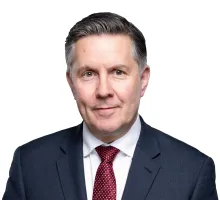
OLIVER PETERSON, HOST: Major changes are coming to the National Disability Insurance Scheme after Federal Parliament passed a suite of reforms last week. The government says the changes will save the NDIS from itself by ensuring it's sustainable for the future and by further cracking down on fraud. Critics say these are the biggest cuts to a government program this century and leave some of our most vulnerable Australians in limbo between support services.
Mark Butler is our Federal Health Minister and he's just wrapping up a trip here to Perth. Good afternoon and welcome back to Drive.
MARK BUTLER, MINISTER FOR HEALTH AND AGEING, MINISTER FOR DISABILITY AND THE NDIS: Thanks, Oly.
PETERSON: Appreciate your time there, Minister. Listener Mattkicks us off with this question. He wants to know what changes will this new legislation mean for those currently on the NDIS with autism, particularly children?
BUTLER: Well, that depends on the age of the child. What we've said around the Thriving Kids program - I heard you mention that in your intro - is that, right up until the end of next year, young children will continue to be able to be enrolled on the NDIS in the same way they had over the last several years. But from 1 January, 2028, there will be a new program established by all states called Thriving Kids which will be there for children with more low to moderate support needs.
Remember of course Oly, the NDIS was set up with the intention of supporting people with significant and permanent disability, not people with more low to moderate support needs. Frankly, when they are children in particular those support needs are better delivered in a range of programs that are very different to the NDIS. Many of those programs used to exist before the NDIS but in far too many cases around the country they were either dismantled entirely or, at the very least, they were reduced significantly. So, parents have been without that port, if you like, in a storm, and the only port they've had is the NDIS.
PETERSON: Well, we know the projection is 160,000 people will be removed from the scheme over four years. How many West Australians, adults or child, will find themselves removed from the NDIS as a result of these changes, Minister? Because we heard one estimate was about 11,000. Is that still accurate?
BUTLER: I don't have that figure off the top of my head, but it will be relatively even across the country. I mean, if you have a look at the numbers on the NDIS, they're, by and large, pretty much the same per head of population, at least in the big states. So, you'd see the proportion, about one tenth of the country lives in Western Australia, so about that would be impacted by the changes that went through the parliament last week.
PETERSON: You were just talking about Thriving Kids being that new support system for children aged eight or younger with developmental delays or autism, with low to moderate support needs. It will be managed by the state. So, where is that program at, Minister?
BUTLER: We've been going through a process over the last several months of negotiating with states about their plans. They've had to produce implementation plans. They've done that in every case except Queensland - we've got a bit of an issue, frankly, getting Queensland on board. But all of the other states and territories - frankly, Labor or Liberal alike - have gone through the hard work of developing those plans and they're in very good shape.
In addition to that they committed at the National Cabinet meeting to put into this program, we're also allocating a fair chunk of our investment directly to the states so that they can deliver those services. Hannah Beazley here, on behalf of the WA State Government and the people of Western Australia, has done a terrific job in developing that implementation plan. I think it's in great shape. So, from 1 October this year, those services can start slowly to be built up over the following 15 months so that they're ready from 1 January 2028 to roll out fully.
PETERSON: Yeah. Premier Roger Cook has been critical, though, of your approach to this - he called it unilateral. Have you been collaborative enough, though? And do you think WA will be ready to receive all the children who need to be transitioned?
BUTLER: I'm very confident about that. I'm a little worried about Queensland, as I said, but I'm very confident the other states are in really good shape. As I said, a lot of these services existed for many, many years before the NDIS. And frankly WA, probably more than other jurisdictions, kept a lot of those services in place at some level at least so that they now can be simply scaled up.
PETERSON: Understandably, parents are worried they're going to fall between the support gaps. How's it going to roll out, though, to guarantee nobody is left behind? And will children be moved en masse to Thriving Kids at the start of ‘28, or will it be staged?
BUTLER: For kids, for Thriving Kids, so for kids under the age of nine, it will really be a program that's there for new entrants from 1 January, 2028. We've said that kids who are enrolled before the end of next year - so they might be on the scheme now as we're speaking today, Oly, or they might be enrolled on the scheme in the usual way over the next 15 or 16 months - they'll be able to stay on the NDIS, so effectively what we describe as a grand-fathering arrangement or grand-parenting arrangement. But for new kids who might be of that age - two, three, four, five, six - experiencing some developmental delay or other support needs potentially associated with autism, they will be able to access those programs of Thriving Kids.
Frankly, they'll be very different types of service to many in the NDIS - a lot of them will be more group-based. They'll be located in many of the places that parents will be more familiar with in their own communities where they live and their children learn and play, and I think will be very familiar to service providers who used to provide these services before the NDIS
PETERSON: The Federal Minister for Health and the NDIS, Mark Butler, is my guest this afternoon on 102.5 ABC Perth. This is Drive with Oliver Peterson at 4:13. I will go to more listener questions in just a moment. But sticking with the NDIS please, Minister, under your proposal, the original proposal, the 2030 cost of the NDIS was estimated to be at $55 billion. Why is it so important for you to rein in spending on that program for our most vulnerable when, at the same time, the government is prepared to spend hundreds of billions of dollars on AUKUS for example? Are your priority's right?
BUTLER: It's pretty difficult to sort of trade off social programs like the NDIS or Medicare against our national security - it's not something we customarily do. Obviously when we set budgets, we look across the whole sweep of demands that governments have to deliver the sorts of services and protections that the community needs.
The point I make about the NDIS I think over the coming years is that it will continue to grow. It won't grow anywhere near as fast as it has been over the last several years. It's grown far too fast, frankly, and become a very significant issue, not just for the budget but dislocating a whole lot of services and other programs like health and veterans care and aged care and education. So we did need to start to get that growth under control, but it will continue to grow. It will still be the biggest social program we have in this country outside of the age pension, way bigger than Medicare, several times bigger than the pharmaceutical benefit scheme. And it will still be the centrepiece of the most comprehensive system of support you'll find anywhere in the world for people with disability - not just the NDIS, obviously, but the disability pension, a range of disability employment programs. So yes, we are constraining its growth, but it will still be very, very big program that continues to grow.
PETERSON: Natalie wants to ask you about dental health. She says good dental health has proven benefits for general health, including preventing heart disease. It's also prohibitively expensive for many Australians. Why aren’t teeth and gums considered body parts like any other, covered under Medicare? And if not for everyone, would you consider means-testing, including it?
BUTLER: At the risk of giving you a bit of a history lesson, the only reason really that dental was not included in Medicare or even Gough Whitlam's version of it, Medibank back in the 1970s, was a pragmatic decision at the time by Labor governments that they could only fight on so many fronts. Introducing Medicare, people might remember, was hard fought. It was opposed by the opposition, it was opposed by doctors groups who threatened to go on strike particularly around bulk billing. It was opposed by many in the media. And it was a hard fight for many years to deliver the Medicare that we have today. And I think Hawke and Whitlam both took a pragmatic view. They couldn't fight the dentists as well as all the doctors. Now, it doesn't logically make much sense not to have oral health covered. I accept that point. Oral health is not just important for the mouth. It has a whole lot of other implications for gut health and cardiovascular health. Our party only had a national conference, the Labor Party, a few weeks ago. And again, there was a vigorous debate about having an ambition to cover dental care under Medicare in some way. We have a program we introduced when we were last in government for children of families on family tax benefits. So a means-tested program for kids. For kids who take that up, it's delivered much better oral health than we might have had 10 or 20 years ago. But one of the things I’m a bit frustrated about is we’re not doing better as a government in getting a high uptake of that. Less than 40 per cent of eligible children access that program of free dental care. It's like $1100 worth of dental care every two years.
So I think sort of slowly but surely we'd like to tread into this area. I've tried to be honest with people that I feel that my job right now is to get the Medicare that we currently have humming, performing as strongly as the community would want it to perform. But then over time, I think the Labor Party's always had an ambition of starting to creep more into dental care covered by Medicare.
PETERSON: Alright, so watch this space, Natalie. Chris asks, why does Medicare cover the blood tests, the cancer markers, CGA, that neuroendocrine patients, cancer patients need to have on a regular basis?
BUTLER: I can't answer that off the top of my head. I'm not familiar with that particular blood test. But what I can say generally is that Medicare covers tests that are recommended to us by a committee of experts that has overseen Medicare for the whole 40 years. It's called the Medical Services Advisory Committee. It reviews applications for particular blood tests or other services that would be paid for under Medicare. There's maybe 5800 different items covered by Medicare. They've all been recommended by that group. That's the way it happens. It's the way the PBS operates for medicines covered by the PBS. They're recommended to Government by a committee of experts that kick the tyres pretty heavily on these tests to make sure that they’re clinically effective, they’re cost effective. Now, I'm not familiar with that particular blood test.
PETERSON: Right.
BUTLER: We have a lot that come before us because there's such amazing technological change happening right now, Oly, in health as in so many other sectors of the economy, that we're living through this sort of turbocharged period of discovery where there are new medicines, new blood tests coming onto the market all the time. We try to make sure that they're covered by Medicare or the PBS as quickly as possible, but that's the work of clinical experts, not politicians.
PETERSON: Minister, you've been at the opening of a new private hospital in Midland today. What can you tell us?
BUTLER: Well, it's a terrific hospital, the Midland Private Hospital, which has been built and will be operated by St John of God Health Care. Your listeners will be very familiar with this amazing organisation that's been servicing Western Australia for 130 years. But I first went out to Midland as a very, very, very junior Health Minister probably 16 or 17 years ago when there was nothing there for health services. Jim McGinty had decided to build a new hospital there to replace the Swan District Hospital and now it's an amazing health precinct. You've got the Midland Public Hospital which has now taken the 60 private beds back as public beds. We'll be expanding that with investment between the Albanese Government, the Cook Government. You've got the Curtin Medical School out there, nursing places and now this terrific new state of the art private hospital. For example it will have a cath lab there, which is a really important testing equipment for cardiac disease. That's the first cath lab in the eastern suburbs of Perth, public or private. So instead of people from that community or the Hills or the Wheatbelt having to drive into Perth to get that sort of test, that will now be available in the east. So over really just a short 20 years or so, that precinct has become a state of the art health precinct, as it should be for those growing eastern and north eastern suburbs of Perth.
PETERSON: Let's go to Rockingham. Peter's got a question for you. Good afternoon. Go ahead, Pete.
PETER, CALLER: I'm an 87-year-old pensioner who has my own possible benefit cover. I just managed to do it. And now they're taking the government subsidy away from it. They put me in a very awkward position. Why is he doing it to me? They couldn’t explain why are you doing it?
PETERSON: Minister?
BUTLER: Well, to be very crystal clear with your listeners, we're not taking away the private health insurance subsidy that is paid to Australians. What we are doing is changing the rate to ensure that it's effectively age neutral so that the Government will pay a subsidy for people's private health insurance that is based on their income rather than their age. What we have right now is that two households living next to each other on exactly the same household income will receive a different level of taxpayer subsidy depending on whether they're over 65 or under 65. The original system that was put in place by Howard did not include that differential treatment according to age and we're returning to that original design. And every single dollar that we effectively save through that change will be invested in new aged care services that, frankly, we just have to start putting in place if older Australians are going to get the care and dignity that they deserve.
PETERSON: Do you accept, though, our public health system will be busier as a result of these changes?
BUTLER: No, that's not our modelling. Some of the modelling put about by the private health insurance industry itself thinks that it will, but our modelling says no, there won't be a material impact on private health insurance membership. And more importantly than the insurance industry modelling or the Government’s modelling, there was some independent modelling only a couple of weeks ago from the University of Melbourne that indicated that the impact they think this will have on insurance will be even smaller than the Government projects as well. So we don't think there will be a material impact on public hospital activity.
PETERSON: Minister, we really appreciate your time while you've been here in Perth and we'll see you back in the studios on your next visit.
BUTLER: Thanks for having me.
PETERSON: That is the Federal Minister for Health and the NDIS Mark Butler, joining us live on Drive.
Media event date:
Date published:
Media type:
Transcript
Audience:
General public
Minister: