
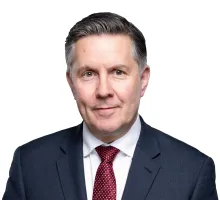
RAFAEL EPSTEIN, HOST: The Federal Government says that there are now more doctors doing more bulk billing. Tell me if you are seeing that, if you are feeling that. And then there is the ever-present issues, so many procedures you go through the private system because you’re encouraged to, you’ve got private cover, and it still costs you a bomb, 1300-222-774 is the phone number. Mark Butler is the Federal Health Minister – thank you for coming in.
MARK BUTLER, MINISTER FOR HEALTH AND AGEING, MINISTER FOR DISABILITY AND THE NDIS: Thanks, Raf.
EPSTEIN: Let’s start with private health. Is private health cover a rip-off?
BUTLER: We are very careful about the way in which we approve fee increases every year. They’ve got to go through the health minister. I’ve got the first applications coming through from health funds about increases they’d like to pass on to members in April. We’ll kick the tyres very heavily on that, as we did last year and the year before. We managed to keep health insurance premium rises over the last few years below inflation over that period of time. They are facing pressures in that their membership is getting older and so claiming more, particularly for procedures that are quite expensive in hospitals. But we’ve got a very good system in Australia. It was designed deliberately this way by Bob Hawke 40 years ago not to take over the entire health system in the way the British did with the National Health Service, but to have a mixed system – public delivery through universal health insurance, through Medicare. But also, the ability of people to have private health insurance for some of those additional procedures, usually elective surgery, maybe maternity services and extras as well that people would be aware of. I think that system is the right one. Obviously, it’s under pressure like everything in health is.
EPSTEIN: Can I push you on the words under pressure? It feels like a rip-off to a lot of people.
BUTLER: I get that it feels very expensive, particularly if you're not claiming. If you claim and you look at what the insurance is paying for in terms of hospital fees and such like, it can cover a very, very expensive procedure. But it is a big impost on households. I get that. I do everything I can every year to keep premium rises to the absolute minimum that is necessary to keep the thing viable.
EPSTEIN: The AMA doesn't agree with you. I think the AMA say, the premiums are going up far beyond the cost of even the health inflation figure. So, who's right there? You said you kept the premiums under inflation. They say they're beyond even health inflation, which is a bigger number.
BUTLER: Over the three years I’ve approved rises, the increase has averaged a smidge over 3 per cent. 3.1 or 3.2 per cent, which is below health inflation. That tends to run more like 4 or 5 per cent. As you know, inflation, particularly in the early part of that period I'm talking about, was running higher than 3 per cent. So compared to what is happening in other insurance products that are recording double-digit increases, we've managed to keep a lid on those premium rises.. I’m happy to have a discussion with the AMA about that. But I'm under no illusion that a lot of households are really struggling to pay their private health insurance premiums at a time of really big cost of living pressure on them.
EPSTEIN: I'll come to specialist fees in a moment, and I'm sure you want to talk about bulk billing rates. Mark Butler's with you, the Federal Health Minister. But if I can zero in on the private health funds one more time, the AMA wants the insurers to give us back 90 per cent of what we pay them in premiums. I think at the moment it's less than 85 per cent. Do you have the power to force the insurers to give us back more of the premiums?
BUTLER: I said to insurers, I can't remember now whether it was late last year or very early this year, that figure that had dropped from the high 80 per cents to the lower 80 per cents needed to jump back up. That is effectively the amount of their income as private health insurers that they're paying, to hospitals and health providers, to deliver services. I said if it didn't jump to a level I thought was appropriate, I would look at legal options to force it.
EPSTEIN: People might want you to do more than look. They might want you to just force them now.
BUTLER: I've got to pass laws through the parliament, so we tried to use pressure on them. That figure has increased. There's no question that figure has increased by a number of percentage points over the course of this year. I've welcomed that in the last few months. I've said also to insurers publicly and privately that it’s not quite where I want it to be, and I'd like it to continue to trend up.
EPSTEIN: Are you going to pass a law?
BUTLER: I'll see how it goes over the course of the next little while. I've made it very clear that those sorts of things will be much more an explicit part of my decision making in terms of what premium increases I approve or don't approve in the period over the next couple of months when I'm doing that process. Insurers are very clear that they weren't paying enough back to members effectively. Some insurers were recording big increases in their profits while that was going down, that return to services. Some insurers were also putting a lot more money into management expenses –effectively the operation of the insurer rather than the delivery of elective surgery or maternity services. I think they've had a big wake-up call, not just from important stakeholders like the AMA, patient groups and such like, and the hospital sector themselves that feel like they were being short-changed, given that they're the front line of the delivery of these services. But I've also made it very clear they've got to do better.
EPSTEIN: It's 19 minutes to nine o'clock on 774. Mark Butler is the Federal Health Minister. Let's see if we can get to calls, just especially on your out-of-pocket costs, 1300-222-774. We'll see if we get a chance to have a question or two put to the Health Minister. When it comes to strong-arming other people in the system, let's look at specialists. A lot of specialists are great. I'm not complaining about any specialist I've seen, but a lot of specialists charge a tonne of money. Can you pass a law to stop them doing that? Can you force them to lower their fees?
BUTLER: Our first term priority really was to turn around bulk billing in general practice. General practice really is the backbone of a well-functioning system. That's starting to turn around. The big investment in bulk billing only took effect last month, from 1 November. If you look at November's stats, there were 11 million bulk billed visits to the GP in November. There were 7 million in October.
EPSTEIN: So a big month.
BUTLER: An additional 4 million bulk billed visits to the GP. Here in Melbourne, we've gone from maybe 400 practices bulk billing all of their patients to almost 800 in just one month. Hundreds of practices in Victoria were charging gap fees in October, are now bulk billing all their patients all of the time. I'm about to go and visit one of them in Elsternwick after we've finished this morning. I've said very clearly to doctors’ groups though, our second term priority is specialist fees, so non-GP specialists, because they are, frankly, I don't use these words lightly, in some areas getting out of control. …
EPSTEIN: So is that a rip-off sometimes?
BUTLER: WI think it is completely a rip-off sometimes because there is no rhyme or reason to it. What we're finding is that in, for example - I don't have a Melbourne stat off the top of my head - but a colonoscopy in Sydney would cost an average of $300 in out-of-pockets right now. But some people, some surgeons are charging nothing, and some are charging $800. It makes no rhyme, no reason. There's no difference in quality between these two things. It's just because some of them can.
EPSTEIN: Can you pass a law? Is it hard to?
BUTLER: We're looking at that because traditionally what we've done, there are some restrictions in the Constitution on what we can do, what we can force doctors to do. That was a bizarre little settlement in the late 1940s when the Labor Government was trying to make a whole lot of changes to our health system. Robert Menzies and the doctors’ groups and the Labor Government sat down, and there is a restriction in the Constitution. But I'm looking at these options very carefully because traditionally, doctors have been allowed to charge a modest fee on top of the Medicare rebate, but it's gone well beyond that in some areas. I was just speaking to a patient here in Melbourne who has cataract surgery planned over the next little while. They are going to be charged a gap fee that is four times the Medicare rebate. That is not a modest fee on top. That is a huge fee. And what we know is that this is not just an impost on people's hip pocket. What we know is that people are choosing not to go to the specialist…
EPSTEIN: Yeah, that’s the problem, right?
BUTLER: And not to have important procedures because of the cost, so it is impacting the health of the nation as well. What we're doing, first of all, is to put some sunlight on this. I'm going to require doctors to publish all their fees. There was a voluntary system introduced by the former government, but it's failed. Of the many, many thousands of specialists, literally only 70 published their fees. Not 70 per cent, 70 doctors published their fees. Everyone else is still keeping it secret. We're going to publish them for them. We've got access to them. We're going to put them all on the website.
EPSTEIN: And sorry, that's all specialists?
BUTLER: All specialists covered. There are some niche areas not covered. I you go to a GP and you the GP says you need a colonoscopy, or you need cataract surgery, you can sit down and have a look at the specialists in your area and compare their fees and shop around.
EPSTEIN: And when's that comparison?
BUTLER: We've got to pass a law to do that in the Parliament. I've also said that we're going to look at other options to potentially control fees. I got the doctors’ groups in along with patient groups and some other stakeholders like the AMA and others into a roundtable, full day roundtable in parliament several weeks ago. I said to them, look, from my point of view, all options were on the table. This is now not just a serious affordability question, it is also now starting to impact access to healthcare. We’re determined over this term of Parliament, we think we’ve turned the corner on bulk billing for GP visits. This is now one of my big priorities.
EPSTEIN: I will get to calls in a moment, but should I worry? Like, you're threatening to pass a law with the private insurers and so they give us back a bit more of the premiums. You're threatening to pass a law with the specialists and maybe some of those fees will come down. Why don't you just bite the bullet and just say, no, you can't do this, you've got to give the insurers, you've got to give the money back. Specialists, you've got to be within a band.
BUTLER: There are areas where we've asked for behavioural change, we haven't got it and we're passing laws. I've talked about one with the Medical Costs Finder. Another one is we've required pathology providers and imaging providers, so x-rays, CT scans, blood tests, all of that, to upload their results to the My Health Record because they weren't doing it. Millions and millions of tests that people were undertaking were just disappearing into the ether so that people had to go back and get the test again. Because when the doctor said, have you had a cholesterol test, in the last year or two? And you said, yes, no one could find where it was. We are passing laws to make the system operate much more effectively where we don't get the behavioural change from providers that I've demanded.
EPSTEIN: Mark Butler is the Federal Health Minister. I want to get onto the meningococcal B vaccine issue as well. But Brent's calling from South Melbourne. Minister, if you just pop your headphones on, it'll make it much easier if you hear what he's got to say. Brent, the Minister can hear you. What would you like to say or ask?
CALLER: Thanks, Minister. I think it's a bit flippant to say that the health insurers need the tyres kicked. I think they need to kick up the bum with their premium risers and what they're covering. I've been in the private health system as a professional for 30 years, and I'm quite judicious and lucky to be able to choose where I go. I try and find someone who is going to not leave me out of pocket, but I'm paying for gold cover that I can barely afford just to cover my wife, should her breast cancer return. So that's a lifelong cost for me. The continued rise is just hurting.
EPSTEIN: Is your question or your query just, like, to try and make that top level cover cheaper?
CALLER: It's to spread the rises out. We know costs go up.
EPSTEIN: Spread the rises out, okay.
CALLER: That's natural but spread it out. But the second part to it was you talk about access to the health system. The private health systems provide emergency departments, and I know at times that's been questioned, but when patients are getting charged up to $500 to get off an ambulance stretcher, I think that's more than unreasonable and it's unclaimable, unrebateable. Even stopping something like that might improve the load on the rest of the health system.
EPSTEIN: Okay, so the emergency fee, and he's got to pay the top tier.
BUTLER: As private hospitals sit down with us and work out what a viable model is for their operations in the future. . What we really want is to have universal access to urgent care and emergency care. That's why we're building all the Urgent Care Clinics that people can access seven days a week, fully bulk billed for things that need to be seen immediately, but perhaps don't need a fully equipped hospital emergency department so that our public hospital EDs are able to cope with the genuine once-in-a-lifetime emergencies.
BUTLER: To the fee increases Brent raised, all I can say is we spend pretty much every summer really kicking the tyres and maybe kicking them up the bum a little bit as well. Last time, for example, they came in with an application for fee increases of over 6 per cent. In the first instance. We kicked that progressively down to about 3 per cent, so really half of what they were asking.
EPSTEIN: Okay.
BUTLER: As I say, at a time of relatively high health inflation. Now, I know that is still a big impost on households. I know how much this hurts households and important it is for people like Brent, given what his wife is going through, how important they feel it is to continue to hold health insurance and the sacrifices they make elsewhere in the household budget to do it. But all I can try to give them confidence about is that we work very hard to keep those increases to the minimum.
EPSTEIN: The Federal Health Minister is Mark Butler. I might do one more call, Minister. We will get to the education sector shaking their fist at Rupert Murdoch's newspapers as well. But Brian's in Mornington. What's your query about, Brian?
CALLER: G’day, Rafael. I just want to quote myself. I need urgent eye surgery. If I don't have it soon, I’ll be going blind. I am 85. The public system has a long waiting list. I can't use it. I'll be blind by the time they get around to it. I've got to find $10,000, possibly more up front. I've got to find it now. My only asset is age pension. I've got nothing else. I'm not in private health insurance. This has got to be done in a private hospital by a private surgeon. It's all organised for next week, actually.
EPSTEIN: Who's going to pay?
CALLER: Well, I've got no choice. I've got to find it - rob a bank or something to find the money. It's not that bad. I can scrounge it up, but it's left an awfully big hole in everything.
EPSTEIN: Brian, let's see if I can get an answer from the Health Minister. That's terrible.
BUTLER: It's a terrible, terrible case, and there are many like it around the country, I know every day, that Brian talks about. The other point, there was good coverage of this over the course of this morning, a lot of people contributing to the debate in the newspapers and beyond, and the point the private health insurers make is that public hospital systems also need to bear some of the load here. The waiting times for elective surgery, for outpatient visits in some of our state hospital systems really have blown out enormously. We're providing substantial additional funding to state hospital systems here in Victoria, 12 per cent increase this year in hospital funding. Yes, they're under real pressure, but this can't just be a private system responsibility. We need the public hospital systems bearing some of the load as well.
EPSTEIN: Just before you go, Minister, I don't have time to get into the funding fight between the state and federal governments. We'll do that another time. We have had a number of conversations with a mother, Norliah, who lost her son to meningococcal B. She wants the Federal Government's Pharmaceutical Benefits Advisory Committee to subsidise the meningococcal B vaccine for people under 18 across Australia. Is that going to happen?
BUTLER: I hope it does happen. I know that families talk to my office. I've spoken to families in South Australia, my state, who have suffered the devastating loss of one their teenage children so suddenly, as happens with meningococcal B. As a result of that, in South Australia, the State Government has been funding meningococcal B vaccines for under-fives and for teenagers between the ages of 15 and 19. They do that in the school system. I think Queensland does that as well, and Tasmania is about to introduce it as well.
We've had a process to have the advisory committee you talk about look at this. They looked at several years ago and didn't approve it being added to the immunisation program, which is the program that provides free vaccinations. It has to go through that process as a matter of law. I can't just add meningococcal B to the National Immunisation Program. But I've been urging the company to take it back to the advisory committee for another look because we've got more and more advice, including from our immunisation experts, that that should be added to the NIP. They haven't responded to that yet. We've been urging them through my office and through the department quite a bit. I've only in the last several days asked my Department for some options about other ways in which I can intervene in this process and move the thing along. Obviously, it's got to go through the proper process as a matter of law, but I would love to see a reconsideration of this question because I know just the devastating loss this is causing to some families, like the family you instanced here in Melbourne.
In the interim, as I said, some state governments have stepped into the gap while we go through these legal processes. That's not just happened in relation to meningococcal B. It also happened for maternal RSV vaccines which is important for protecting newborn babies. Now we've got that on the National Immunisation Program. The heavy lifting the state governments did helped fill the gap. We've now taken the load. That's rolling out as free vaccination on the NIP. I'd love to see that happen in meningococcal B as well.
EPSTEIN: Thank you for coming in.
BUTLER: Thanks, Raf.
EPSTEIN: Thanks for taking the questions as well. That's Mark Butler. He is the Federal Health Minister.
Media event date:
Date published:
Media type:
Transcript
Audience:
General public
Minister: