
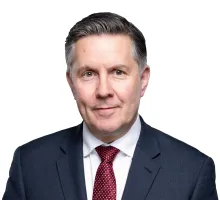
GRAEME GOODINGS, HOST: And my very special guest in the studio is Federal Health Minister, Mark Butler. Minister, good morning to you.
MARK BUTLER, MINISTER FOR HEALTH AND AGEING, MINISTER FOR DISABILITY AND THE NDIS: This very chilly Friday morning.
GOODINGS: As we were saying though, you don’t mind a chilly morning if the day ends up like it is at the moment.
BUTLER: It’s a beautiful day, but just doesn’t seem to be warming up at all.
GOODINGS: No – if you stand in the sun, but out of the sun it’s not so good. Busy week in federal politics?
BUTLER: Yeah, very busy week this one, with some significant developments over the last 24 hours – some of them very positive, some of them pretty deeply distressing. The news from Laos about the investigation into Holly and Bianca, those two 19-year-old Melbourne women who did their rite of passage – I mean, how many parents have waved their young adult children off for a trip overseas, and they didn’t come home because of methanol poisoning, along with four other foreign nationals who lost their lives from other countries, America, the UK and some others. Some pretty distressing news, frankly, about the investigation there. I know the hearts of those parents are breaking all over again. They’re deeply disappointed. We’re deeply distressed.
So yes, busy. Some good news, but that’s been deeply distressing news.
GOODINGS: I guess there’s not much the Australian Government can do about that.
BUTLER: We’ve been talking to them at the highest level. The Prime Minister’s talked to his counterpart about this. The Foreign Minister, Penny Wong, has been engaged regularly and will again see her Foreign Minister counterpart at the ASEAN meeting next week. We've called the Laos ambassador in this morning to make our position very, very clear with them. We understand this is a very poor country and we offered, after this absolute tragedy happened, that if they needed some policing resources to conduct a proper investigation into what happened and gather the evidence for a prosecution, that we would send Federal Police resources over there. Unfortunately they rejected that offer, and now we're left with the deeply distressing news that it doesn't appear anyone's really going to be held accountable for the loss of six innocent young lives, including Holly and Bianca here from Australia.
GOODINGS: Tragic story. 8223-0000 is the number to ring if you would like to pose a question to Health Minister Mark Butler. Some positive news though regarding the PBS and crucial MS drugs.
BUTLER: That's right. There was a possibility only pretty recently, frankly, that two very widely used, very effective drugs for Australians living with MS might be withdrawn from the PBS. If that happened, what that would mean for those patients is that the cost of that medicine would go from maybe $25 a script to as much as tens of thousands of dollars every single year. I asked the medicine experts to have a very quick look at this. They gave me advice in recent days, which I've accepted, which means that those drugs will not be taken off the PBS. So all of those Australians out there with MS whose lives have been changed by these drugs can be confident that they're not about to be ripped off the PBS.
We're going to do a broader review about the range of medicines available for Australians with MS. If people have watched this area for a long time, some of these medicines that have been available over the last many years, these disease modifying therapies, have really changed, transformed the lives of people living with this very debilitating condition, just transformed their ability to live lives, do their work, be with their family. The last thing we want to see is that transformation and the stability in the condition that these drugs bring interrupted by these pricing decisions.
GOODINGS: Minister, are you ready to take some calls?
BUTLER: Absolutely.
GOODINGS: Paul(*), good morning.
CALLER PAUL: Good morning. Good morning, Minister.
BUTLER: Hi, Paul.
CALLER PAUL: I'd like to know, when are you going to get my vote back and save your job by returning the concessions to the pensioners and older people for the health fund rebates? That decision is appalling, and your government should be ashamed to penalise pensioners for that decision.
BUTLER: Graeme and I have talked about this decision, which we didn't take lightly before on this show, which is to go to a position which used to be the case where everyone received a level of subsidy for their private health insurance membership that was determined according to their income rather than their age, so that a household in their 50s next to a household potentially in their 60s would receive the same level of support for private health insurance membership if they were on the same income. This is, as I say, not a decision we took lightly. Every dollar that we save will be reinvested into the real need we have for aged care services expansion.
CALLER PAUL: But we haven't got an income. Minister, we haven't got an income. We are pensioners. Now, you've taken that money away. A lot of us won't be able to keep our health funds up, and then we'll return to the [indistinct] to the public system and then block up the hospitals again, even more than they are now. So it's your decision that's going to cause that problem.
BUTLER: The taxpayers, or government on behalf of taxpayers will continue to pay a quarter of the cost of private health insurance membership for pensioners and for people earning the equivalent of the pension out there who are under 65.
CALLER PAUL: That's not good enough for the pensioners. That's not good enough for the pensioners, and you know that. You don't have to pay it.
You're fully covered. You are well looked after as a politician. The pensioners are struggling, and they will struggle more.
BUTLER: I've said, Paul, this was a hard decision.
CALLER PAUL: It's a decision that should be reversed.
BUTLER: Yeah, I’ve heard that, Paul.
CALLER PAUL: And you will pay for that at the polls.
BUTLER: This was a hard decision to go back to the position that used to be the case, that everyone received the same level of health insurance membership subsidy according to their income. Whether that was through a government payment or a pension or earned through a wage, we determine what a household income is and pay a private health insurance membership subsidy according to that.
GOODINGS: Okay, thank you for your call, Paul. Let's move on. Jane(*), good morning.
CALLER JANE: Yes, good morning. I'm glad I'm able to speak to you today, Mark. I don't know if you've been aware. I'm a SAH recipient level three that's been grandfathered. Just recently in the last two, three weeks, I've had three calls, cold calling, to sell and promote a rise in my level of funding and to help me make sure I'm getting the best out of my funding. Now, these are cold calls, a bit like somebody ringing you up to say, oh, we can offer you a better deal for your electricity. Are you aware of that happening?
BUTLER: No, I'm not, Jane.
CALLER JANE: Okay.
BUTLER: I'm a little puzzled as to how these people cold calling you would get your phone number and know that you were a recipient of a Support at Home package.
CALLER JANE: So somewhere out there is my name, and I have what I’d call an official name and my known name, which is Jane. Somewhere out there, they've got my official name, cold calling. And there's that gap of time between when I pick up the call to when I'm going to speak to somebody. The first two times I didn't really- wasn't quick enough. But I spoke to my provider, and he said to me, well, next time they call, Jane, see if you can get a little bit more information out of them, which yesterday I had a call. And I was able to gather a little bit more information, because the person who said to me, oh, well, you've got my number, if you wanted to make any changes, just give us a call and we'll facilitate those for you.
Now, we're living- us pensioners are living at the moment in a fraught anxiety period of time since the changes have occurred since November. I've always- I started off as a- having my account managed, and then I realised that I could look after my own account, so I self-manage my account. So I'm always aware of costs, making sure I'm not running out of funds and all those sort of things. But this was out of the blue, and it has caused me anxiety. And I need to find an answer because one, I don't want these calls, and two, I'm looking after my own self. What about some other aged person or older person who gets coerced, I'm going to use that word, into changing and creating more angst for themselves.
BUTLER: I'm worried for you, Jane, that you're getting these calls, but I'm also worried that other people must be getting them as well.
CALLER JANE: Yes.
BUTLER: I want to get to the bottom of this.
CALLER JANE: That's why I'm calling you today, Mark, because I'm sure that now that I'm having said that, people might think, I've had one of those calls.
BUTLER: Jane, if you want to give your details to Graeme’s producer, we’re happy to contact you if you’re happy to do that and help you chase this down.
CALLER JANE: I certainly am.
BUTLER: Thanks for bringing that to my attention. I’d not heard that before, and I’ve got to say, I’m pretty concerned that there are people out there using, well, first of all, getting their hands on the phone numbers of people like you, Jane, I’m sure many others, and starting to use them to cold call people.
GOODINGS: Thanks for your call, Jane. Put you back to my producer, Sam. Let's take another call now. Nick(*), good morning.
CALLER NICK: Good morning, Graeme. Good morning, Peter[sic]. I've just received last week a letter from Australian Government Services Australia, My Aged Care, which I’ve practically had a heart attack over the change of fees. The letter, dated 1 July 2026, states that this is a copy of the letter they have sent to also my elderly mother who'll be 96 this year, who's suffering from advanced dementia, and I've been her carer since the time of her dementia seven, eight, nine years ago, and she's no longer a capable of staying home. So I've placed her as taking care of her and having power of attorney, et cetera, to an aged care home for full-time care. Now, it states here that: your aged care fees have changed. We have reviewed your aged care fees to make sure that you are paying the right amount. Your new fees are shown below, and the place that my mother is permanently cared for can ask you to pay these fees from 1 July. When I spoke to the manager there, he said that will take place this month on 21 July.
Now, the changes are these. From 1 July 2026, the basic daily fee changes from $65.65 to $66.80, which isn’t- it’s okay, it’s a $1.25 difference. But the accommodation contribution has changed from $5.27 to $72.30 per day. How am I going to get another extra $25,000 a year for this? We've had a- we passed- we provided all the assets and income, et cetera, and this is just totally unaffordable. On top of this, I've been trying to ring My Aged Care, and every 10 minutes that I call, I'm cut off. I'm just under so much stress and so much pressure that I think I need to go to an aged care home the way things are going.
GOODINGS: Okay, Nick, let's hear what the Minister has to say.
BUTLER: It's hard for me to answer that really without access to some of the details around your mum's assets and income, but I see that you are in my electorate and your local member should be able to provide you with some support for that. Either you can leave your number with the producer and we can follow that up and get some of those details, or you can ring my electorate office as a constituent in my electorate of Hindmarsh, and we can try to help you get to the bottom of that.
I know this can be really a cause of real anxiety for families. These rules are complex. They've been in place for a long time. And sometimes, the sort of reassessment by Services Australia, what we used to call Centrelink, of people's assets and income can lead to these changes that cause a fair bit of shock. If you want to take up that offer, Nick, my office would be more than happy to try and get to the bottom of this with you. You can either hang on the line and give that number to Graeme's producer, or you can contact my office directly.
GOODINGS: Thanks for your call, Nick. 8223-0000 is the number to ring if you'd like to have a word or two with the Health Minister, Mark Butler.
GOODINGS: And we have Federal Health Minister Mark Butler in the studio to answer your questions on 8223-0000. And Minister, before we take another call, I'd just like to follow up on caller Paul's concern about the removal of private health insurance rebate cuts for Australians over 65. You've said the money is being invested in other areas of aged care. Why did you single out pensioners to carry the burden?
BUTLER: I didn't particularly single out pensioners. It was people over 65 were given a premium for their private health insurance subsidy some years ago. Everyone on a particular income, whether that's 40,000 or 80,000, have a level of subsidy assessed according to that income. And on top of that, people over 65 got an extra premium. So, say a 55-year-old household on $40,000 a year would get a quarter of their health insurance paid, whereas a 65-year-old household on the same income would get a quarter of their health insurance paid plus a premium. We took the view that it was hard to justify that premium continuing to be paid when frankly, every single budget, we are having to find billions of dollars additional money to go into aged care.
It wasn't particularly about pensioners because moving out of the pensioner range into people who are self-funded retirees, for example, they are also getting the same subsidy as younger households with the equivalent income plus a premium. Everyone will continue to get a subsidy from the government for their private health insurance, but that won't change according to your age. It will simply be assessed according to your income.
GOODINGS: So how much has the government saved by cutting back on this rebate?
BUTLER: It's about $3 billion over four years. This is out of a scheme which over those same four years probably delivers in the realm of $35 billion to $40 billion in subsidy from government to people with private health insurance.
GOODINGS: You can justify it, but there's no doubt a lot of pensioners are going to be hurt by this.
BUTLER: I've tried to be frank about that from the time we made it. It was not a decision we took lightly, but equally, I think, as I said, we are having to find tens of billions of additional funding in aged care expenditure. That's going to continue as far as I can see, frankly, as far as I can predict. And so, we're having to take really hard budget decisions. I think people understand the budget is under pressure. There's not a whole lot of lazy money lying around just waiting for something for us to find to spend it on. We are having to take hard decisions to ensure that we're using budget money wisely. I know this was a hard one. It's not one we did lightly. It's one we chewed over quite a bit in the Expenditure Review Committee, which is the budget committee of Cabinet effectively that I sit on. I'm determined to do everything I can to make sure that aged care services are up to scratch.
GOODINGS: Sadly, it's going to put more pressure on the public health system. Irene(*), good morning.
CALLER IRENE: Good morning. Thank you for taking my call. Good morning, Minister.
BUTLER: Hi, Irene.
CALLER IRENE: Hi. I went to the chemist yesterday. I've had this ear problem for the last week and a half. And I asked him if I should continue with a drop or see the doctor, and he said to me straight away, look, I can help you here if you like. And I said, oh, that's fantastic. And he said, but there'll be a fee of $35. And I said to him, well, being a pensioner, I think I'll go to my doctor. I don't have to pay. Now, when I rang my doctor, I'm having to wait till Tuesday, which is yesterday, till Tuesday to get in. Sometimes you can wait up to two weeks. But what I was wanted to complain about is the fact that the chemist, you're wanting the load taken off the doctors because of their load and have the chemist do things, but pensioners are being charged.
BUTLER: I've never heard of a case like that, Irene. There are some particular programs that state governments are setting up, where people can go to a chemist, for example, if they've got um a urinary tract infection and pay a fee to the chemist to have a consult and then to receive a prescription for the medicine, for the antibiotic, from the chemist. Some people are taking that up if they're finding it difficult to get into their doctor, but I've not heard of that sort of service being offered by a chemist and then attracting a fee like that. We are really doing everything we can to ensure that people get access to those services if they can't get into their GP quickly. An ear infection can be really debilitating, so it's pretty hard to wait several days. We've got Urgent Care Clinics that we've opened, including up in the area around where you live in the Northern Suburbs. But also, we've got 1800MEDICARE, which we launched on 1 January, that has urgent nurse advice and if need be during the evening, an urgent telehealth service free of charge backed by Medicare with a doctor to cover things like you've encountered as well.
We're trying to do a range of things to ensure that if people can't get into their usual doctor, they need to get some relief quickly for something like a UTI or an ear complaint, they can do that. I'm a little puzzled as to why a chemist would be just offering this service. I'm not aware of the State Government running that sort of program here, but I might check whether something's happened recently that I haven't been aware of.
GOODINGS: Right, let's move on. Another call. Helen(*), good morning.
CALLER HELEN: Good morning. Look, I've actually rang up about my aged care provider, but firstly, I'm a little bit confused about pensioners having to pay for the medical treatment, where we didn't have to do this before- that gentleman rang before about.
BUTLER: For medical treatment, I'm not particularly aware of that. We've had a bit of a discussion about private health insurance membership.
CALLER HELEN: Yes, sorry. Private health insurance, yes. The private health insurance.
CALLER HELEN: Why punish- we’re the backbone of this country. So why should we be punished?
BUTLER: We've tried to repay that enormous contribution that pensioners have made to build this country through so many things that we've done in healthcare. To make sure we turn around bulk billing rates for pensioners, to freeze the price of medicines at the pharmacy for pensioners for the entire decade, to cut the safety net for medicines for pensioners, which has already delivered, I think, at the moment about 90 million additional free scripts at the pharmacy counter that otherwise pensioners would have been paying for. As I just said to Graeme, this was a really tough decision we had to take in relation to private health insurance membership. We didn't take it lightly. But Helen, I want to assure you that the position of pensioners is always front of mind in my portfolio of health, obviously, but in so many things we do as the government.
GOODINGS: Time for one final call. Adrian(*) at Largs Bay, go ahead.
CALLER ADRIAN: Hi, Mark. Just like to say I called into your office yesterday, and the girls were wonderful and very helpful.
BUTLER: Thank you, Adrian. I am so lucky to have terrific staff. Some have been working with me for over 30 years. I don't know why they do it, frankly, but they do and they just provide terrific service. I know MPs all feel the same, really. The frontline contact with many constituents who need a bit of help or a bit of information is those hardworking staff. I really appreciate that comment, Adrian. Thank you very much.
GOODINGS: Yeah, thanks for the call, Adrian. And finally, from the text line, Jill(*) says: tell Mark Butler that pharmacists charging for services are common. After all, it's their time they are investing with the client. Most charge $25 to $30 just to write a sick certificate. So, there it is. Thank you for that.
Minister, thanks so much for your time today. Thanks for coming in. Really appreciate it.
BUTLER: My pleasure, Graeme.
GOODINGS: We'll have you again in about a month or so time.
BUTLER: Will do.
GOODINGS: Mark Butler, Federal Health Minister.
Media event date:
Date published:
Media type:
Transcript
Audience:
General public
Minister: