
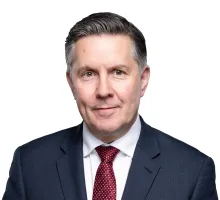
GRAEME GOODINGS, HOST: Six minutes past 10, FIVEAA, on this Friday Morning, and it’s my very great pleasure to welcome the Federal Health Minister, Mark Butler, into the studio. Minister, good morning to you.
MARK BUTLER, MINISTER FOR HEALTH AND AGEING, MINISTER FOR DISABILITY AND THE NDIS: Good morning, Graeme. Good to be with you on a beautiful day.
GOODINGS: It certainly is that. We know there’s only one poll that’s important, but you must be concerned about the polls showing the Labor Party, the Labor government, on a downward spiral.
BUTLER: Look, genuinely, of course we read the polls. It’s hard not to, they’re on the front page of newspapers a couple of times a week now. But we’re also pretty sober about the fact that these things go through cycles, and we’re going through a period where there’s a lot of pressure in the Australian community, a lot of pressure on households, a lot of pressure on business. We’ve seen the unemployment rate tick up by 0.2% this week, unexpected by us, unexpected by the Reserve Bank. A bigger increase in unemployment than we thought was going to be the case, which reflects softness in the economy while there’s obviously ongoing cost pressure. It’s a really difficult time for everyone in the community, and I think it’s unsurprising that that’s being reflected in polls halfway through the electoral cycle.
GOODINGS: I mean, there has been an uptick for you, more people are being bulk billed.
BUTLER: That’s a terrific thing because not only was that an increase in cost of living pressure for Australian households, as bulk billing was really in freefall five years ago, it was also leading to more and more people choosing not to go to the doctor when they needed to because of cost, and so it’s a healthcare issue as well. We’ve seen a big increase in bulk billing over the last 12 months, a bigger increase than I expected, frankly. We set a 2030 target to get bulk billing back up to 90%, and we're already halfway there in the first year. We've got many more GP practices around the country bulk billing 100% of their patients than we thought we'd have by this time. We've got more than we thought we'd have by 2028, let alone 2026. I'm very pleased with that result. It's delivering millions and millions of additional free visits to the doctor, which means that a lot more people can feel that they go to the doctor whenever they need to, rather than checking their wallet and seeing whether they can afford to. And the increase in bulk billing in South Australia has been quite a bit more than the national average, which is, as a South Australian myself, particularly pleasing as well.
GOODINGS: Now, onto the matter of private health rebates for older Australians. It's an issue that concerns a lot of FIVEAA listeners. Despite your bill cutting private health rebates, it was defeated in the Senate. You've reintroduced it. Have you made any changes?
BUTLER: No, we've reintroduced it in the original form. The reason we did that was because it wasn't even debated in the Senate. We want a genuine debate in the Senate about the contents of that bill and what it would go to fund, and you and I have talked about this. I know there are strong feelings about it. I know you have strong feelings, Graeme, and I wish I didn't have to try to take decisions like this to find the money we need to find to expand aged care services. We did reintroduce the same bill. We want it to be debated next week in the Senate. I expect that there will be amendments proposed by some parties, and we should have a genuine debate about those amendments rather than what happened several weeks ago, which is the bill was just taken off the notice paper by non-government parties. I don't think that's a way to conduct public policy debate.
GOODINGS: Now, a recent Ipsos survey found 12.1% of over-65s would cancel private health cover if the age-based rebate is cut. That's far higher than your estimates. And what's going to happen to those people? They're going to go into the public system.
BUTLER: I read reports of that survey. It doesn't accord with our projections. It doesn't accord with independent modelling that's been done by the University of Melbourne that's very experienced in this area. I get that this is a hard decision. Just to be clear and remind your viewers, what we're proposing is to return the rebate or the subsidy that people receive for their private health insurance fees to the original design, which was not to have differential treatment based on age. Everyone would get a taxpayer subsidy for their private health insurance based on their household income. If what we're proposing passes the parliament, you'd end up back in the situation we used to have, which is two households living next door to each other on exactly the same income, one in their 50s, for example, one in their 60s would receive the same level of taxpayer support for their private health insurance.
Now, we don't think there will be the sort of impact on membership or public hospital activity that some have talked about, particularly the private health insurance industry has talked about. They've talked up these very big impacts before. When we made changes 12 years ago, 15 years ago, to private health insurance, they said 1.5 million people would leave, 850,000 would turn up to public hospitals. None of it happened. I just urge people to be a little bit sceptical about some of the self-serving modelling that industry, not just the insurance industry, but other industry bodies, put forward into the public debate when there's a proposal for change.
GOODINGS: Well, what about SA Health? They say that your plan would see a further choking of the public hospital system. Do you discount their reaction?
BUTLER: Yeah, I disagree with them. We've modelled this carefully. We've had independent modelling done by, not by a government, but by the university that brings an independent eye towards these things. Obviously, we'd monitor these things closely, but we've got experience here. I'm not pretending this is not a difficult decision, but I really do disagree with some of the suggestions in the public debate that this is going to have an impact that history tells us it won't.
GOODINGS: We'll take calls in a moment. But Julie says on this very subject: I have paid private health insurance since I was 16, now retired after nursing my mother for six years. Now I've fractured my ankle and had great service from the public system from the first medical issue in my life. Tell me why I should keep it private- or keep my private health insurance up?
BUTLER: Because, Julie, you'll continue to receive significant, I don't know what your household income is, but significant taxpayer support, as will other households on the same income you have for their private health insurance. About a quarter- for most people, about a quarter of their private health insurance bill will continue to be paid by taxpayers.
GOODINGS: And Karen says: many pensioners have been in their health insurance companies for many years. They should be rewarded, not punished. Also, outpatient appointments are being blown out. People are getting more sicker, or getting sicker, waiting for appointments. Not good enough.
BUTLER: You'd, I'm not, frankly, very clear about the waiting lists for outpatient services here in South Australia. I don't really have access to waiting lists for outpatient services for any state and territory, actually. Arguably, I have more information about waiting lists in the National Health Service in the UK than I do for state governments. I think there is a very serious responsibility for all state governments to expand their outpatient services, which we've seen decline steadily over many, many years. Which means that often people's only choice is to go and see a private specialist, who are increasing their out-of-pocket costs at an alarming rate.
GOODINGS: Okay, let's take a call. Colleen, go ahead.
CALLER, COLLEEN: Yes, good morning, Graeme and Mr Butler. Firstly, I am a taxpayer. I pay in Bupa and I pay a Medicare levy, and I'm in the mid-80s, and I'm very concerned about a family member that's in his electorate. Going just recently, and it's happened before, she has been admitted into a ward, and the clerical staff have come up with papers to sign that she is in- a private patient, and that they want a claim from Bupa. Now, a four-bed ward and admitted as a public patient, she refused to sign it. And from then on, it was sort of downhill.
The second thing is, I had to go down nearly every day because her food came; it was cold, and I had to try and find somewhere to reheat it, or otherwise she was out of the room for tests and the staff collecting the meals never checked, and she didn’t get a meal. Another thing was the computer, they are now computer-wise for ordering meals, and it's connected with the television. The part that particular part was not working. I approached the nurse's desk and asked for a paper copy so that she could order her meal. Out of the 10 days, she missed breakfast, I would say, seven out of the 10 because it showed that there was no one in that particular room, and the nurses were upset that they had to go and hustle up some breakfast that would be suitable for her.
On the last day, or second-last day, I was down there, and they were running around putting Christmas decorations up, and call buttons were not being answered. I thought the treatment down there has gone on a very slippery slope. Because of her conditions, she was not being, not able to be admitted to a private hospital, and this has made her very fearful of going back into the public health system. But she has no option.
BUTLER: I'm incredibly sorry that- about all of that story. Being able to order a meal seems to me one of the most basic expectations of being in a public hospital for people who've paid taxes their whole lives. Really, for anyone, but particularly people who've given to their country what your family member has. If you are willing to give Graeme's producer your details, my office will contact you and we will take those issues up with the State Health Minister about that experience that your loved one had, because it's frankly not good enough. I know that hospital well. I've a great deal of affection for the people who work there, but that's a really difficult story.
In terms of what happened when your family member went there, we hear that far too much at state public hospitals across the country, where effectively admin people, administrative staff in public hospitals, try to get privately insured members of the public to sign on as private, effectively private patients, which is essentially at risk of double dipping from Commonwealth government funding for the operation of a public hospital service, and also getting money from private health insurance as well. We're trying to crack down on that. We don't think it's a proper way to run public hospitals. We've taken it up with all of the state governments in our latest negotiation with them for public hospital funding. But I know it happens still far too often.
GOODINGS: Thanks for your call, Colleen. 8223-0000 is the number to ring if you have a question for the Health Minister, Mark Butler. 10.21AM this Friday, 20 November. In the studio I have Health Minister Mark Butler. Your calls in a moment, but Minister, something I want to ask you: Support at Home, great concept, great idea, no question about that, but there are suggestions that's going the same way as the NDIS. We hear rates reaching $380 per hour for basic assistance such as showering, a $20 meal billed at $40, a dozen pre-packaged meals rising from $88 to $264. One example of a patient previously paying $300 a month under the old home care package now charge $1,440 for the same service under Support at Home. How can you let this happen?
BUTLER: Before I get to some of those frankly shocking, outrageous reports, you are right to say this is an important program for Australia. Over the time I've been involved in aged care, we’ve gone essentially from not offering much support for people at home at all, to now having almost 500,000 older Australians receiving these home care packages. When I was last Minister, 15 years ago, it was maybe 60,000, and we've tripled the number of these packages since the beginning of COVID. This is what older Australians want. They want to be able to stay in their own home for as long as possible, rather than going into an aged care facility. And the big priority has been expanding this program.
The new program which has been running now for twelve months has better packages. Rather than capping out at about $50,000 worth of support for people with the highest needs, it's more like $80,000 or $90,000. We are growing the program and making it better for people, particularly with high support needs. But these stories, Graeme, are unacceptable. Absolutely unacceptable.
GOODINGS: So, how can it happen? How can these providers just go out there and do it, you know, unabashed? It doesn't seem there's any control.
BUTLER: There is control in the sense that the Safety and Quality Commission that oversees the aged care sector has clear powers to intervene and order refunds, and it is doing that. We're making our view as government crystal clear to the commission that we expect them to exercise those powers, and I've also said to the sector that we are going to put in place regulatory arrangements, price caps, to ensure that these rip-offs cannot continue.
There is no rational explanation for smoothies that might cost $20 being unsold for a hundred dollars plus. I mean, it is ripping off older Australians. Taxpayers, for example, might be funding $50,000, $60,000, $70,000 of support for an older Australian living in home. We expect that they get maximum value from that.
Now, what we saw several years ago is that the providers that deliver this care were able to keep 35% of the package as an admin fee, or a management fee. Like, one in three in three dollars that taxpayers were providing for support for older Australians, kept as an admin fee. We've progressively ratcheted that down so that now instead of 35%, they can't charge more than 10%.
GOODINGS: But you're playing catch up. Why wasn't it instituted from the start?
BUTLER: What we instituted from the start was a reduction in management or admin fees to 10%. What we said was that we would monitor what's happened with prices. We'd put in place controls where unreasonable prices were being charged, that refunds could be ordered by the Safety and Quality Commission. That is happening. And once we became a little clearer about what prices were being charged, we'd set price caps in particular areas of service, whether that was showering or the provision of meals or what have you. And we're in the process of doing that. We're also publishing prices that are being charged by organisations so that people can have a look. Providers can have a look, but older Australians can have a look on a three-monthly basis to see whether the charges they're being levied are above the odds. They can check what the average prices for particular services are that are being charged.
But I think my short answer to you, Graeme, is this is unacceptable. This is a great program, but I'm not willing to continue to see these rip-offs occur. We're going to come down on these providers pretty hard through the Safety and Quality Commission, and when we get a good sense of what the reasonable prices are, we're going to put in place price caps.
GOODINGS: Okay, let's take another call. Tracy, go ahead.
CALLER, TRACY: Yes, good morning. Thank you, GG, and thank you, Mark. I'm just ringing, we are a provider under NDIS and a family member has being in a quite diabolical situation. But I just want to ask, what measures is the health minister taking to prevent conflicts of interest involving NDIS occupational therapists who prepare assessment reports, particularly where those reports may contain inaccurate information that places vulnerable participants at risk?
BUTLER: Tracy, the NDIS agency, so the agency of government that runs this, has pretty clear expectations in place. Not quite sure what you mean by conflict of interest.
CALLER, TRACY: I can explain that further if you like.
BUTLER: Yeah, whether you want to do that through this program or whether we want to take your details and have an offline discussion if you've got a particular case -
CALLER TRACY: I suppose it needs to be addressed.
BUTLER: That might be a bit sensitive in terms of presenting details over the radio. But I expect, and we expect all health professionals they are required to act with integrity. That’s a condition of their registration as health professionals, whether you're talking about doctors or the sort of allied health professionals you mentioned, avoiding conflicts of interest, making sure that they deliver reports in the best interests of their patients. They are very basic expectations. Whether they're working in the NDIS or any other part of the healthcare system.
GOODINGS: Thank you, Tracy. Thank you so much for your call. Just before we go, a comment from Andrew: Mark Butler talks about trying to find money to fund essential services, then why are we spending $53 billion over the next 10 years on non-citizens who are on the NDIS scheme?
BUTLER: What I think your listener is referring to is the fact that permanent residents, so people who are here forever, who've been told by the government that they can stay in Australia for the rest of their lives, and are on a pathway to citizenship, they have to be here as permanent residents for a few years before they go through the final ceremony, if they become disabled, they're eligible for the NDIS. Now, there's been some debate about this over the last week or so, suggesting that a whole lot of people come to Australia with disability to get on the NDIS. You cannot enter Australia as an immigrant if you have a significant disability or healthcare need. That's a clear disqualification for coming to Australia in the first place.
The people we're talking about are often people who live in our community, have bought a house, have their kids in school, have a job, have been told they can spend the rest of their lives here in Australia, but suffer a catastrophic injury or develop a catastrophic disease that requires disability support. And from the original design of the NDIS and its implementation by the former government, it's always been available to citizens and permanent residents, so not people here on temporary visas, but permanent residents who have been told by their government that they can stay here for the rest of their lives.
GOODINGS: And just before you go, Minister, Mally wants to know, she says: please ask the Minister why, if older Australians are losing the special health rebate because there shouldn't be discrimination over age, that Indigenous people still get special discriminatory benefits?
BUTLER: I'm not quite sure what benefits that caller is talking about. Certainly, no different treatment in relation to private health insurance or Medicare or any of the things that I have responsibility for. There are targeted health programs in Indigenous communities that reflect the depth of some of the healthcare needs of those communities and the gap in life expectancy that we still have between Indigenous and non-Indigenous Australians. But I don't accept the idea that there is discrimination of the type that you caller says.
GOODINGS: Minister, thanks for coming in today.
BUTLER: Thanks, Graeme.
GOODINGS: Always good to chat. We've been speaking with Health Minister Mark Butler.
Media event date:
Date published:
Media type:
Transcript
Audience:
General public
Minister: