
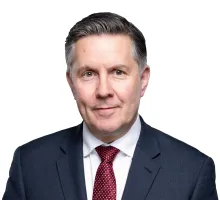
RICHARD KING, HOST: Well, today, appropriately, is in fact World Family Doctor Day, and right now joining me – and he will be at a press conference a little later this morning in Charlestown, along with Pat Conroy and Sharon Claydon, the Member for Shortland and Member for Newcastle, to talk about the 6 new bulk billing GP clinics, which will be opening in our neck of the words – Newcastle, Hunter Region, Central Coast – in the next 12 months or so. Joining me now is federal Health Minister Mark Butler, who’s on the line. Good morning, Minister.
MARK BUTLER, MINISTER FOR HEALTH AND AGEING, MINISTER FOR DISABILITY AND THE NDIS: Good morning, Richard.
KING: Many people have talked about this Budget as being all about intergenerational equity, but some have described it though as a boomer bashing Budget. Just before we get onto the GP clinics, the fact that I’m over 65 so my private health cover’s going to cost me a little bit more. Your response to this boomer bashing Budget?
BUTLER: I don’t describe it in that way at all. What we’re doing with private health insurance is basically moving to a subsidy system which is equitable across the community. John Howard in 1999 started to pay older Australians a higher subsidy than Australians who might be in their 40s raising kids, on exactly the same income. What we’re doing now is where there are 2 households next door to each other on exactly the same income, they’ll now receive the same subsidy for their private health insurance membership, rather than a different one depending on their age.
Every dollar that we save from that measure will be ploughed back into aged care. I know this is an unwelcome decision for many older Australians, but I think at a time of real budgetary challenge, and where I feel that we need to find every dollar we can to go into aged care services, that was just a difficult position to sustain, having different subsidies paid to people on the same income just because they happen to be a different age.
KING: These 6 new fully bulk billing general practices across our area – I believe Newcastle really provided the model for these clinics. I think we were the first in Australia to establish these GP care clinics. Is that correct?
BUTLER: I’m not sure that’s right. But when we’re talking about equity, one of the things that I’ve said for quite a while, over the few years where we’ve been trying to turn bulk billing right around across the country, is that I want to see the benefits of our huge investments in bulk billing shared equitably across communities. The fact is that bulk billing rates in Newcastle and in parts of the Hunter, particularly the lower Hunter, around Lake Macquarie and on the Central Coast, are far too low. The number of bulk billing clinics in those regions is about half the New South Wales average. The bulk billing rate for those regions is about 15 per cent below the national average, a full 20 per cent below the New South Wales average, and remarkably it’s about 30 per cent lower than you’ll find in Western Sydney and South Western Sydney.
And frankly, there’s no rational reason for that. It’s obviously just as expensive to run a general practice business in Sydney as it is here, or arguably even more expensive. But people living in those communities enjoy far better bulk billing rates. I’ve said very openly, including at GP conferences, that this market around Newcastle, Lake Macquarie, Central Coast and the Hunter, is if they didn't see a shift in bulk billing, that I would intervene and we would provide consumers or patients with more choice. And that's what we've done in this Budget.
The first area we moved on was Canberra, which also had very low bulk billing rates. But I said the second market I was most worried about is this market. I'm determined to give patients in this community better choice to access free general practice care.
KING: I did speak to Pat Conroy, who will be with you at this press conference later this morning. This was after the Budget was handed down. This was Wednesday morning. Pat said that they'll create more competition between GPs and encourage more GPs to bulk bill. Has that been the case in other areas?
BUTLER: This is really a new thing for the government to do. Where there's no rational reason for a low bulk billing rate, the only thing you can conclude is there's a cultural issue among general practitioners or general practices in this region. The only way to fix that is more competition, and that's why we are investing in new bulk billing practices in this region because we think it will drive more competition among general practitioners but it will also provide more choice for patients, because bulk billing, it's not just a nice idea, it's a really important way for people to access health care.
What we found, when bulk billing was in freefall when we came to government, is more and more people deciding not to go to the doctor because they didn't feel they could afford it. We want people to feel that they can go to the doctor when they need to go rather than when they feel they can afford to go. And this region just hasn't been enjoying the benefits of the huge investment that we've been making in bulk billing and I'm determined to change that.
KING: John emailed me and put a question that he wanted me to put to you and he said, are these urgent care clinics extra practices with extra doctors, or will you be commandeering an existing practice?
BUTLER: The urgent care clinics, and there are a few in this region, are attached to existing practices. But these new bulk billing practises will be new. They'll be additional practices. I'll be inviting expressions of interest from people who want to start a new practice on the condition that they'll be fully bulk billing. Now, they'll have to recruit doctors. There are opportunities to recruit doctors in this region from a range of areas, including places like the UK and New Zealand and Ireland. It's very easy to recruit those doctors now because of changes that we made when we came back into government.
I'm very confident that there'll be the doctors there to do it, because of the changes we've made, bulk billing doctors earn a good salary now. They used to earn significantly less than GPs who would charge gap fees, but because of the investments we've made, a full bulk billing doctor on average will earn more than someone charging gap fees. We're confident we'll get the doctors, we just need the general practices to be established.
KING: Okay, you've got to establish the practice, you've got to get the doctors. When are you hoping to open these 6 extra billing general practices, Minister?
BUTLER: Well, it won't happen overnight, but we're hoping to have them open next year. Because they'll be new practices, we have to go for a competitive process, obviously, that will be conducted at arm's length from government via the primary health network for this region. But we're confident we can get them up and running next year.
KING: New figures show it takes at least 12 months on average to get a spot in an aged care home or secure at-home support. What's your government doing to improve that 12 months on average time?
BUTLER: Going back to our first discussion about private health and our investments in aged care, this Budget provides significant new funding for more care beds in nursing homes, but also more packages and better care. That's something government's going to have to continue to do at a time of significant ageing of the population.
The most recent official data about waiting times, which is a few months old now – we'll have new data out very soon – but that data showed that waiting times both for an assessment for aged care, but also to actually get your package, was down quite significantly over the course of the summer period because of the new investments we were making. We know people have to wait longer than they'd like to at a time where there’s more and more demand, but we're putting a lot of additional investment to get that wait list down and that investment is starting to show results.
KING: I think it was yesterday at the Senate inquiry into the tobacco crisis that Dr Nick Coatsworth, who was the former deputy chief medical officer, he spoke about tobacco tax cuts labelling the emergence of this multi-billion-dollar black market controlled by organised crime as a whole-of-government policy failure. Are you contemplating reducing the excise on cigarettes?
BUTLER: I had a look at Dr Coatsworth's evidence. It's important because he was the deputy chief medical officer under the last government when those huge excise increases happened, more than tripled, so an increase of more than 200 per cent. And there's been some excise increase under our government, but really it's a fraction of what happened under the former government when Nick Coatsworth was the deputy chief medical officer.
There's no question we've got a huge problem in this country with illicit tobacco. We're not the only country to have that problem. There's been a flood of cheap illegal tobacco right through the global market, and it's a problem at a couple of levels. It's bankrolling serious organised crime to conduct their criminal activities, like drug trafficking and sex trafficking. It's a lucrative source of revenue for them. But also, it’s a really serious threat to our most important public health program to drive smoking rates down. We're desperately worried about it. We've been doing good work with the New South Wales Government here to enforce the criminal laws. We're seizing more at the border, the Commonwealth is, but New South Wales Government's doing terrific work on the ground now with new laws and new enforcement of those laws.
There'll be, through the Senate inquiries, some debate about a range of other measures. I'm waiting for that outcome with interest because I'm willing to look at any ideas to combat this. It's a very serious criminal law issue, but it's also a serious public health problem.
KING: Finally, just a quick response to what the Shadow Health Minister, Anne Ruston, has had to say.
[Excerpt]
ANNE RUSTON, SHADOW HEALTH MINISTER: Labor's Budget will make health care harder to access.
[End of excerpt]
KING: Yeah, harder to access. Just a quick response to that, Minister.
BUTLER: It's the typical political response you'd expect from her. There's no question there's way more doctors in the system because of the changes we've made. Bulk billing's going up, although I'd like to see it go up more in Newcastle and the surrounding regions, which is why we're doing what we're doing. We've got urgent care clinics that will see 2 million people every single year and medicines are much cheaper than they were previously. Our promise to strengthen Medicare is showing results.
Of course, there's more to do and that's why every single budget there is more in there for Medicare because for a Labor Government there's nothing more important than universal health care.
KING: Appreciate your time this morning. Thank you very much for that, Minister.
BUTLER: Thanks, Richard.