
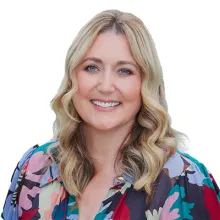
RYK GODDARD, HOST: So opening right now is a new Medicare Mental Health Centre opening in Tasmania. Emma McBride is Federal Assistant Minister for Mental Health and Suicide Prevention. Hi, Emma.
ASSISTANT MINISTER EMMA MCBRIDE: Good to be with you.
GODDARD: Part of the team opening this. So what do these centres do that's different?
MCBRIDE: These centres remove any of the barriers that have stopped people in distress escalating to crisis simply because they couldn't access care. Someone doesn't need a diagnosis, they don't need a referral, and they can walk in without an appointment to get care tailored to their individual needs.
GODDARD: You've opened some of these centres in other areas. What impact do you see that they have? What evidence do you have that they're effective?
MCBRIDE: This is the fourth that will be officially opening in Tasmania and the 57th across the country. And what we've seen now nationwide is more than 500,000 free walk-in appointments where people have been able to get care tailored to their individual needs, much closer to home, without waiting and for free and backed by Medicare.
GODDARD: So, I mean, in terms statistics or evidence, do you see improvements in mental health in any of those communities? Do you see a drop in suicide rates?
MCBRIDE: What we're seeing, and this is early evidence of a new national program which we're investing significantly in, because in Australia today, 1 in 5 adults experience mental health distress or concerns in any 12 months. That's 2 in 5 of us in our lifetime.
And we needed to make sure that support was available sooner for people who needed it. And we are.
There's been an evaluation by the chief psychiatrist, Sophie Davison, an independent evaluation, which is showing really promising early results, including that people who otherwise couldn't access care; older people, men, people living in the regions now have support available within their local communities. And typically people are going back about 5 or 6 times showing that they're getting the care they need, that it's in a safe and trusted environment and that they're being able to build the skills that they need to be able to thrive.
GODDARD: So there's been a national conversation, particularly about men's mental health, where often it's situational, it's often to do with relationship breakdowns. So these are people who don't have mental health problems, wouldn't identify as having mental health problems, they’re just dealing with a terrible time in their lives. Is this the sort of place you can go then? Because you don't need to be diagnosed. You don't have to have told your GP, and then they refer you, and then you make a call and then you make a booking.
MCBRIDE: It is. It’s that type of place where someone can walk in, they don't need diagnosis. Because as you describe, many people in distress don't have a mental health disorder, but they're living with relationship breakdown, with financial pressures, with problems at work. And they're typically the drivers that lead to distress that can ultimately lead to, as you said, suicide. And we know that in Australia today, we lose 9 Australians each day to suicide. But suicide disproportionately impacts men and First Nations communities.
GODDARD: And if you need to talk to someone now, you can always call Lifeline. So- or just text us, 0438 922 936. I've just opened Lifeline's webpage and their phone number is not at the front of the page, which is absolutely crazy. I will find that number for you in just a second.
So for a lot of people, what's really impacting their mental health, Emma McBride, Federal Assistant Minister for Mental Health and Suicide Prevention, is the cost of living. Now, we saw the biggest impact on wellbeing during COVID when Centrelink supports were increased, why can't you just do that? Because that surely would be a more effective investment than putting up a whole lot of centres for people who are now distressed.
MCBRIDE: You're right. Financial stability and that kind of security, whether it's through work or through support provided through governments, makes a really big difference in people's lives. We have increased the minimum wage, particularly for people working in industries like aged care or early childhood education. We have provided tax cuts for Australians, but I appreciate many Australians ...
GODDARD: [Interrupts] What about Centrelink, though? I mean, that's the real key area. When those pensions went up, I had this incredible 6 to 8 months of speaking to every single community service here who said people are happy, demand’s dropping, this is the best thing that's ever happened.
MCBRIDE: And I saw that in my community as well, which is a community with large and growing need. I think my particular focus as the minister responsible for mental health and wellbeing is to make sure that we can make these services available and free, because cost, to your point, has been a big barrier for people accessing care. People have told me that they've paid hundreds or more than $1,000 to see a psychiatrist. This is parents with young children seeking support, or older Australians. So my particular focus as a mental health worker myself who's worked in the regions is to make sure that any barrier that stops someone accessing support has been removed. So no diagnosis, no referral and no cost.
GODDARD: Emma McBride, Federal Assistant Minister for Mental Health and Suicide Prevention, in town to open the fourth mental health walk-up clinic in Tasmania. It's in Glenorchy. So who are the staff there? And say I come in and I'm in the middle of a really distressing and complex divorce. How- can they connect me with other services?
MCBRIDE: They can. So the staff there, it's a multidisciplinary team. That means that someone might be able to see an accredited mental health nurse, an accredited mental health social worker, a counsellor, and importantly, peer workers. We’re finding that peer workers, people with their own lived experience, are proving to be very effective in developing rapport with people seeking support and also helping them to way-find or navigate, because they've struggled with these challenges themselves. And they also offer hope because someone can see that someone who's walked in their shoes is now thriving.
GODDARD: I have someone who's doing that work, and she says she finds it incredibly rewarding and it's so satisfying to create spaces for people in that space that she didn't have when it felt very sort of institutional and institutionalised. Is there any, like, in terms of continuing to measure the effectiveness of it or if you're not getting the service you want from it, what do you do then?
MCBRIDE: So we've found that since we've opened these centres, and now as I mentioned this is the 57th, that more than 500,000 free walk-in appointments. We've had an independent evaluation, an evaluation by the chief psychiatrist, because we want to make sure that these services are effective, that they're providing the care that people need, and we'll continue to refine the model to meet people's needs.
But importantly, often they're provided by a consortia to provide relationship or family counselling, alcohol and other drug support, in addition to clinical mental health support to give that more wraparound support to address the drivers of distress, to boost protective factors and give people that wraparound care that they deserve.
GODDARD: Great to talk to you this morning. And if you want to talk to Lifeline now, it's 13 11 14. That's Emma McBride, Federal Assistant Minister for Mental Health and Suicide Prevention, opening that centre in Glenorchy today.