
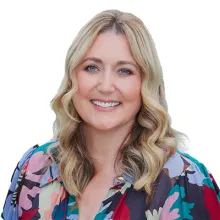
JULES SCHILLER, HOST: Emma McBride, good morning to you.
ASSISTANT MINISTER EMMA MCBRIDE: Good to be with you, Jules.
SCHILLER: Alright, let's talk about these new mental health centres, because you- I think you joined us a few months ago to talk about two that opened in the south. These are two in the north. Where will they be and who is eligible to attend them?
MCBRIDE: Today is a really important day for access to mental health support for local families in the northern suburbs of Adelaide with two new services opening in Elizabeth Vale, one a Kids Hub designed for children aged 0 to 12, because we know 1 in 7 Australian children experienced mental health challenges in the last 12 months and more than half of mental health conditions develop before the age of 14 so it’s really important to have earlier intervention and wraparound support that's available for free at the Kids Hub backed by Medicare. And then a new Medicare Mental Health Centre free walk-in service for any Australian where they don’t, they don't need an appointment, they don't need a referral, and they can get support when they need it close to home.
SONYA FELDHOFF, HOST: So are these people who would perhaps normally turn up in our emergency departments?
MCBRIDE: I worked in acute adult inpatient services, and I saw people in distress where it escalated to crisis simply because there wasn't support in the community, which is why we’re creating a network of mental health services free under Medicare across the lifespan. So Kids Hubs for 0 to 12s, headspaces for 12 to 25s, Medicare Mental Health Centres for any adults who need support. It might be information or advice or it might be counselling or seeing a social worker or a psychologist.
SCHILLER: Do you have a psychiatrist in there as well?
MCBRIDE: We do, we know that access to psychiatrists has been very difficult for people across Australia and including in Adelaide and the northern suburbs of Adelaide.
SCHILLER: But we don't have enough of them, do we?
MCBRIDE: We don't, and we're working on growing the pipeline of psychiatrists, funding more training places for psychiatrists and supporting them in their fellowships. But we do need to see more straight away, and that's why we have psychiatrists in these free services.
FELDHOFF: So these that you're opening today and you're on your way to the north to open these centres, they join five others, is that right, in South Australia that have already opened? Do you have any evidence to suggest that is helping reduce the numbers of people in emergency departments? I mean, is there evidence that this is making a difference? We all want to see a change.
MCBRIDE: We do. And this, for Australians today, you know, one in five adults experience a mental health challenge in any 12 months. And that's almost half of us in our lifetime. So this is something that is impacting people and families right across the country. What we’ve seen since we opened the five free walk in services in South Australia, is more than 25,000 free walk-in appointments. So people who otherwise may have presented to emergency departments. And I have heard in other parts of the country because we now have 57 open, there's one that I visited in Townsville and they were asking people, where would you otherwise have sought support? And a quarter of people said they would have otherwise been forced to go to the emergency department. And emergency departments aren't designed for people in acute mental health crisis. So to be able to provide them a safe place where they can walk in and feel welcome and have wraparound support is making a real difference across the country. We’ve had our, just this last month, 500,000th visit to a mental health centre across the country.
SCHILLER: We know in the north, InDaily did an article, there's a 12 per cent increase in mental health presentations to ED so this is sorely needed in the north northern suburbs of Adelaide. How much of this, though, is drug and alcohol related, some of these mental health issues? And would these centres be appropriate to deal with those issues?
MCBRIDE: We know alcohol and other drug challenges are a contributor to mental health distress and to mental health crisis. So what we're designing with the Medicare Mental Health Centres is often a consortium. So we've got Relationships Australia as part of the services so that they can do family or couples- family counselling. We've got places like Odyssey House contributing as well drug work. So what we're designing is a wraparound care that can be tailored to the individual and their family's needs. Whatever support you need is often available within the Medicare Mental Health Centre itself or you can be warmly connected to it without having to retell your story and not having to then navigate your way through a complicated system.
FELDHOFF: You've just said, though, we've got a shortage of psychiatrists. I believe we've also got a shortage of psychologists. So, how will this help? Because what the next step is, getting ongoing support, isn't it, for these people?
MCBRIDE: And importantly, ongoing support is available through these services. Someone might walk into a Medicare Mental Health Centre to seek information and advice for themselves or for a family member. Someone may walk in, and I met a woman recently at the Canberra Medicare Mental Health Centre. She was someone who had schizophrenia and had a recent psychotic episode, couldn't afford to see a psychiatrist. Her only other option, her family told me, was to go to the emergency department, which she didn't want to do given her previous experience. She was able to have an initial assessment in the Medicare Mental Health Centre by the intake team. Then she was seen by a psychiatrist and she had three follow-up appointments for free by a psychiatrist. So we're making sure that all of these centres, now more than 28 of them, are linked by telehealth to a network of psychiatrists and psychologists as well. So if you walk into a centre and what you need is in addition to that service, you can then be connected to that again for free.
SCHILLER: Now this is, I believe part of a $1 billion commitment that you made before the last election, which is a large amount of money. So does that mean there's going to be more announcements in Adelaide? Because people are asking about the eastern and western suburbs. Will you be back at some point announcing more?
MCBRIDE: Yes, I will, yes. There'll be three more that we're going to be opening in...
SCHILLER: [Interrupts] In Adelaide?
MCBRIDE: In South Australia. This is part of a national network of 92 Medicare Mental Health Centres and, as you mentioned, the largest investment by the Commonwealth in mental health and wellbeing, $1.1 billion. But it's important for listeners to also know that each year, we're investing as a Commonwealth more than $8 billion in mental health and well-being.
SCHILLER: How much of that 1.1 billion has been spent already? And how much is left to spend?
MCBRIDE: In terms of how that investment is being allocated, so $700 million of that is for children and young people, given the real- the high prevalence of mental health distress amongst young Australians. So $700 million towards expanding Headspace and Australia's first youth mental health research institute. Then for the Medicare Mental Health Centres, centres, $267.3 million.
SCHILLER: So are you halfway through or three? How much have you spent so far?
MCBRIDE: So in terms of the allocation, it has all been directed, it's more about now opening the services so people can access them. But each year, $8 billion being spent on the services and the programmes
FELDHOFF: You're listening to Emma McBride, the Federal Assistant Minister for Mental Health here on 891 ABC Adelaide with Sonia and Jules.
She's here and she's about to open a Medicare-backed mental health centre in the north along with a kids hub backed by Medicare. This happened though in Adelaide yesterday. It was a social media post. Someone said, I've been here at the Flinders Medical Centre since 8.30 a.m., almost 12 hours ago, sitting in the waiting room with suicidal ideation. I called the mental health clinic in the city. They cannot give medication. They do not have beds or places to stay. Their function is a mental health chat, then referral back to hospital where they are. So, is what we're hearing about now going to change the situation for a person like that?
MCBRIDE: I would hope so. I really would. That someone in experiencing suicidal ideation has had to spend hours waiting just shouldn't happen. But I understand that it does. And this is why we're making this really big investment. Co-located with the Adult Medicare Mental Health Centre that we're opening today is the new crisis stabilisation unit, which does have sixteen beds, which is funded by the state Labor government. So what we're hoping is by having the co-location of the Crisis Stabilisation Centre and the Medicare Mental Health Centre that there's a better continuity of care. So if someone walks into the Medicare Mental Health Centre, but will be better supported through the crisis stabilisation unit, that will happen in a much smoother way. This is something that is distressing to hear for someone to experience. And that's why we're making this record investment in mental health and suicide prevention. But we know there is much more to do.
SCHILLER: Emma McBride, thank you for your company. Emma McBride is Federal Assistant Minister for Mental Health.