
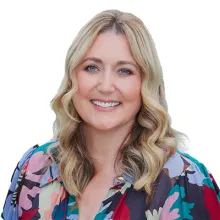
LOUISE MILLER-FROST, FEDERAL MEMBER FOR BOOTHBY: I'm Louise Miller-Frost. I'm the federal Member For Boothby, and I am really thrilled to be here for the opening of our Kids Hubs Kids Mental Health. I'm here with my friends, Emma McBride, the Assistant Minister for Mental Health; Chris Picton, the state Minister for Health; my good friends, Sarah Andrews and Nadia Clancy, who is the Assistant Minister for Suicide Prevention; and Sageran from Sonder, who is one of the key partners here; and a carer, Karina.
So, this is a really important part of our mental health and health plan overall. This little area here in the middle of Boothby is such a fantastic health hub. We have our Urgent Care Clinic. We've got headspace down the road. Flinders Medical Centre not far away as well. And to be able to have this here in the GP Plus Clinic just adds to the sorts of things that we can offer for people in Boothby. We know that early intervention is so important when you're talking about mental health, and to be able to provide this service, which is for kids up to the age of 12 and their families in the context of family therapy, will make an enormous difference to people in southern Adelaide.
And I'll hand over to Emma McBride.
ASSISTANT MINISTER EMMA MCBRIDE: Thank you very much, Louise, and I want to start by acknowledging Louise's advocacy as the local federal member and the work that she has done to make sure of one of 17 Medicare Mental Health Kids Hubs is right here in the southern suburbs of Adelaide. To Chris Picton, the South Australian Health Minister, these services are delivered under our National Mental and Suicide Prevention Agreement with the state government, and we're proud to work alongside you to boost access to early intervention and support to children and families.
We know that distress amongst young people is growing across the community, and as Louise has mentioned, we know how impactful early intervention can be. But for far too long, parents and children have had to wait. They've had to wait for a formal diagnosis. They've had to wait for a referral. And then it's been unaffordable. What this Medicare Mental Health Kids Hubs will do here in the southern suburbs of Adelaide, and across the country, will make that support available, will create a new front door so that parents and children can access the early intervention they need when they need it close to home and affordably.
As a mental health worker myself, I know the difference that this will make, and to know that right here children will be able to access in the near future a psychologist, a paediatrician, a psychiatrist, OTs, specialist mental health social workers and psychologists, to provide them that wraparound multi-disciplinary support and care, and importantly, under the one roof support for families and carers as well. We know that parents of young children who are experiencing mental health challenges or need emotional and social or developmental support need better support themselves. That will also be available here for free.
This is an investment of close to $85 million nationally and $12 million here to make sure that local people and families get the support and care that they need close to home and affordably. This is, as I mentioned, part of our national priority for mental health and suicide prevention. At the election, our government announced a historic $1.1 billion investment in the mental health and wellbeing of Australians, with a particular focus on young Australians because we know the way that mental health impacts are being felt in mental health challenges of young people earlier and with more complexity. I'm so proud to be here today to stand alongside my colleague and friend, Louise Miller-Frost, and Chris Picton and the local state MPs because we know that working together in strong collaboration is what will make a difference and provide the support and care that families deserve that they've had to wait too long for.
I might now hand over to Minister Picton to talk about the South Australian Government's part of this centre today. Thank you, Chris.
CHRIS PICTON, SA HEALTH MINISTER: Well, thanks so much, Emma, and thank you for the partnership with the federal government that's seeing this centre delivered.
Unfortunately, we are seeing a significant increase of mental illness amongst our young kids here in South Australia and around the world. Particularly, this has skyrocketed since COVID. And some of the biggest increases of presentation numbers that we see in our hospital system are young kids in mental health distress, and we know that we need to help these kids and we need to provide additional support for them. And this new centre is going to be focused predominantly on those younger kids, those primary school-aged kids before the age in which they would be eligible for headspace services, to fill what we think is a significant gap in the community at the moment, to be able to provide wraparound services, a multi-disciplinary team helping those kids to be healthy, to get on the right path, and to avoid having to enter our hospital system and our acute system.
Predominantly, the state governments run hospitals and the federal government provides that community support, and we're really appreciative that the federal government is providing the funding to enable this centre to open. And not only open here at Marion, but it's going to have outreach into the southern suburbs immediately down at Aldinga, and then next year will be opening outreach in the northern suburbs as well, so that right across metropolitan Adelaide, there's going to be access to these important services for families with young kids.
And obviously, it's a really difficult time for so many parents navigating who have a primary school-aged kid who has mental health issues to be able to get access to the support that they need, and that they will be able to know that they'll be able to come here to this service, get access from a whole range of different health professionals with the help that they need. And it's going to fill a really missing gap for people at the moment.
So, I think I'm now going to pass over to Sageran from Sonder, and we want to thank Sonder who are partnering with us on this service to outline more of what's going to be delivered here.
SAGERAN NAIDOO, SONDER: Thank you. Hello everybody. I'm Sageran Naidoo, the chief executive officer at Sonder. Sonder is proud to have been selected as the lead agency to provide and establish and operate a new Medicare Mental Health Kids Hub across the northern and southern Adelaide region. These hubs provide high-quality, culturally safe, and free mental health services and wellbeing support for children, their families, and caregivers between the ages of 0 and 12. And it is an incredibly important service, and Sonder is extremely proud to have been selected as the provider, as the lead agency of the consortium.
We’re delivering this Kids Hub here, the outreach in Aldinga, and a Kids Hub in Elizabeth in partnership with Kudos, with KWY, and Multicultural Communities Council of South Australia. Incredibly proud of the consortium, incredibly proud of the collaborative nature of that consortium, and incredibly proud of the team that has worked so hard to establish the centre in such a short space of time. Together, we bring deep expertise in child development, cultural leadership, and multicultural engagement to ensure families and their caregivers receive early, integrated, and holistic support.
And to hear more about the lived experience of the families and caregivers, I'd like to introduce Karina van der Merwe, mum, caregiver of 3 daughters, to speak more about her experiences. Thank you. Karina.
KARINA VAN DER MERWE, MUM, CAREGIVER: Good morning, everyone. My name is Karina. I am a wife. I am a working mother of three amazing daughters aged 13, 16, and 22. When our youngest daughter over a year ago was really significantly struggling with her mental health, I could not find any support for her. I really struggled. I reached out to any and every one I knew. I googled. I just followed every avenue that I could think of, and the biggest barrier was her age. No one had a support service for her age range. Sixteen and over, adolescents, but nothing in her bracket. So it was incredibly difficult to find additional support for her and I think with these centres opening, it's really going to fill a very big need, from my experience at least. Yes?
JOURNALIST: How difficult was it then for you, not having those sort of services available for someone in that age range? What sort challenges did that present?
VAN DER MERWE: Well, as I said, I couldn't find anything. I eventually was able to link up with another service as well as a private counsellor, but in that moment I felt extremely helpless- hopeless. There's just no support available. Then having to make use of a multidisciplinary team which then meant I'm driving up and down to multiple therapies, which means I spend hours and hours in a car. So having everything in-house like we're going to have in this hub, that's going to be really beneficial to families. I think it's going to be life-saving, life-changing for quite a number of families struggling. And the fact that it's fully funded by the government, that's a big barrier. A big barrier for most families not being able to afford services for their children. And yeah, again, as a parent feeling helpless and thinking how am I going to support this child, not having access to anything is not a good space to be in.
JOURNALIST: I have this question for the Minister. It indicated that there's one in the northern suburbs. Sounds like Elizabeth is the site for it, is that right?
PICTON: Yes, Elizabeth. Yeah, that’s right. So this will be established first and then Aldinga and then establishing in Elizabeth next year.
JOURNALIST: Is that going to be in the site opposite [indistinct]?
PICTON: Maybe I'll get Sonder to explain.
NAIDOO: Thank you very much for the question. The exact location has not yet been resolved. There's a significant amount of co-development with lived experience, with families contributing to the exact design and location of the site. And once we are ready, the department and the Minister's office will make announcements.
JOURNALIST: This one for you, Assistant Minister, if that's okay. The Australasian College for Emergency Medicine has revealed 10 per cent of mental health patients are waiting more than 23 hours for a bed. That's 7 hours less than they were- longer than they were less than a decade ago and far exceeding clinically recommended wait times. Is that acceptable?
MCBRIDE: This is really tough. I'm a mental health worker myself. I worked in acute adult inpatient services for nearly a decade and seeing people in distress end up in crisis and being brought in by police or ambulance and waiting at our emergency departments and in our public hospitals is hard. It's hard on individuals, it's hard on families and on communities, which is why we're making such a big investment in primary care and earlier intervention.
Just last month, Minister Butler and I announced a new national program, Medicare Mental Health Check In, which is designed to provide early intervention for people in situational crisis or distress, whether it's bereavement, relationship breakdown, overwhelmed by problems at work where they can get support sooner and for free to catch them before they end up in distress.
We're also rolling out a network of Medicare Mental Health Centres for adults. So we'll have Kids Hubs for 0 to 12, headspace for 12 to 25 and new adult services including one that has been announced for the seat of Boothby, a new Medicare Mental Health Centre free and walk-in. Our commitment is to work with the states and territories to do everything that we can to make sure that Australians of whatever age and whatever their circumstances can get the support they need sooner and for free.
JOURNALIST: And do you anticipate those measures that you just outlined would go some way to bringing down those wait times in hospitals?
MCBRIDE: This is our intention. We have seen nationally and globally a big increase in distress amongst people and we know that early intervention works. We know that wraparound multidisciplinary care is the most effective. Having worked in multidisciplinary teams myself, I know the benefit of seeing a social worker with mental health expertise working with a psychologist, paired with an OT, and importantly with people with their own direct lived experience, helping to navigate the systems of support and care. So, our intention under the National Mental Health and Suicide Prevention Agreement is to work closely with our state and territory counterparts to make sure that we can fill gaps like the ones that we have had for children aged 0 to 12 and to make sure that there is support sooner, close at home and for free so that distress doesn't become crisis and our inpatient units don't become overwhelmed, because we know the best type of care is in the community. And the right kind of care is wraparound care and the most affordable way we can provide it is of course for free under Medicare.
JOURNALIST: Great. Maybe just a couple for the Minister if that’s okay. In SA, only 40 per cent of mental health related presentations were seen on time in 23–24 according to the College for Emergency Medicine. Will you look at delivering more inpatient beds?
PICTON: That's exactly what we're doing, Catherine, and you would have seen just in the past few weeks we've opened additional beds at Noarlunga, additional beds at QEH. We're soon to have additional beds coming online in Mount Gambier and Modbury, and then in coming years additional beds coming online at the new Mount Barker Hospital as well. We've made a really big focus on adding additional mental health capacity into the system. Adding to what Emma was saying in terms of additional primary care and community support that's happening, making sure that there's additional inpatient capacity as well for those people that really do need that acute stay, and also delivering it in a new way of rehabilitation, where we can have people having longer stays so we can avoid what can become a bit of a revolving door of our hospitals where people have been discharged before they're ready to be back in the community, and then they end up back in emergency departments as well.
So we have to tackle all fronts of this issue. We're putting in additional hospital beds. The Commonwealth government's putting in additional community supports so that every end of the system we've got more mental health support for people that need it.
JOURNALIST: Have you seen the AMA's wish list for the state election yet? What do you make of it?
PICTON: I just saw their press release before. I mean, I thought – you know, we obviously welcome our discussion and dialogue with the AMA and President Dr Peter Subramaniam, and look forward to further discussions with them and look forward to discussing with them their wish list, as you put it, Alan, that they've put out today. One of the interesting things about it was that none of the points that they put in their press release are actually about hospitals, which I took as a fact that this is a government which has been investing very significantly in our hospital system, expanding the number of beds, expanding the number of doctors and nurses, expanding the budgets.
And I think the AMA is right to point to the need for additional supports for GPs. Obviously, as the AMA themselves pointed out in their media release, that's predominantly the responsibility of the federal government and something we're obviously working with Emma and Minister Butler on a day-to-day basis. And we're standing right here adjacent to the Marion domain where that clinic is now operating not only with an urgent care centre, which is open extended hours and bulk billing, but is also now a fully bulk billed GP practice as well, which is really welcome news for the community. Because up until the last few weeks not many people across Adelaide have been able to access a bulk billed GP and that's now starting to change due to these federal government investments that we really welcome.
JOURNALIST: So you seem to be pointing the finger quite frequently at the federal government, and the AMA actually raises this and says the state government should not be trying to sidestep its responsibility. So are you trying to sort of sidestep your responsibilities in some of these areas?
PICTON: I totally disagree with your characterisation, Alan, as you might imagine.
JOURNALIST: [Interrupts] [Inaudible]… sidestep right there in the release.
PICTON: No, about your characterisation of what I was saying. We want to work in partnership with the federal government to deliver this. We have been very busy investing in our hospital system. We've also invested in community care options as well. We're putting extra resources into our virtual care services to help people stay out of hospital. That's been helping people particularly through aged care to avoid having to go into our emergency departments. We've invested in mental health services in the community such as services like we're talking about today but also the Medicare urgent – the Medicare Mental Health Centres, including the Urgent Care Centre in the city, the one in Elizabeth and of course, there’s more to come in that as well. And we’re also investing in urgent care hubs like the ones that we've opened at Playford, near the Lyall McEwin, at QEH and the old emergency department there, to help people who have issues where it's urgent, it's important, but it's not necessarily needing an emergency department.
And what we've been able to see is that we are seeing reduction in some of those less urgent cases coming to the emergency department, but we still see very significant increases in complex cases coming to the emergency department, which is why it's important that we keep investing in our hospital system as we've been doing so.
JOURNALIST: They've also raised again the issue of payroll tax load on GP practices. Is the state government going to do anything about either quarantining or alleviating or relieving that burden on the practices?
PICTON: Yeah. Already, we took action to the former treasurer, who's got responsibility – the Treasurer has responsibility obviously for payroll tax. Former treasurer Stephen Mullighan put in place a complete exemption for GP services that are bulk billed. And this means that quite a significant percentage of those services across the board are bulk billed. It means that as we're seeing more and more practices like here at Marion becoming fully bulk billed, then they're fully exempt from payroll tax. We're – obviously, as I said, we'll continue to talk to the AMA about their requests that they've just put out today. We'll continue to have dialogue with them. But this is a government which is absolutely committed to doing everything we possibly can to making sure people can access healthcare when they need it.
JOURNALIST: But it sounds like you're not prepared to go past the bulk bill practices in terms of that quarantining.
PICTON: Look, as I said, we'll continue to talk to the AMA about their wish list that they've put out today. But we've already taken action on that measure that compares us favourably to many other states and we'll continue to work with them on any other measures that we can take.
JOURNALIST: Just off the back of Alan's earlier question, the Commonwealth says EDs and public hospitals broadly are a state responsibility. Do you accept that?
PICTON: They are and of course primary care is predominantly a federal government responsibility as is aged care, and all of those things need to be working well in partnership together for people to be accessing health care right across the board. Of course, public hospitals take the brunt of a lot of issues where people can't get care in the community or they can't get aged care appropriately and public hospitals have to carry that weight, and we've seen unfortunately the percentage of the federal government money going to public hospitals reducing at a time that that burden is increasing. So that's something where our premiers and ministers are continuing have discussions about a new health reform agreement that needs to be put in place.
JOURNALIST: Just on Proton, did SAHMRI do the right thing in terminating the contract with Proton International for the Adelaide Proton Unit?
PICTON: Look, SAHMRI have been – particularly the current SAHMRI leadership, have been managing a very difficult situation in terms of where this project has been up to. Obviously, this has always been the responsibility of Treasury in South Australia to manage this, but obviously Health, we have a lot of engagement in this process as well. We're in regular discussions with SAHMRI about how they're managing this issue. I think that it is appropriate that they have taken action in terms of this matter. Obviously, there's legal action afoot which wouldn't be appropriate to talk about in great detail. But we are hopeful that we'll be able to find a solution to enable proton therapy to happen here in South Australia. Obviously, it is an important service that needs to happen across the country. We're continuing our discussions with both SAHMRI, but also with the federal government about how that could be progressed here.
JOURNALIST: Is the state also a party to that legal action?
PICTON: No.
JOURNALIST: Is there any chance the contract could be revived as Proton hopes?
PICTON: I think that would be a matter and a question you'd have to put to SAHMRI. It's a contract between SAHMRI and that provider.
JOURNALIST: Should there have been – I heard chat from Proton I think on ABC this morning saying that they're disappointed that they didn't go through mediation phase. Is that a reasonable request or approach or is that time long since passed?
PICTON: I'm not going to comment in detail between legal action that's taken place between two non-government parties.
JOURNALIST: And you mentioned that you'd like it to stay in Adelaide. How concerned are you about the prospect of it going interstate?
PICTON: I mean, I think everyone wants to make sure that we can get this service in Australia, but we think that we have a good option for that to happen here in South Australia. There's obviously complexities given where the project has ended up over the past decade, and we've been working through what potential solutions there could be with alternative providers and working with the federal government on how that could happen.
JOURNALIST: The federal government's sort of, I think, suggesting the South Australian Government should make it happen rather than the federal government. Is it a responsibility of the state government or is it a responsibility of the federal government to make this happen?
PICTON: I'm not sure that is what they're saying, Alan, but I think everyone understands that this is a national service, that that this needs to be there to provide for all Australians and obviously, you know, it would only be in the small percentage of patients who would actually be coming from South Australia to use this service. So it is a national project. It needs national involvement to make it happen.
JOURNALIST: Do you have a level of confidence that you can keep it in Adelaide?
PICTON: We're obviously optimistic and we want to keep working with the federal government on all options for that to happen.
JOURNALIST: And just on the algal bloom committee that's sitting here today, we'll be hearing evidence from Nicola Spurrier. Do you have confidence in the health advice that's being distributed? There's been some criticism from the Opposition about potential changes. Do you have faith in the health professionals?
PICTON: I have absolute faith in our public health officials and I think it's incredibly disingenuous of the Opposition to keep playing political games with our public health officials. I mean, the Opposition have gone from a position where I think people gave them credit during COVID for backing our public health officials, and now they're out with the conspiracy theorists. I think that we have been very well served for many, many years by Professor Spurrier, by Dr Lease, by Dr Cunliffe, a whole range of those public health officials who work in very difficult circumstances to be able to provide advice to the government but the public of South Australia. The advice that has been published is the advice that they have given. It is – you know, I, as the Minister, am not providing alternative advice. I'm backing their advice. They're the experts. I want them to be able to have that advice provided to the community and I support them and I think it's really disappointing that we've got an opposition out trying to score points against our public health officials so soon after where we were in COVID and when they were actually backing those officials.
JOURNALIST: And do you think the public messaging has been up to scratch?
PICTON: I think that this is an unprecedented situation we've had here in South Australia, and I think everybody, including our public health officials, have been doing the best that they can to communicate with the public to make sure that the right messaging is getting out there and to get the best advice to the public, and we’ll continue to do so as we get through this situation.