
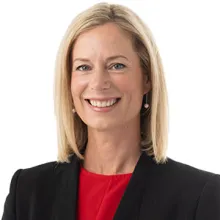
BELINDA KING: Finding a GP in Tassie can still mean long waits or at times no availability at all, particularly in the regional areas. Now the Federal Government is pointing to two major initiatives to help fix that. More than $1 billion national investment in GP training, and for the first time, full medical degrees being delivered in Launceston through UTAS. Federal Member for Lyons, Rebecca White, joins us this morning. Bec, good morning.
REBECCA WHITE, ASSISTANT MINISTER FOR HEALTH AND AGEING: Good morning, BJ.
KING: Now people are still struggling to get a GP appointment even today. How long before this investment actually can make a noticeable difference on the ground?
WHITE: Well, people should start to see a difference already because we've provided some of these training places for GPs who are already out in community. I've met with some of them, they're doing their placements in some of our local GP practices. We've got 74 training places here in Tassie and 72 of those positions are filled already. So, there are doctors out there right now who are taking advantage of this investment and that's making a difference and I know a lot of people are still thinking about whether or not they'll be able to get in to see a bulk billing GP.
I just wanted to give you some good news that here in Tassie we've now got 59 bulk billing clinics operating across the state, which is a huge increase of GP practices, so hopefully more and more people can get in and see their GP for free.
KING: So 72 of those 74 spots filled at the moment. Do we get any guarantees that those GPs will stay in regional communities, stay in Tasmania?
WHITE: There's no guarantee, but what we know from the discussions that have been had, but also the program as it's been funded in the past, is that when people grow up in a community like Tassie, and they can now do their end-to-end training in Launceston, in Burnie and in Hobart, so right around the state, they're more likely to stay there, because they've done their training there. They've built relationships with their patients. And that's certainly what I was hearing from the registrars who are undertaking this program as part of their training at the moment. They're telling me they really enjoy the fact they can have continuity of care, so ongoing relationship with their patients and that means they're more likely to stay in those communities. So the biggest thing we can do I think is keep supporting these trainees, keep supporting the GP practices that are engaging them and giving them a good experience because that means they're more likely to stay.
KING: It's a significant federal investment, so how much of that funding is actually flying into Tasmania? Is it limited to those 74 spots?
WHITE: We'll be rolling this out continuously, this is a significant increase on what we did last year. it's a 16 per cent increase on last year and it's nearly a doubling of when we came to government in 2022. So we are training more and more doctors every year. And the exciting thing is that we're seeing more and more people choose to study to become a GP. So this year across the country, this is not specific to Tassie, but it will flow through to Tassie especially now because we can offer end-to-end training in places like Launnie.
The national program will support about 2100 doctors commencing their GP training across the country, which is the largest number on record, on top of it being the number on record last year, on top of it being the largest number on record the year before. So we are seeing a steady increase over the last three years of more people doing GP training across the country, including in Tasmania, which is really good news because it's great when we can grow our own doctors and also give them a chance to do their study here in Tasmania from the time they start to the time they finish.
KING: Let's talk about that, that medical training in Launceston because training doctors locally makes so much sense, but it's still a bit of a long pipeline, isn't it, in terms of the number of years it takes to actually go through that medical training?
WHITE: Yeah, that's right. I mean, it's a very important area of study and we want them to make sure they've got the time because they come out and they've got a really important job. You don't want to go and sit before a GP who hasn't had appropriate training. And it's really important to have confidence in their system. So yes, it takes time, but it means we get great doctors at the end of it. So I'm really pleased that here in Launnie we've been able to offer 20 new spots for medical students to complete their training without having to go to another campus to finish off those last couple of years, which is what was happening. And so now, whether you’re in Hobart or Burnie or Launceston, you can, if you're a medical student, do your training from start to finish, which means that those people are more likely to stay working in Launceston which is great news for the northern community.
KING: Let's move to the fuel excise cut that is going to be kicking in as of tomorrow. There seems to be bipartisan support, a fair bit of the local and the state and federal governments saying thank you to each other for making this possible. Would you like to add any comment to that?
WHITE: Well, this was a decision that came out of National Cabinet, which is a process that includes all of states and territories. So our Premier was at the table there along with our Prime Minister and there was agreement. So that's why we've got consensus, and bipartisan support for this because everybody understands we have to do what we can to keep cost of living pressures under control. We've seen fuel price escalations that have been pretty eye-watering, and I've been speaking to a lot of our social services groups as well as our industry groups to understand what the impact of that is looking like across the economy, and on household budgets.
And it's really hard, it's getting really tough for people. So, the decision that has been taken to halve the fuel excise on petrol and diesel for three months kicks in from tomorrow, so that will make fuel cheaper for Australians by about 26 cents. So if you're filling up full tank, it's $20 back on what you would have paid otherwise. That's not going to be everything to everyone who's feeling a lot of pressure at the moment, but it's something.
And we're also cutting the heavy vehicle road user charge to zero for three months, which is really important for our trucking industry. So that'll help them keep their work underway. And that's important for keeping our ag sector moving. It's important for keeping groceries on our supermarket shelves. It's important for keeping all of those things happening around our economy. So that also keeps the cost pressures a little bit lower because we've seen the impacts right through the supply chain.
We want Australians to have confidence that we're thinking about this from every angle and we've got really strong plans because we don't know when this war will end. We would like it to end soon because we want Australians to start to feel some relief from the pressure that they're seeing at the bowser.
KING: As difficult as it is, I think everyone really truly needs to bear in mind that the circumstances that have caused this are extraordinarily and truly beyond this country's control. So we can only deal with the hand we're dealt, unfortunately, isn't it?
WHITE: That's exactly the reality we are faced with. It's an international fuel crisis, really, and we're working with all the governments around Australia, because we want Australians to know that we are tackling this and trying to keep our economy moving, and supporting those who are most vulnerable too because you would hear from listeners to this program, and I hear from people in my community about the kind of pressure this is placing on household budgets. It's very, very tough for people so we are trying to do what we can to reduce some of those cost pressures where it's possible.
KING: Bec White, thank you very much for joining us this morning.
WHITE: Thanks so much, BK.
KING: Cheers. Rebecca White, Federal Labor Member for Lyons with us this morning on LAFM and 7SD.