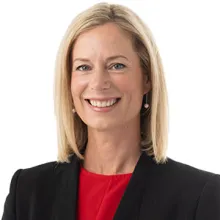
BELINDA KING, HOST: Now, on the topic of super girls, it has been a big year in politics and a particularly significant one for Rebecca White, who made the move from state to federal and was elected as Labor's Federal Member for Lyons at this year's election. As the year begins to wind down, she joins us for a bit of an end-of-year catch-up. Super girl, Bec White, morning.
REBECCA WHITE, ASSISTANT MINISTER FOR HEALTH AND AGEING: Good morning.
KING: Sorry, we've had a very big year, and I know it's been a big year personally and professionally for you. When you look back on the move from state to federal, what stands out for you most this year?
WHITE: Well, I just want to say thank you to everybody who provided their support and voted for me at this election this year because – I'm so grateful. The greatest honour in this job really is to have the privilege to talk to people about what's happening in their lives or be invited into businesses and to see what's going on across our economy in Tassie, and then have the responsibility to represent those interests in Canberra.
It's been phenomenal. We're part of a federal government that's got a really clear plan for our country and I'm really, really enjoying it. So, I'm very much – I’m very grateful to everybody, and I’ve really had a great year. Thank you.
KING: Now, you represent one of Tassie's most diverse electorates, and in recent weeks, we've seen the bushfires at Dolphin Sands heavily impact the local communities. What role can the federal government play in recovery, and what support are you advocating for locally?
WHITE: We have sadly seen bushfires start very early in Tassie this year, and in my electorate, St Helens has been impacted as well as Dolphin Sands. I visited Dolphin Sands last week and met with some of the residents and the council. And today, the Minister for Emergency Management, Kristy McBain, is in Tasmania, and I'm taking her out to show her some of the impacts of the fire and to meet with residents and to meet with some of the first responders who led that activity in terms of responding in the community.
We've provided support to the Tasmanian Government through a range of different grants, and if anyone needs to, you can find those details on the Service Tas website. We've assisted with emergency assistance grants which help with shelter or clothing or food, some of those things that you just need immediately when you are evacuated from a fire-affected area, and that's for St Helens as well as Dolphin Sands. But then, specifically for Dolphin Sands, given the loss of properties that we saw there and just the general devastation, there are additional grants. So essential services outage grants, because people lost essential services for more than 5 days. It continues to impact on some people. And then, recovery and restoration grants, and this is to assist people with living expenses, replacement of household items, repair and restoration of the home if they don't have insurance. Because we realise that for some people, the consequences of these fires will be long lasting, and so, the federal government has stepped in and provided additional financial support.
KING: Let's turn our attention to health for a moment, because it continues to dominate our conversations. There is, of course, the ongoing clash between the states and Canberra over aged care funding, with significant numbers stuck in hospital beds waiting for places. From a federal perspective, what can you do to assist with that bottleneck?
WHITE: And I want to just make it clear, none of us want to see patients not receiving the care they deserve or older people staying in hospital when they should be in aged care bed. It's why we've invested $4.3 billion in reforming the Aged Care Act and rolling out new places. Discussions around the National Health Reform Agreement are ongoing. There was a ministerial meeting late last week where ministers tried to narrow down the areas where there was still disagreement, with the hope that we might get to a resolution before Christmas. Now, that may not be possible given the circumstances over the weekend. I think everybody's diverted their effort and resources to making sure we support the community in Bondi and our fellow Jewish members of Australia. However, the intention was always to reach an agreement in this year, and there's been $23 billion extra put on the table by the federal government to support states to manage demand in hospitals. But also, coupled with that, we're doing quite a lot. And here in Tassie, we've got 5 Medicare Urgent Care Clinics. We've expanded bulk billing. And Tasmania's seen the greatest uplift, about 400 per cent increase in bulk billing GP practice across the state, so that people can access the healthcare they need close to home, without needing to rely on going to the emergency department, to try and take some of that pressure off. There are actions that we are taking, including negotiating and putting more money on the table, and we do sincerely hope we get an outcome this year to provide certainty for states and for the Commonwealth going into 2026. But I do note that from Sunday, of course, everyone's effort and energy have been directed towards supporting those terrible outcomes that we saw in Bondi and the devastation of that community.
KING: Yes, understandably, but there are still some 3000 people nationally that are awaiting an aged care bed. So we'll certainly be keeping tabs on that situation going into 2026.
WHITE: Absolutely, and that's appropriate to do so. And I know from talking to the Minister for Aged Care, and he's spoken about this publicly too, that when somebody is assessed and needs an urgent package, they usually get that within a week, which is important. It's those assessments where people have been categorised as having a mid to low range care need, it can take some time. I acknowledge that and it does put stress on families. It doesn't mean people don't deserve that care and I know the wait can be quite difficult for people, so we are working to address that with an additional 80,000 packages of care that will be provided over both this financial year and next financial year.
KING: You have mentioned Sunday's deadly shooting in Sydney. As a federal MP, what responsibility does Canberra have to respond, particularly around community safety and gun control, and what reassurances would you like to offer people feeling shaken by the tragedy?
WHITE: Well, it is completely devastating. And one of the things we can all do, because I think we're all seeking ways to help, is just to make sure that we reach out to one another in our state here in Tasmania and offer support, and continue to be inclusive and recognise that our Jewish Australian friends and family members are feeling particularly concerned at the moment. I called leaders in our Jewish community yesterday and extended my support and love to them and their family, and I encourage other people to do the same. Make sure that we look after each other. There are supports and resources available to people, too. If you are feeling particularly vulnerable at the moment, please reach out to Lifeline and other supports who are ready and willing to assist.
But I think in addition to that, BJ, you would have seen that National Cabinet stood up yesterday and had a conversation about what else can be done across the country, and there was a statement released by the Prime Minister there. So National Cabinet is the Prime Minister and all of the premiers and chief ministers from across Australia looking at how else we can support our community as we deal with this devastating terrorist attack. And there has been some outcomes, including looking at what we need to do around firearms in our community, looking at how we can support greater security for our Jewish members of our community so that they feel safe, particularly during Hanukkah, but also working to address some of the immediate responses that are necessary to support the community in Bondi at the moment. There's always work for the federal government to do here, whether it's leadership, showing that we can work together, but also through financial support, which will be provided.
KING: Finally, Bec, after an intense year and a very confronting end to it, how do you plan to relax and recharge before stepping back into what is shaping up to be another big year in the federal arena?
WHITE: Well, I always love being in Tassie this time of year, so I'm not going anywhere. I'm planning to spend some time with my kids and family and friends, read a few books. One of the other things I already plan to do, but I think it's also important to suggest that other people do, is donate blood. That's been something where people can make a big difference to support people who are in hospital in New South Wales at the moment. So just add that to the list of things you might want to do this Christmas because, whether it's today or next week or next month, that will help. And I know all of us are looking for ways we can make a difference at the moment, so I'm also going to be doing that. But I'm looking forward to playing a bit of beach cricket, to be honest with you, getting out there with my kids and having a hit and just having a splash in the water and enjoying Tassie summer.
KING: Fabulous.
WHITE: And I hope everybody else can find some time to do that too.
KING: Rebecca White, great to catch up with you this morning. We look forward to doing it on a regular basis in 2026. Have a great Christmas.
WHITE: You, too. Thank you.
KING: Thank you very much. Our Federal Member for Lyons, Rebecca White with us this morning on LAFM and 7SD.