
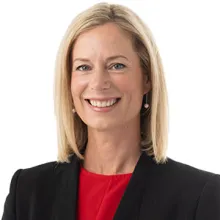
HAMISH MACDONALD, HOST: You're going to hear from Rebecca White now, who is the Assistant Minister for Women, Health and Aged Care. She's in Sydney this morning for the Women's Health Roundtable. Women with cardiovascular conditions suffer different symptoms than men, which often leads to delayed diagnosis and treatment, which is where our conversation begins.
Rebecca White, welcome to 702.
REBECCA WHITE, ASSISTANT MINISTER FOR HEALTH AND AGEING: Thanks so much for having me on.
MACDONALD: What do women who've lived with cardiovascular disease tell you about accessing care in Australia? What are the things that they run up against?
WHITE: Yeah, that's a really good question. What they're telling us is that often they get dismissed, so they might be presenting with symptoms of a heart attack into the emergency department, and it takes a lot longer for them to be supported. They might get told to sit down and have a Panadol, it's just anxiety or they're just dealing with some pain, or they go to a cardiologist or they might go to their doctor and they feel like they're not being taken seriously.
Now, that's not all of the time, but these are stories that I'm hearing commonly. And we know that cardiovascular disease is a leading cause of death for Australian women. So we're trying to get to the bottom of understanding why this is the case, that we're not doing a better job of supporting women to access the healthcare that they deserve.
MACDONALD: And what are the- I mean, there's obviously- must be quite a bit of research into this. Is it because the symptoms that women present with are different, or is it because of cultural perceptions, societal perceptions of women presenting with the same symptoms as men? What's going on?
WHITE: I'd say it's both of those things plus more. We know that the symptoms for women are different and they get referred to as atypical symptoms, but for women, they are typical symptoms. So it's not necessarily the gripping chest pain and the pain down your arm, which is also the case for some women. They may be milder symptoms. It might be back pain, headache, nausea, sort of things that could then get dismissed and you're given a Panadol for.
But we also know there's an assumption, I think, in the broader community that cardiovascular disease affects men [audio skip] than women, which is simply not the case. And so when women are experiencing these symptoms, they may not recognise them in themselves, but also health professionals may dismiss them. And the broader workforce, community, people they talk to, express their concern about what it is they're feeling, may not even consider that they're having a cardiovascular issue. So it is both the fact that the symptoms are different and sometimes less obvious, and that we are set up still with a very male model of healthcare when it comes to treating cardiovascular disease that doesn't account for women's experiences.
MACDONALD: You are in Sydney today this expert panel on women's health and you're meeting with women living with cardiovascular disease, but I wonder how you think we tackle medical misogyny. I mean, having a conversation about this stuff is one thing. Ensuring that changes flow through an entire medical system when, as you say, the factors are manifold and presumably some of this is also kind of institutional. This is written down in documents and guidance papers that date back many decades.
WHITE: Yeah, that's true. So we are having a roundtable with women today, about 50 women who've come together here in Sydney to share their experience of living with cardiovascular disease. And we're hoping to learn from them what it's like, but also what their experience was like interacting with the health system. The next roundtable we will be doing will be with health professionals and some of their colleges because they are working off guidelines that are written for male model of healthcare. A lot of the research that we've undertaken, not just here but internationally, has been based on clinical trials with men and medicines and how they affect a man's body, and that's just a legacy issue from the 1990s really. So we are doing our best to make sure there's informed information, informing policy that's guided by the evidence. Hence why we're talking to these women today.
I think a lot of people might be surprised that here in Australia, 20 women die every day from heart disease, so it is something that a lot of people are affected by every single day. And in Australia, about one in four women deaths in 2022 were due to cardiovascular disease, so it's a very significant issue. So we are both hoping to find out how we better inform women about the signs and symptoms, but also what else we need to do to educate the health workforce so that we have faster diagnosis and treatment.
MACDONALD: Rebecca White is here, the Assistant Minister for Women, Health and Aged Care. I'd love to hear from you this morning. If you have been through the health system, if you have faced cardiovascular issues and have found the questions coming at you, the way you're treated, the way your issues are triaged is perhaps different, 1-300-222-702 is the number.
I'd also like to ask you this morning about the Federal Budget, Rebecca White. Obviously, we're seeing growing pushback, particularly from the small business community against some of the changes that your government's trying to introduce. Also growing pressure over changes to trusts and the way tax arrangements might impact them. Do you think the government's got it wrong when it comes to the impacts of your capital gains changes on small businesses?
WHITE: I don't, and there's going to obviously be further consultation, but there's a couple of things I'll premise my answer by saying. The way that we are tackling the changes to capital gains tax really is to address some of the problems we're seeing in the housing market first and foremost. So this has been the guiding principle. We want the treatment of income earned from labour and wages to be the same as other legitimate forms of income like is earned from assets. So it's about making our tax system fairer because after all, why should a nurse or a teacher be taxed more than a property investor? So this is about addressing fundamentally that issue, and this will help us see 75,000 people into home ownership.
Now, you've touched on the matter of small business, and I've read some of the reporting around this too. So there's a couple of things I think that are relevant to note. About 90 per cent of small businesses will not be affected by these changes that we're making to trusts. I think there's certainly always going to be people who raise concerns through the media and they have every right to do that. But broadly speaking, small businesses will not be affected. I've noticed some of the commentary about potential for stamp duty to be applied. We're working with states and territories to make sure that we understand what that might look like.
And also, I think it's really important to let people know that our government will provide rollover relief to affected small businesses that want to restructure from a trust to a company structure. So there are steps that we've already taken. There are steps that we will take. These changes won't come into effect until 2028.
MACDONALD: But I suppose the point is for people here in Sydney running small businesses, it's already pretty difficult. The amount of tax you have to pay to have to be dealing with constantly, whether it's quarterly BAS or other instalments. There's already a huge amount of challenge. And I guess the broader argument that we're starting to hear, particularly from the small business community, is that this government is disincentivising their ambition. Do you think you are doing that, you're sending the wrong signals?
WHITE: No, well, there's 90 per cent of businesses, small businesses, will not be affected by the tax changes that we announced in the budget. I think that's really important to reinforce. And also in the budget, there was a lot of support announced for small business because we do recognise that is the engine room of our economy. The innovation that individuals undertake every single day with their specific endeavours is what makes our economy thrive, but also what makes it so interesting to live in a place like Australia.
So we've done a lot. So there's about $3.5 billion in new business tax relief measures that are designed to support small businesses, so making the 20,000 instant asset write-off permanent. So that'll give businesses more certainty to invest. We're reintroducing the two-year loss carry-back for companies with a turnover of up to $1 billion from 1 July this year. So basically that is assisting small businesses with their cash flow, because we know there has been a tough time in the economy for some small businesses. There are other measures that we've also introduced. And if you're a sole trader, you will also benefit from our $250 tax offset from the ‘27-‘28 financial year. We are trying to reduce the tax burden on working Australians.
MACDONALD: Yeah.
WHITE: We are supporting small business through this budget. There's obviously always going to be critics …
MACDONALD: [Talks over] Have seen all the memes?
WHITE: … and we will work to address some of those challenges.
MACDONALD: Have you seen the memes of the small business operators with their new business partner, Anthony Albanese, the new 47 per cent business partner?
WHITE: I haven't seen all the memes.
MACDONALD: [Laughs]
WHITE: I'll take your word for it that they're out there, though.
MACDONALD: I mean, they're clearly doing the rounds. And I suspect part of this is that it does take some time for the realities of these changes to flow through and for people to interpret them and understand them. But clearly there is a sector of our community that sees the government getting too far into their business model. Are you as a government open to listening if people feel that you've gone too far?
WHITE: We're always open to listening. That's our job. And as elected representative, I don't do my job well if I'm not out there speaking to people. It's why I'm asking 50 women to come together in Sydney today to share with me their experience of living with cardiovascular disease. We always want to understand what's happening across our community, across our economy. I think there's quite a lot in this budget for small business.
There's also been a lot of misinformation and a bit of a scare campaign. And it's important to recognise that about 90 per cent of businesses will not be detrimentally impacted by the tax changes in this budget. In fact, many of them will be better off because of some of the other measures that we announced. Our job is to make sure we're communicating directly with small business about that through chambers of commerce and business peaks and just talking to them in our communities. So we recognise there's a bit of work to do here, but I think once we are able to sit down and have that conversation, people will find there's support there for them that they're looking for.
MACDONALD: Thirty per cent tax rate will soon apply to all discretionary trusts who align earnings from investments with income tax. Is that ultimately a death tax?
WHITE: No, not at all. And I want to be really clear about this: reports on that are totally false. Fixed trusts and deceased estates are exempt from any policy changes. So if people are worried about that, they really shouldn't be.
MACDONALD: Rebecca White, appreciate your time this morning. Thank you very much.
WHITE: Thanks so much, Hamish.
MACDONALD: That's Rebecca White, the Assistant Minister for Women, Health and Aged Care.