
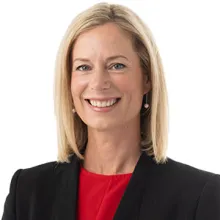
KYLIE BAXTER, HOST: It is Women's Health Week, well, it's coming to a close. Today's the last day and the theme, as I told you, this year is Do It Anyway. Yesterday we chatted to psychologist Inge Gnatt about how women need to carve out time to look after themselves. Small things can really make a difference. You know, just eat well, breathe exercise, all those sort of things were some of her advice, making that doctor's appointment, valuing your health. It is a topic close to the heart of Federal Labor MP Bec White, who is Assistant Minister Minister for Health and Aged Care, as well as Assistant Minister for Women. She joins me on the line. Happy Women's Health Week, Rebecca White.
REBECCA WHITE, ASSISTANT MINISTER FOR HEALTH AND AGEING: Hi, Kylie. Thank you so much, and same to you.
BAXTER: Yeah, it's something so important, I think, for all of us to make sure we do think about our health. There's currently a Senate Select Committee looking into women’s health. Can you tell us about that?
WHITE: Yeah, there certainly is. It was established quite recently. And it's looking at a couple of things. It's looking at postpartum care, to properly understand, particularly for women who have delivered a baby and then deal with postpartum anxiety or depression, what their experience was, where the gaps are, how we can improve service delivery. It's also looking at pain, because we know a lot of women, I've certainly had plenty share stories with me, where they've presented with pain and felt dismissed or not properly understood, and we want to hear their stories. And it's reporting next year, but it's accepting submissions until the 9th of October. So I'd really strongly encourage anybody who has a story that they'd love to share, and you can do it and have your name redacted, to let us know, because it's only from listening to women that we're able to make better decisions about their health care.
BAXTER: And so why did you see it as so important to establish this inquiry? I mean, what was going wrong when it came to supporting women's health?
WHITE: We've heard lots of stories about women who have had great births or traumatic births, whatever it might be on that spectrum, but the postpartum care period can be a bit patchy. Whether it's the continuity of care, so that means the continuing contact with somebody who knows them and can provide that care, or just the feelings that you become a bit overwhelmed, which is pretty normal, whether it's sleeping or feeding, or generally looking after your own wellbeing and health, has led us to understand that there are some gaps in the system. And plenty of women have got their own stories to share. I’m no different. The Chair of the Senate inquiry, Marielle Smith, has shared her own story of postpartum anxiety and she's doing a marvellous job championing this as well.
So we know that there are some challenges here. It's also an opportunity for us to hear from women who've experienced a miscarriage, because we know sometimes the care that is received at that time and afterwards can be a bit patchy depending on where you live and what your relationship is like with your healthcare professional. So these are some of the areas we know we can do better. We can do better, and especially when it comes to women's pain.
BAXTER: You're listening to the voice of Rebecca White, Assistant Federal Health Minister. I'm Kylie Baxter, and you're on 9.36 ABC Hobart. So the Federal Government launched an advertising campaign highlighting perimenopause and menopause in May of this year. What were you hoping to achieve out of this?
WHITE: Yeah, we sure did. So this highlights the value of participating in a Senate inquiry actually, because there was a Senate inquiry in 2023 into perimenopause and menopause and the recommendations from that included a public awareness campaign which we funded, and that has started to roll out this year. So going back to our earlier chat, there is absolutely value in making a submission. Submissions from anybody to Senate inquiries are listened to, and they can inform decisions made by government. And this is an example of that. So the perimenopause and menopause campaign came from hearing the voices of women in 2023 who said they didn't see where they could access healthcare for the symptoms they were experiencing. They didn't have a proper understanding of the symptoms of perimenopause and menopause. And a lot of healthcare practitioners were dismissing them when they were presenting and asking for help.
So, this campaign is aimed to do a couple of things. It is providing a pack of resources and they're all evidence-based because I think a lot of us get pushed a lot of information on social media. Not all of it's very helpful, not all of it's based in evidence. So, this is about cutting through that information. It's also being combined with resources that have upskilled our health practitioners so that they can better respond when women present with perimenopause and menopause symptoms. And the campaign is really about destigmatising perimenopause and menopause. It happens to half the population, Kylie. We're all going through it as women as we age. We want workplaces to be more familiar with it, we want our partners and our loved ones to be more familiar with it. And as women, we deserve to have good information about what's happening to our bodies. So the campaign aims to break down that stigma, share evidence-based information, and direct people to where they can get help, because you should not have to go through this alone.
BAXTER: Now your Government's also investing in what's known as LARC centres. So what are they and why are they important?
WHITE: That's right. So Centres of Excellence for LARC is- and there's always so many acronyms in health, so I will explain it.
BAXTER: [Talks over] What is it?
WHITE: What's a LARC? It's a long-acting reversible contraceptive. So it could be an Implanon, which you put in your arm, or an intrauterine device, which is also called an IUD, another acronym for you, which is inserted. So we are funding quite a lot in this space because, again, we heard from women that it's a bit of a postcode lottery. Wherever you live might determine your access and the affordability for this kind of contraceptive care. And we know it's 99 per cent effective, and it's also really useful in some cases for women who are dealing with period pain, heavy bleeding, endometriosis, so it's not just about contraception.
So today I actually announced here in Tassie, as part of our national campaign, a $25 million investment to establish a Centre of Excellence in every state and territory. Here in Tassie, we'll have one delivered by Family Planning, who've got offices in Burnie, Launnie and Hobart. And it'll be a service women don't need a referral to. You can just go, have a chat to a health professional, they'll provide that to you for free. The insertion and removal for free and pain relief, which we know has been a barrier for a lot of women accessing an IUD, will be provided as a part of that service for free too. So this is about making it affordable, accessible for women to access a LARC, a long-acting reversible contraceptive. They are 99 per cent effective, and an IUD can last eight years. So it is a really useful thing to know about, and I'm happy talk about it because I think we don’t talk about these sort of things enough. And they're pretty normal, routine healthcare options, but women just need to know the choice is there for them.
BAXTER: I think a lot of women listening would be very relieved to hear that, because many have paid, found it really expensive, and so to have that option for people who might not otherwise be able to afford it is going to be a bit of a game changer, I think for a lot of people in Tasmania, a lot of women. So good to hear some positive news on a Friday. Rebecca White, thank you for joining me.
WHITE: It has been my pleasure, Kylie. Thank you.
BAXTER: Thank you, Rebecca. Bec White there, Assistant Federal Health Minister, with some good news on contraception and just generally talking about women's health.