
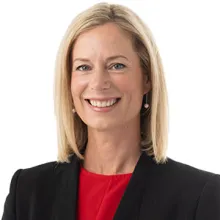
REBECCA WHITE, ASSISTANT MINISTER FOR HEALTH AND AGEING: There’s nothing more important than making sure our little ones get a really great start to life, and that’s why the Albanese Labor Government has been proud to support our early childhood educators. We provided a 15 per cent increase in their pay in December 2024, and recently we've extended that with a further 15 per cent increase. That’s $2.6 billion over the next two years.
This is because we know that we have to keep these workers. They are so vital, not only for supporting our little people to get a great start in life but supporting families to return to work and to training.
Having access to early childhood education is a really important productivity enhancer for our economy. And I don't think a lot of people think of it like that. They think about it as, essentially, looking after children - but it's not just that. It's about providing these kids with a great start in early education and care but also supporting families. And we know that this has helped so many families to be able to re-engage with work, re-engage with training, and to be able to continue to provide for their own families.
Since the pay increase was introduced in December 2024, we've actually seen 20,000 more workers join the early childhood education and care sector. This is really important. Because I know a lot of families might have found in the past that they've struggled to find a place with a childcare provider. I know that still continues to be a bit of a challenge. But what we have seen is a decrease in that problem because we've got more workers in the sector, because they're finally being paid appropriately.
This is really important. These people do some of the most critical work any person could do in our community, they look after our smallest and most vulnerable, so we need to make sure we pay them properly. They are fully qualified and trained to provide this work, and we are recognising that with this 15 per cent pay increase. It means that, for a typical educator who's in full-time work, they're getting about $255 more a week compared to when the first pay increase started, or $410 a week for a teacher. Now, these are substantial improvements in wages for a highly feminised industry that has typically been one of the lowest paid in our economy, and we need to continue to see improvements here. Because this is important work, it is valuable work, it is highly qualified work, and we are recognising that through this pay increase.
I'm going to ask Suzie, who's the CEO of Lady Gowrie. to speak to what it means and also, I think, some of the great improvements they've seen in terms of worker retention across their site, because that has been a really big, important outcome that's resulted from the pay increase.
SUZIE JONES, CEO, LADY GOWRIE TASMANIA: Lady Gowrie Tasmania is really supported by the Australian Government’s investment in the worker retention program. This increased funding allows us to ensure stability. It's really important for children and families to know that they've got a connected, stable workforce that are really supporting and having fun and great growing and learning outcomes. But importantly I think the qualification aspect is recognising that educators undertake a lot of training, professional development and formal qualifications to do the role that they do.
These pay increases recognise that children don't have good learning outcomes if they don't have that wonderful education and care basis as well as beautiful play environments. We talk a lot about our workforce being dedicated and caring, and of course they are but you don't work in this sector for the money. And increasingly, these wages are reflecting that we need to recognise them for the important role that they play but also recognise that they are skilled professionals that are really impacting on the learning outcomes for our littlest people and putting children first every day.
JOURNALIST: Has staff retention been an issue for the Lady Gowrie in the past?
JONES: It has been in the past. We've seen quite a reduction in our turnover over the last three years. We've got a really stable workforce now and recruitment activity has really decreased. So, we're really thankful. We're doing a lot of work around our professional development program, our educator well-being, but the wages are pretty cool to stop that turnover.
JOURNALIST: And would you say that wages are one of the main reasons in the past that you have had issues recruiting and maintaining staff?
JONES: Yes. I think just recognising that this is an important professional workforce, so people are going to where they're going to get more money. We generally pay over award wages for all classifications, and that's important to us to recognise the job that our educators are doing. But certainly, in the past, when wages were lower, we were losing lots of educators into the other human services sectors, so into aged care and to disability, but we see much less of that now.
JOURNALIST: Do you think that these changes will actually improve the quality of education and care that children receive, you know, with potentially being able to attract higher qualified staff?
JONES: Yes. I think the wages will reflect that. We've got a higher number of educators that are wanting to move on from their Certificate III qualifications into Diploma qualifications. So increased wages are really making those qualifications more attractive. And enhancing the skills of our workforce means that children have better learning outcomes and get a whole range of experiences in the environment than with a less stable workforce, so yes, definitely.
JOURNALIST: And besides the pay and the retention of staff, or the staff shortfalls, what else are the sort of big challenges that you face as an education provider?
JONES: There are a lot of change in the sector at the moment. We're seeing a lot of policy change and a whole raft of changes to the legislation. We're aware of that and at the end of the day, that means more changes for educators and we're trying to minimise that. We're an organisation really trying to stay on top of these reforms and making sure that we embed them into training in a way that makes sense for educators.
JOURNALIST: You might have touched on this just before, but do you expect that the higher wages will make it easier to attract new staff? Like, do you have- how many - I don't know if you can kind of put it in numbers, but do you immediately see a lot more people on board now?
JONES: Yes. We were running recruitment campaigns a couple of years ago for 30 to 40 staff and continually recruiting. Now we're recruiting in pockets for two or three staff members and maybe some casuals. So, we've definitely seen that churn slow down and we're definitely seeing more qualified people apply for roles across our services. So, that churn has definitely slowed down. We’ve got just under 600 educators across the state. So, we're lucky in being a large provider that we have opportunities for staff in different services, and all of our services are so different.
We like to think that we've got a home for everyone. We don't have a cookie cutter model, they're all quite bespoke. So, we’re- we've got the luxury of being able to offer internal transfers to our staff as well.
JOURNALIST: And I'm assuming that you do this out of love and not necessarily for the pay. Is that a fair?
SINEAD CRAWFORD, MANAGER, LADY GOWRIE TASMANIA: 100 per cent. Yes.
JOURNALIST: Can you talk me through, I guess, your career in early childhood education?
CRAWFORD: I started my career at 17. So I went to TAFE, instead of going to Grade 12 and then I started working. I have worked for three different organisations within the sector. I started with Lady Gowrie and am back here now.
JOURNALIST: And I imagine seen a lot of changes in education over your time?
CRAWFORD: There has been a lot of changes, yes.
JOURNALIST: What keeps you coming back each day?
CRAWFORD: The children. Caring for the children and being able to give them a welcoming space where they can always be supported, learn, grow and feel welcomed.
JOURNALIST: I would imagine it's quite a tough job at times. Do you feel that this new pay rise represents the work and the effort that you put in day to day?
CRAWFORD: Definitely. It definitely makes it easier to stay in the industry because bills are getting higher. So, it does help you to be able to stay and do it.
JOURNALIST: And do you find at times, I guess, the difference between a centre like this instead of school, is it viewed more as babysitting than perhaps as education? Or do you think times are changing and we're keeping up with that idea that you guys are educators?
CRAWFORD: I think it definitely is viewed more as babysitting but I do think the times are changing and it is getting less and less viewed as that but it definitely still is heavily viewed in that way in certain areas.
JOURNALIST: Have you ever had moments in your career where you've thought about pulling the pin?
CRAWFORD: Yes. I think so, everyone has on a hard day..
JOURNALIST: Financially, did that ever come into it or not so much?
CRAWFORD: Not so much for me because I would be looking at other opportunities in the community services sector.
JOURNALIST: And do you think a pay rise kind of places you more in the public's eyes as educators. Do you feel that that's recognition?
CRAWFORD: I think so, yes. I think it definitely recognises our education and our experience.