
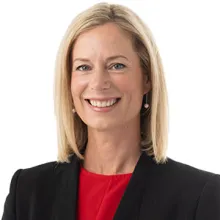
REBECCA WHITE, ASSISTANT MINISTER FOR HEALTH AND AGEING: I'm absolutely thrilled to be standing here in Sorell at the location of the brand-new Sorell Medicare Urgent Care Clinic. I'm joined today by Kerri Mus, who's the owner of Sorell Family Practice, who are going to be partnering with ForHealth to deliver the Urgent Care Clinic here in Sorell.
This is such an exciting day. Our community worked really hard to highlight the need for an Urgent Care Clinic in Sorell ahead of the last federal election. I'm so proud that we are delivering on this commitment, and we are doing it before Christmas. This is something that will make a massive difference for families in the southeast region. This is a growing area. We've got a lot of people who need access to urgent healthcare treatment, and at the moment, their only option is to travel through to the city. Particularly over the summer, we see an increase in population as people come and holiday here, but that can also be a time when accidents happen. So to know that there's a Medicare Urgent Care Clinic in Sorell provides a peace of mind to families and people who are going to rely on this service and will be able to do so seven days a week, fully bulk billed, all you need is your Medicare card, and we've got great doctors and nurses who are already working here. In the new year, there will be more doctors coming into this practice to support the operations of the Medicare Urgent Care Clinic.
This is one of the ways that the Labor Government is strengthening Medicare, by making sure that people can access the healthcare that they need close to home. We know with our existing Medicare urgent care network across Tasmania, about one in four presentations are children. We also know that about a quarter of all presentations happen on the weekend. These services are open seven days a week, and they're open extended hours. And about a third of presentations happen after 5pm on a weekday. This is why these services matter so much. These services provide help for healthcare at a time when you might not be able to get in to see a GP, and you don't want to travel through to Hobart to go to a busy emergency department because what you actually need help for might be a sprain or a cut or a baby with a temperature, and you just need peace of mind to be able to see somebody quickly in your local community to get the healthcare that you need.
I'm going to ask Kerri Mus to say a few words as both the practice manager, owner, nurse, and mum of six. She is Wonder Woman, and I'm so thrilled that she and her husband Gerard are the successful tenderers for the Medicare Urgent Care Clinic in Sorell. This is a family practice by name but also by ownership, and I'll ask Kerri to say a few words.
KERRI MUS, SORELL FAMILY PRACTICE: Thank you. We are super, super proud. My husband Gerard and I are actually partners with Dr David Dalton and Dr Sue Lizner as owners of the practice, and we've seen a need for this for a very, very long time. I've been part of the community here in Sorell for 30 years. I've raised six children, as Rebecca mentioned, and just yesterday, we've been open for two days and we've seen over 50 patients come through already. Last night, 7.15, I was about to leave and a young mom comes in with a child, and I'm like, this is what it's about. This is why this is needed in this community. I wish it was here before this, but I think this is one of the best things that's probably happened to this community in a very long time. So, I thank you guys for bringing this along.
We're actually going to be partnering with ForHealth group, and without them, we wouldn't have been able to do this as well. And we feel that this is something that we need to do to be able to bring even more services to this community. So we're looking forward to this time ahead.
JOURNALIST: Kerri, thank you for that. Maybe just a couple of questions before we move on to any other speakers. What made you and your partner want to put your hand up to take on the responsibility of hosting the Urgent Care Clinic here for Sorell?
MUS: I think it was because we did know how much it was needed, and we see this on a daily basis, the phone calls that we get and how we have to always- reception always have to say, sorry, we don't have any doctor's appointments available. We have an emergency doctor allocated for the morning and the afternoon, but we often fill those up as well. And so, when we get these calls, it's like, what are we going to do? So our reception team just have to say, call the Urgent Care Clinic, go to the Urgent Care Clinic in Hobart. Now, we have a lot of older residents who were just like, I'm not going to Hobart. That's not where I want to go. So now that we're here, it's going to be perfect.
JOURNALIST: Have you heard much from members of the community about how they feel about this? Did they seem pleased?
MUS: Definitely. Yes. They're all walking in, and we actually had a- every year, we have a patient lunch. So the practice, we put on a lunch for our patients and we had it right in this room here, and we were telling them all about it and they were like, this is great, because they hadn't heard anything about it before. Didn't even know what an urgent care clinic was. And so, then, I’m going to tell my neighbour this. So- yes, so it’s been really good feedback.
JOURNALIST: And did you find adjusting your practice from how you were running it to now taking on the responsibility of an Urgent Care Clinic? Was there much work that had to happen behind the scenes to make that transition happen?
MUS: Yes, there has been a lot of work. But we’ve got an awesome teem, so we’re very lucky. We’ve got all our GPs and our nurses are all very qualified. We’ve got ED nurses that work here, we’ve got midwives, we’ve got an amazing team, so it’s all come together really well. We’ve all worked together. The atmosphere within the practice has been amazing too, because we are all working together and they’re all really excited about bringing this to Sorell, because most of us [indistinct]...
JOURNALIST: And what sort of services will be on offer here? Will there be anything here that’s in addition, or are you offering anything extra that perhaps some of the other Urgent Care Clinics in the state aren’t?
DR DAVID DALTON: I've been working in Sorell for 30 years now, and I’ll add on to what Kerri says that this area has grown so much in those 30 years. When I arrived there were vacant fields that are now filled with houses, and there are even more planned for the area. We've always struggled to keep up with the demand placed on the medical services. We moved into this building 13 years ago because we'd outgrown our old one, and even moving to a bigger building we have struggled to keep up with the daily needs of general practice and the urgent cases that come in. We've always- as an outer suburban practice, people walk in with these sort of ailments that are typical presentations in an Urgent Care Clinic. So we're all very experienced in dealing with those issues already, but now they're being focused in one place and delivered in hours which are extended. And so now people have an option, an extra option in Sorell if they can't get into the usual GP. And as Kerri said, people come in to us and say, I don't want to go over the Tasman Bridge, I don't want to go into town – can't you fix it all for me here? And now there's a lot of things we can fix here which is going to make a huge difference to families and the elderly who often find it difficult to travel that distance into the city.
JOURNALIST: And could you perhaps talk us through the x-rays and maybe any other additional services that this Urgent Care Clinic will be offering that's unique compared to any of the others?
DALTON: We will be offering an x-ray when it's developed, and that will allow us to do x-rays for suspected fractures, pneumonia with chests and any other thing that fits the bill for the urgent care. But also, it will be available to anyone who wants to use an x-ray – so if you've got a referral from the doctor from a different practice or from our practice, you can come in and use that x-ray. Eventually we're hoping to offer ultrasound services, perhaps down the track a CT scanner. Currently, most these services are only available in Rosny, which is 20 minutes down the road. So again, that's going to be a great saving in driving and time for people.
JOURNALIST: Do you have the timeline in mind for when you'd like to see those x-ray and CT scan services available here?
DALTON: Love to see within the next few months. Just depends how the build goes, I guess.
SUSAN POWELL, ACTING CEO, PRIMARY HEALTH TASMANIA: For Primary Health Tasmania, we're really excited about this new development for Sorell. We understand the importance of people having regular contact with primary healthcare services as a really important way to keep themselves healthy and well. So access to the Medicare Urgent Care Clinics means they have another pathway where those needs might be urgent, and for some reason they're unable to access their usual primary healthcare services.
JOURNALIST: And is the addition of the Urgent Care Clinic going to help this practice remain open and give it some long-term sustainability? We know that GP services have been struggling lately.
DALTON: I think the normal structure of our day is, as Kerri said, we have emergency spots. So we'll often be seeing and fitting into our day people who present with urgent care-type presentations. So I think it will take a little bit of the burden off of us. But, of course, patients from anywhere who have a Medicare card can come to the Urgent Care Clinic. So it won't just be patients from our practice. So I suspect with the GP shortage as it is, we'll still be working really hard in our practice.
JOURNALIST: But does this help in giving you some acknowledgement, some recognition of the hard work?
DALTON: Oh, absolutely. I think it's a great additional service to be able to offer the people. And I think in terms of sustainability, one of the problems we have is attracting people into general practice, training them, which we do a lot of here. We train GP registrars every year. Retaining people in general practice is often tricky because people find they want a bit of work-life balance. They also like a bit of balance in their daily routine. If you have an Urgent Care Clinic co-located with a general practice, then you'll find GPs who might want to work some sessions in general practice and a session or two in urgent care. Breaks up the week for them, keeps them interested, so I think it'll improve the sustainability of general practice overall.
JOURNALIST: Very good, thank you. Bec, I’ve just got a couple of additional questions on this one, perhaps more broadly on health. Was this clinic delivered on time and on budget?
WHITE: We made a promise before the last federal election to deliver a Medicare urgent care clinic in Sorell before 1 July 2026, so we've delivered it ahead of time, opening it before Christmas. And I'm just so thrilled we've been able to do that. Because the community response when we started talking about the need for a Medicare Urgent Care Clinic in this community was overwhelming. Whether it was from people as far up the coast as Swansea down the peninsula to Nubeena, in this growing municipality of Sorell there's such a great need for access to urgent care and we've been able to provide it, and I'm just so thrilled we've been able to deliver it.
JOURNALIST: So was ahead of time, but was it on budget?
WHITE: I understand it's on budget. That's probably a question for Susan.
JOURNALIST: What was the total Federal Government investment in this?
WHITE: So there's investment for the entire Medicare Urgent Care network across the country, it's not broken up into individual columns.
JOURNALIST: And what's progress like on the Kingston Urgent Care Clinic and any others that are in the pipeline as well?
WHITE: So we have five Medicare Urgent Care Clinics that have been operating in Tasmania. The Sorell one being opened now is the sixth and there are two more to come - one in Burnie and one in Kingston - and the announcement about the location for those is imminent. It's very exciting that we're going to be able to expand this network and do that well ahead of 1 July 2026, which is when we said we'd do it by.
JOURNALIST: Just on the state and territories federal funding deal, we're just less than a week out from Christmas. Is it acceptable that we still haven't got a deal finalised yet?
WHITE: It's our hope that we would have been able to finalise a deal before Christmas, and we're working towards that outcome. Of course the events that we've seen in the recent week have meant there's been a diversion of resources and effort towards supporting our broader community in dealing with that tragedy. We've made provision within the MYEFO to accommodate that, the offer that's been put on the table. It's about $23 billion that we are negotiating across the states and territories to be able to provide appropriate funding for hospital care as part of that agreement.
JOURNALIST: Erica Abetz was quoted in The Mercury this morning, saying that there wasn't any funding in the Federal MYEFO for the National Health Reform Agreement. Is that accurate? And if it is, why wasn't that included?
WHITE: Minister Abetz is not accurate. It's on page 50 of chapter three of the financial reports, it's been provisioned, because we understand how important it is for us to be to deliver on hospital funding right across the country. We are serious about landing a deal here because we want patients to have access to the highest quality care. We want the states and territories to be able to come to a deal with us, hopefully before the end of the year so we can provide certainty for patients, certainty for state and territory budgets, and make sure that we can then work together on delivering those outcomes.
JOURNALIST: The fact that state and territory leaders are pushing back on the Government's offer, and have been doing so for some while now, does that show that the Federal Government has got it wrong with the offer that's currently on the table?
WHITE: Our offer is very serious. We're talking an offer of over $20 billion for the states and territories, to support them to deliver hospital care right around the country. That's on top of funding that we've already provisioned in the budget that was handed down earlier this year.
We are determined to work with states and territories to make sure patients can have access to high quality care, it's why we're also investing in primary health care. Medicare Urgent Care Clinics are a terrific example of that; the extra funding, $4.3 billion, that we're putting into aged care. We understand how important it is for people to have access to high quality care close to where they live. Whether that's delivered through our primary health network, whether it's delivered through our aged care network or our hospitals, we want states and territories to work with us to deliver outcomes here for patients, to come to an agreement on a deal, because that's in everybody's interest.
JOURNALIST: Just on the LGH cooling situation, Bridget Archer gave a bit of an update yesterday, said the works are still ongoing. Wouldn’t it have been ideal if perhaps that work was complete by the summer?
WHITE: Well, operations for a hospital network is the responsibility of the state government, I'm glad to see the Health Minister provided an update there. But I'm sure that staff and patients who are currently in the LGH would like to have air conditioning. We are seeing warmer days now and that can be really uncomfortable if you're not well or you've just delivered a new baby. It's important that people have appropriate air conditioning so that they are able to recover well.
JOURNALIST: Just to follow up on my last question there. I think you mentioned that the Federal Government is serious about this hospital funding deal, but the state government here says that if the late 2023 deal isn't adhered to in full, that Tasmania faces a $673 million shortfall of health funding over the next five years. The Government might be serious about it but is it adequate enough, what's on the table?
WHITE: We've got $23 billion on the table. That will see an uplift in funding for every state and territory, including Tasmania. We are serious about getting a deal here because we know that patients and staff who work in a hospital system rely upon it. I think what you see is negotiations happening through the media that are not at all conducive to the outcomes we need to reach. What we want is for people to come to the table, show goodwill, sit down and work through the details here. Because that's the way you get an agreement, it's not through having an argument through the media.
JOURNALIST: What do you make of the fact that they're saying that the shortfall could be as much as $673 million over the five years? That's significant.
WHITE: That's not taking into account the money that we've put on the table.
JOURNALIST: And I'll just chuck a Spirit’s question at you if you don't mind?
WHITE: No, sure.
JOURNALIST: The Government delivering an update on the construction of the berth. Is this a little bit too late? I think they're trying to dress it up sort of as a Christmas present.
WHITE: About a year too late, perhaps, I think all Tasmanians, in fact, probably everyone around the country has watched the debacle of the Spirit Tasmania project and wondered how it could be that you order a couple of new ships and you don't invest in the infrastructure needed so that you can berth them. We need to see more than just regular updates from the government on this project. We need to see the project delivered. It's important for economy, it's important for our tourism and agriculture sector, and it's important for our reputation as a state that is going to be taken seriously on delivering infrastructure projects.
Media event date:
Date published:
Media type:
Transcript
Audience:
General public
Minister: