
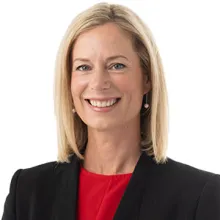
REBECCA WHITE, ASSISTANT MINISTER FOR HEALTH AND AGEING: The Australian Labor Government is very serious about eliminating gendered violence in our community, and I’m pleased today to launch the evaluation report. It’s a program that we have been delivering through our Primary Health Networks in every state and territory across the country. This program has been focused on training health professionals who’re working at the front line, whether they are GPs, nurses or even our receptionists in our doctor’s clinics, so they can better identify and respond to patients who are walking in the door dealing with family, domestic and sexual violence. This evaluation report shows very strong results. It is telling us that across the country, we’ve been able to provide training to thousands of people and that they feel better equipped and empowered to be able to support whoever might be walking in the door, presenting with indicators of family, sexual, domestic violence, and connect them with appropriate services.
Today, I’m also able to let you know we are extending this program with a $22.7 million commitment to allow the 12 PHNs who’ve been providing this service across the country to continue their important work.
This builds on the $48.7 million commitment that we delivered in our ‘22-‘23 budget. I'm really pleased today to be joined by the Assistant Minister for Social Services, Ged Kearney, who can speak about the work that we're doing across government to eliminate sexual and gendered violence. but also by Susan Templeman, who has a PHN in her electorate delivering outstanding results, and a practice manager here in Canberra, Samm, who's going to talk about what it's been like to participate in this training. Just some of the statistics that illustrate how impactful this program has been, that emphasise why we're continuing it across the country. Over the last few years, we've been able to deliver more than 700 training sessions, which has really upskilled our general practice workforce to be able to respond and identify cases of family and domestic and sexual violence. We've also been able to support 1500 individuals with a direct referral to a crisis service, and this might mean housing or legal support. It could be mental health counselling and crisis intervention. And alongside that, about 8000 other referrals have happened where there's been intersection between the general practice and support services for people who are at risk or are living with family, domestic and sexual violence. We know that we can't respond through a siloed process, and this is where every single department of government and every single sector of our community has to come together to work to eliminate gendered violence. That's why programs such as this are so effective, because sometimes the only place somebody feels safe to disclose is with their health professional. And our Primary Health Networks have been instrumental in providing support for this training to happen right around the country.
What we want is for anyone who is struggling with family or sexual or domestic violence to feel confident and comfortable to walk in to have a chat to their GP or nurse, or even the person at the reception desk, and know that they can get help.
GED KEARNEY, ASSISTANT MINISTER FOR SOCIAL SERVICES: Good morning, everyone. I'm Ged Kearney. I am the Assistant Minister for the Department of Social Services and for the Prevention of Family and Domestic Violence. This is such great news that we are going to extend this program. We have seen an uplift in people reporting incidences of family and domestic violence, and that is a good thing that people feel confident to report. But we need to make sure with that uplift that we have a whole of system approach that can deal with that and respond appropriately, and so the extension of this program into the primary healthcare sector is incredibly important. It means that as Rebecca said, the Assistant Minister said, that our nurses, doctors, allied health professionals and even our administration folk in primary healthcare facilities in your local GP are well equipped and prepared to deal with a disclosure.
I'm a healthcare professional. I know how people trust healthcare professionals with incidents in their lives, and I know that they do disclose very often in that setting. So this sort of program makes sure that people feel comfortable and confident that when they do disclose that something positive will be done to help them in their response. I have visited one of the primary healthcare services that provide this program, and they told me a story about a woman who came to the clinic with eight children and was fleeing a family domestic harm situation. Now, that could have gone any ways when she turns up to the reception and says, I'm not here for a health situation. I'm here because I'm fleeing a dangerous situation. But because that clinic had done this program, the admin officer knew exactly what to do. The nurses knew what to do. Everybody knew what to do to help that woman and her family. So that is how important this program is. It means people get the appropriate help, and it might even mean that lives are saved.
The Assistant Minister referred to the approach of the Albanese Labor Government. We are taking family and domestic violence incredibly seriously. This program is not in isolation. We're investing nearly $60 million in training our health professionals. We are working very closely with the healthcare sector, with Assistant Minister White and Minister Butler to make sure that our health system can respond. And we are investing over nearly $60 million over and above this program in training our healthcare professionals to be well equipped to deal with family domestic violence. But not only that, we are really taking a whole of government approach. Whether that's the Attorney-General looking very closely at the justice system and how that responds. Whether it's the Minister for Education, Jason Clare, dealing with sexual assault on university campuses. Whether it is our communications minister, Anika Wells, making sure that the online space is safe and isn't driving family and domestic violence. Or working with men and boys in the DSS, making sure that we grow healthy men and that we can prevent family and domestic violence. We are working right across the whole government to make sure that we can reduce what is actually a scourge on this society.
So thanks very much everyone. Thank you to Assistant Minister White for this announcement today. It is an incredibly important part of a very large whole of government approach that is investing nearly $4 billion into this area. Thanks very much.
SUSAN TEMPLEMAN: Susan Templeman, Member for Macquarie. I have this pilot operating in my electorate through the Nepean Blue Mountains Primary Health Network, and I visited one of the practices involved. What I heard convinced me that this program is life changing and potentially lifesaving for women. The doctors, the nurse practitioners, the practice manager, the receptionist all told me what a difference it had made to them, how they're more alert to things that might be an indication of domestic violence. How they now have the language to have that discussion with women, and that more than that, they have access to the pathways that will allow that woman a safe future. And the way it links in the referral pathways is absolutely essential to this program. So when I hear that from our trusted primary health carers, I know that we've got a program that really makes a difference and I'm so delighted to see this extended. What I'd say to all GPs, reach out to be part of this program. I had a very experienced GP talk to me, she felt she knew a lot about how to handle difficult things, and she said from her position in her practice through to every other position they now feel empowered to really make a difference.
SAMM JULIAN CURTIS, PRACTICE MANAGER: I'm Sam, practice manager of Culcairn Medical Practice and Health Plus General Practice. We are two practices in the ACT that have taken part in this pilot. With 175 deaths in 2024 due to domestic and family violence, the announcement of the extension of this pilot's funding to 2028 has been- actually not just a budget line about hope for our community. As medical professionals, we've been supporting survivors of family and domestic and sexual violence for a very long time with very little resources. So ongoing initiatives and funding is so important to us all as a community, not just as GPs, but it's something that we all have to worry about and think about and care about every day. The biggest thing that this pilot has brought to all of us is the ability to have crisis planning and appropriate pathways to keep people safe in that moment of danger when they need it. And this is definitely the gap that needs to continue to be filled. So I just would like to say thank you to Assistant Minister Rebecca White and Ged Kearney for making such an important announcement for us all today. Thank you.
JOURNALIST: So we hear a lot about the burden on GPs is often massive, like you're expected to be experts across everything. And so to then have this program on top, what has the support been to be able to facilitate this and not diminish any other services that [indistinct]?
CURTIS: So it's just adding practical levels of support behind our GPs and nurses and administrative staff. So things like direct phone lines for GPs to contact crisis workers when their patient’s sitting in the room on the day, to be able to build that rapport with the crisis worker before your patient leaves and actually be proactive in that safety planning, because we do know that when someone gets a domestic violence order, that is actually the most dangerous time for them. So that immediate and proactive safety planning from the medical practitioner's perspective is the most important thing and is the hardest thing to coordinate because there is that time pressure.
JOURNALIST: And one for one of the assistant ministers, I guess. You talk about how it's important to have spaces that people feel safe to bring up domestic violence situations, and not everyone has perhaps the best relationship with their medical practitioner. Are there other spaces, other sectors that you're looking at? I know you've listed some of the other programs, but are there other industries or sectors that you’re looking at to upskill for this sort of training?
KEARNEY: Certainly, there's a vast array. As I said, we've invested four billion dollars as a government into trying to stop family domestic violence and supporting victim survivors. So there's a raft of places where people disclose one small example is that we launched a program to help small businesses identify if one of their employees discloses, for example. There's a raft of multidisciplinary centres where people can just walk in and they can see a counsellor, there could be police there. So the various states provide those services. There are a range of things.
And just yesterday we launched the first ever national strategy for First Nations communities to stop family and domestic violence in Australia. And this is a landmark, it's the first ever of its kind. So we are looking at this right across the spectrum, right across the government, right across society. And we are very interested in also working with states and territories in frontline services to make sure that there are enough. It's a really important thing for this government to support our frontline workers like we are with this program.
JOURNALIST: And if I can just ask one on another matter? With the Israeli president's visit today, are you at all concerned about protest actions we might see in Canberra today outside of Parliament House?
KEARNEY: Everybody has a right to protest. I think the main thing is that everybody is safe and that we just try to keep things very respectful. We do have protesters. We just hope that everything is calm and the response is calm and that everybody is safe. And I think that's the main aim today. Thank you.