
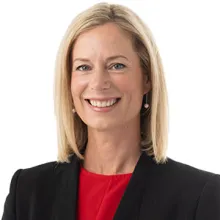
REBECCA WHITE, ASSISTANT MINISTER FOR HEALTH AND AGEING: This exciting stage that we're seeing behind us of the Callington Wing, will be a new eight-bed aged care facility for residents here in the Southern Midlands. I'd like to also acknowledge standing with us today, we've got the Minister for Health, Bridget Archer. We've got Athol Bennett, who's the chair of the Community Advisory Committee, and also joined by my colleague, Dan Repacholi, who's the member for Hunter, along with members of staff here and the construction business that's been awarded the tender to undertake this project.
With the support of the Federal Government with a contribution of $3.8 million, we're able to see another eight beds here as part of the Callington Wing redevelopment that will support residents in this community be able to age in place. This work has been driven largely by the community, and I want to pay tribute to the Community Advisory Committee, who have worked tirelessly for decades now to support this service in this community. For more than 35 years, they’ve worked really well with the government and the community more broadly to raise funds to see the development of projects as you see them today and also what’s envisaged for the future, raising over $2 million from the local community over that time to support projects that have supported people [indistinct] access health services close to where they live.
And really, that’s what this is about. It’s about making sure that people who have contributed their entire lives in the Southern Midlands community can access to the healthcare here and to be supported as they age close to their communities, staying close to their friends and family and know that they’re getting the best and the highest quality care.
I’m really proud of the investment of the Federal Government is making to this development as part of the Callington Wing, which will establish an extra eight beds, to make sure that more people in this community can come here as they get older and know they’ll get the highest quality healthcare but also the best love and attention that a local community like this provides as people are ageing in our community.
I’m going to ask the Minister for Health to say a few words. Happy to answer any questions at the end.
BRIDGET ARCHER, TASMANIAN MINISTER FOR HEALTH: Thanks, Rebecca. And as Rebecca said, it’s really wonderful to be here to see construction begin on this second stage of the redevelopment here at Oatlands at the Midlands Multipurpose Health Centre. As Rebecca has said, this enables people who have lived in this community all of their lives to be able to age in place, to get the care that they need without having to leave their community, and that’s so important. I’d also like to acknowledge my colleague Mark Shelton, our local member who’s joined us here today as well. And I’d also like to acknowledge Macquarie Building who is undertaking the work here in this second stage.
The Tasmanian Government has also been really proud to partner with the Australian Government in the redevelopment of this site. And I would also like to pay tribute to the Community Advisory Group and to Athol Bennett here who’s with us today. He’s such a passionate advocate for his community and has dedicated so much of his life with other community members in advocating for this facility and for the needs of their community. And I think, Athol, you were recently honoured in the Australia Day Honours List for his contribution to this community, which can’t be understated as well.
I’d like to just now pass over to Ann, who might want to say a few more words about the clinical space here.
ANN ALLANBY, NURSING DIRECTOR FOR HOSPITAL SOUTH: I'm the nursing director for Hospital South, and I look after sub-acute aged and community services, and Midland's multi-purpose centre is part of that. So it’s a very important site for us. It enables, as the ministers have said, people to actually remain in the community. We've got sub-acute beds, we've got residential aged care beds and we've got an emergency care centre which is managed 24/7.
We've also got very good support from the GPs within the centre. Dr Michael Lees is here today. They support the clinical care along with the nurses and enable people even for short periods of time to stay within the community rather than going through to the Royal or other inpatient facilities. So it's a very much- we would like to thank everybody for the support and the extra beds will make a huge difference, particularly to patient flow. People won't have to wait in other facilities waiting for a bed to come here for as long as they are at the moment. So thank you very much.
JOURNALIST: How long have you been working or lobbying trying to get this facility here?
ALLANBY: I've been in the position for about three years, but people before me were very much involved. The Community Advisory Committee is very much on the front foot and lobbying for the extension of facilities up here, and the staff that work here are very much involved in the community as well. Many come from outside the community, but once they're here they're very dedicated. And I think the combined effort everybody and seeing what the need is- and once you work in a community health centre and a multi-purpose centre, you actually feel part of the community, so you want the community to have as much as they can and to have services within their reach.
JOURNALIST: Do you know when it will be finished and open for the people to come and use these beds?
ALLANBY: It’s predicted, I think, about around October this year that this phase will be completed. And then we will be looking towards another phase, which is phase three, which is the development of a palliative care unit. So that would be an extra added bonus for this community as well.
JOURNALIST: How much demand are you seeing in the community for facilities and amenities like this? And how much of a difference would this make for Oatlands and the wider community as well?
ALLANBY: It’ll make a huge difference. There's a huge demand for both sub-acute and residential aged care. So there is a waiting list at the moment for people to get into residential aged care. The sub-acute care beds are occupied 85 to 95 per cent of the time, so that tells you there is a demand within this community.
ATHOL BENNETT: We started this project negotiating for upgrades nine years ago, and five years ago we were successful in getting funding from the State Government for Stage 1. And then Stage 2 - back in May ’24, we got funding for Stage 1 and then Stage 2. But on the circumference of this, there is the Homes Association and there's 22 units that accommodate from 75 to 95 in age. So the next step is the hospital, and they've got a waiting list of around about 28 people ready to come into the units. So it's just from one point to the other - it's from the Homes Association into the hospital, so a waiting list of about 28 families.
JOURNALIST: What's made you so passionate about trying to get this work done for so long?
BENNETT: Well, I've been compassionate to the community for over 65 years in many fields like Homes Association and in the hospital - well, actually my mother and father both died here, and both brothers died close by and my nephew just recently in the last couple of years. So, that's why I've been more passionate about the hospital. I've been Chairman for about 15 years and on that committee for 25, and in all, 35, when we first started with the hospital and the nursing beds. So I’ve been involved in a lot around the community. So always been passionate about the community, and I was grateful for receiving the medal.
JOURNALIST: Yeah. Well done. Yeah. So is it a relief to see this work now being done?
BENNETT: It will be when Stage 3 is completed. It's only a minor- it's only the acute section that was done back in 2019, and then the next stage was to Stage 1. There just a matter of upgrading the room that's already been upgraded, so it's not a big effort to complete the Stage 3.
JOURNALIST: A $35 million funding promise from the State Government for a 50 per cent stake has very strict conditions, which has meant that they can't get a loan for their half of it.
WHITE: I'm not aware of the details with respect to the funding agreement that they're trying to negotiate between State Government and the Launceston Health Hub. I've met many times with the proponents of that project. I see the merit in it. I understand how important it will be to increase services in the north of the state.
We all want to see that project proceed because it will take pressure off the LGH but also provide an avenue for more people in the north of the state to access sub-acute and acute care which we know has been a real challenge. So, I just encourage the State Government to work constructively with the Health Hub in Launceston to realise the ambition for that project. We are short of hospital beds in the state, particularly in the north of the state, and this does provide an option to relieve some of the pressure on the LGH.
JOURNALIST: And same question about Tabatha Badger. Any advice for her looking to change state politics for federal politics?
WHITE: Well, I wish Tabatha well in whatever she chooses to do. I enjoyed working with her in the State Parliament, but I know there's a ballot that will be underway and that'll be up to Green members to decide who they send to Canberra.
JOURNALIST: On bed block, if I'm not mistaken, health ministers across the country recently met with Mark Butler to discuss the issues of bed blocking our hospital systems. Where did that conversation and that meeting go? And what is the Federal Government prepared to do to try and alleviate bed block in our hospitals, especially here in Tassie?
WHITE: Yeah. Well, we're standing in a project today where we're investing in the establishment of eight new aged care beds. And we've invested more than $30 million in Tasmania in the latest round to provide more aged care beds. That is one part of our contribution to supporting more Tasmanians to age in their local communities, and take pressure off emergency departments and hospital facilities.
We're also investing very heavily in primary care. We've established eight Medicare Urgent Care Clinics in Tasmania now, but we've also seen through the increase in bulk billing rates. The number clinics now providing free GP visits in Tasmania increased from just 25 practices to now 59 practices.
These things provide options for Tasmanians to access healthcare closer to home and take pressure off the emergency department. Alongside that, of course, there's a significant suite of work occurring in the NDIS and aged care. We want all Australians, and I particularly am very passionate about making sure all Tasmanians can have access to the healthcare that they deserve and that they can find that treatment in the right place in a way that works for them, and hopefully be affordable for them as well. Hence why we've committed significant funding to strengthen Medicare.