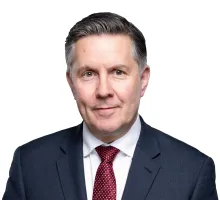
KARL STEFANOVIC, HOST: Welcome back. As conflict in the Middle East rages on, 115,000 Australians remain stranded right across the region. Joining us to discuss today's headlines is Health Minister Mark Butler and National Senator Matt Canavan. Morning, guys. Nice to see you. Mark, to you first up, what is the latest on getting Aussies out of the region?
MARK BUTLER, MINISTER FOR HEALTH AND AGEING, MINISTER FOR DISABILITY AND THE NDIS: This is still an area where the airspace is largely closed. The Prime Minister, as I think your viewers know, had a conversation with the President of the United Arab Emirates yesterday, obviously acknowledged the deeply distressing, dangerous, volatile situation his country faces and the broader region faces, and thanked him for the hospitality and the care that the country is showing. I think 24,000 Aussies who are in that country alone, and they discussed the importance of commercial flights being able to resume their operations. The scale of Aussies caught in the region but the Americans are saying the same about their people really mean that the practical way to get people moving again is going to be through commercial flights and that requires airspace to be reopened in what is a really dangerous situation. Iran attacked nine countries yesterday alone, including the UAE, obviously, and other innocent bystander countries. Their determination to create mayhem is obviously impacting thousands of Aussies and innocent bystanders from other countries.
STEFANOVIC: Is the ADF on standby with personnel as well as aircraft and other military assets?
BUTLER: This is a contingency we always keep at hand. We're always monitoring that option. But the sheer numbers of Aussies who are caught in the region mean that the practical way to get people moving is if the airspace opens, to have commercial flights shift people at scale.
STEFANOVIC: Appreciate the information on that. A lot of anxious people out there. Look, Donald Trump was holding a press conference this morning. This is what he had to say.
[Excerpt]
US PRESIDENT DONALD TRUMP: They're going to be in for a lot of hurt. These are bad people. These are people they killed. I guess it's 35,000. It’s coming out 35,000 over the last three weeks. They're still lobbying some missiles at some point. They won't even be able to do that because we're hitting all of their carriers. We're hitting all of their missile stock.
[End of excerpt]
STEFANOVIC: Matt, he went on to say that he's prepared to go forever on this war.
SENATOR MATT CANAVAN: Well, look, Donald Trump has said a lot of things in the last few days. I'm concerned that the Trump administration's reasons for this conflict seem to be shifting by the day. Yesterday, the Secretary of State suggested they went in because Israel was going to go first. Look, I've been against these attacks. I don't see these regime change wars that we've gone through in my lifetime ever working out well. Let's see. Let's hope and pray now. All we can do is hope and pray this turns out better than Iraq, than Libya, than Syria, than Afghanistan. All these conflicts have ended up making the world worse. And it's great to see the Ayatollah no more, but I'm still asking, what's next?
STEFANOVIC: I think that's a key question, Mark. And I agree with Matt, no one's going to mourn, or very few of the population are going to mourn the loss of the Ayatollah. But a forever war without a plan ain't no plan.
BUTLER: We've indicated our Government's support for the operations to defeat Iran's ability to get a nuclear weapon. We think that's important not just for the region, but for global peace and stability, but also their broader ability to threaten peace and stability in the region. We've seen that year after year since the revolution in 1979 the region, but we've seen it in our own country over the last couple of years with Iran's sponsorship of attacks here in Australia on the other side of the world, which is why we took such strong action.
STEFANOVIC: Yeah. But if there's no plan, it gets so messy. And, look, petrol's already, there's speculation this morning it could hit $3 a litre. Good luck with that inflation genie.
BUTLER: Of course, we're all around the world and in the region worried about the degree to which this becomes a protracted conflict. But to the extent, this is an Operation Defeat to defeat Iran's ability to get a nuclear weapon and to threaten stability and peace in the region and the globe more broadly, we support it. But, of course, all of us are nervous about this becoming a very long protracted war because we know from previous experience when there's a protracted war in the Middle East, it reverberates right through the global economy.
STEFANOVIC: Well, this is the problem. We're allies, but they didn't even tell you they were going in, which is fair enough from a military point of view, operational point of view. But what's the plan, stan? Matt, the Government failed to control inflation before now. Food will go up, everything will go up.
CANAVAN: Well, look, that's not necessarily the worst outcome, Karl. We're already in a vulnerable position with inflation being the highest in the developed world, thanks to this government's excessive spending. And now we face potentially disruptions of supply, not just high prices, because, you know, we don't produce things like we used to, we don't produce fertilisers like we used to, we obviously have fuel refineries that have shut.
Now the government's putting a carbon tax on the two fuel refineries we've got left. So we've got two fuel refineries left, they only produce 20 per cent of our demand, and this government puts a carbon tax on them. Their own review a couple of weeks ago found that investment in those refineries is at risk because of that carbon tax. So why is the government obsessed with net zero rather than just obsessed with making sure our country is self-sufficient and not dependent, so dependent on conflicts like this, cutting off essential supplies.
STEFANOVIC: Just on that, Mark, how many weeks of fuel do we have in reserve if supply chains are disrupted?
BUTLER: We've been talking, obviously, to companies. They are confident we've got fuel running into May. We've got more fuel at hand than we've had at any time in the last 15 years, as I'm advised.
STEFANOVIC: So by May we're out?
BUTLER: The entirety of the last government, when Matt Canavan was the Resources Minister. But, of course, we are, as he said, a trading nation which depends upon open trade, which is why we're so worried, as every country in the world is, that the prospect of this would become a protracted -
CANAVAN: Mark, I've opposed net zero from the get-go. I've opposed net zero.
BUTLER: I'm not talking about net zero, Matt. I'm talking about fuel at hand.
CANAVAN: Yes, it is, because you can't produce fuel if you get committed to net zero.
BUTLER: We've got more fuel at hand than at any time when you were the resources minister.
CANAVAN: And I oppose net zero, I said so publicly, right? This is the problem. We should be focused on our own country more.
STEFANOVIC: The question back is as valid as the first question. Why haven't we stockpiled more fuel reserves? And Matt, I guess you were in government as well, and why didn't we?
CANAVAN: Well, it was the cost at the time, Karl. It's going to cost about $15 billion to do that. What I've always advocated for is finding new oil and gas. The stockpile, there's too much focus on the stockpiles. If we go from one month to three months, it's a little bit more security, but it's still not that much. What would be much better is if we found new oil and gas. But in Victoria, we have a ban on fracking, which means we can't exploit the liquid fuels that are there. That's what should change the country. Use our own resources for our own people.
STEFANOVIC: Can't see that changing under this government.
CANAVAN: No, not under the Labor Party. Not under the Labor Party.
STEFANOVIC: Good to talk to you guys. Appreciate your time this morning.
Media event date:
Date published:
Media type:
Transcript
Audience:
General public
Minister: