
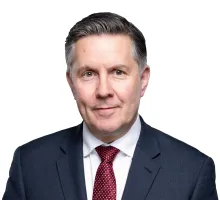
JAYNE AZZOPARDI, HOST: Today Australians will learn more about the government’s plans to outlaw hate speech. The PM’s decision to link those laws to his gun buyback scheme has led to criticism that he’s more focused on his own political interests than the national one. Let’s bring in Health Minister Mark Butler, and chief political correspondent at the Sydney Morning Herald and The Age Paul Sakkal, to discuss these issue. Good morning to you, Minister. Look, if you really wanted these laws passed, why are you tying the two issues together? Why can't the Parliament debate hate speech and gun laws separately?
MARK BUTLER, MINISTER FOR HEALTH AND AGEING, MINISTER FOR DISABILITY AND THE NDIS: From the day after that horrific terror attack in Bondi almost a month ago, the National Cabinet, all of the premiers and chief ministers, as well as the Prime Minister, made it clear that we needed a comprehensive response, not just to the motive that drove those alleged terrorists, but also to the tools that they used. The hate speech, the antisemitic hate that drove them to conduct that terror attack, but also the tools they used was very clearly the focus and the commitment that was made by all leaders, not just the Prime Minister but premiers and chief ministers, and that's the work that we've been doing over the last several weeks.
AZZOPARDI: But you could still get that done and keep the two issues separate in the Parliament, so I mean, what's more important, is it passing these laws, getting them into place, or making life difficult for your political opponents?
BUTLER: This is not about making life difficult. It's about delivering on a commitment that we made along with all state and territory governments to the Australian people for a comprehensive response, not just to the motives that drove those alleged terrorists, but also the tools, the methods they used to carry out their terrorist attack. I think this is more about the divisions within the coalition around gun control rather than any artificial distinction between motives and method here. We committed to dealing with both and that is the legislation that we deliver next week.
AZZOPARDI: Paul, what do you think? Do these issues have to be tied together or can they be separated?
PAUL SAKKAL, CHIEF POLITICAL CORRESPONDENT SYDNEY MORNING HERALD: Well, I think the Minister's probably given away the game there a bit by mentioning divisions in the Coalition on gun control. There is a sense in a probably smallish rump in the Coalition that the government response to Bondi will be one that is full of overreach and unfair restrictions on civil liberties as well as the rights of gun owners. I think the vast majority of Australians would disagree with that, and would say that you shouldn't have four or five guns if you're a suburban person who doesn't shoot animals. And so the government's probably on good political ground here to try and expose those divisions within the coalition. But you do ask the question, why is the government thinking politically here? And a cynic would say that they are, and that's on them to explain.
AZZOPARDI: So how do you think it'll play out then?
SAKKAL: I think Sussan Ley will try and exert her authority to get the party to back this bill, but she very quickly yesterday, after the Prime Minister spoke and said that this would be one bill, before she even examined the legislation, came out and said, this is the Prime Minister playing politics, which, you know, again, if you're sitting at home and looking at the national Parliament, which is meant to come together next week earlier than planned to create a moment of national unity, you'd say, come on guys, get things together, work together, let's get this done, we want to come together after Bondi. But that looks difficult in a very fractured political system.
AZZOPARDI: Mark, would you be open to changes pushed by the opposition or by any of the independents?
BUTLER: As Paul said, we briefed the opposition yesterday on the detail of the legislation. It is quite a substantial bill. We did that a week ahead of the Parliament coming back because we do really want to maximise the chance to get this bill through with the support of the opposition. It's been referred to the Intelligence Committee for a quick inquiry, and as the Prime Minister said, yes, of course, yesterday, of course, we're open to constructive suggestions, either through that inquiry or in the lead-in to Parliament debating the bill. But we've been working on this very hard, we've been consulting as said we would since the day after the awful terrorist attack. We're pretty confident this is the right set of laws to deal with the hate preaching, the access to the lack of sharing of criminal intelligence around gun licencing arrangements and a whole range of things dealt with in the bill. But of course, we're open to constructive suggestions. We want to have the best possible set of laws put in place.
AZZOPARDI: Okay, well there are also concerns that by having this bill to focus on race and excluding religion, that these laws might target antisemitism but not Islamophobia. Even the local MP for the Bondi region is calling for religion to be included. Why has the government made the decision that it will focus just on race?
BUTLER: Unapologetically, we said that we wanted to get laws in place as quickly as possible to respond specifically to the Bondi terror attacks, and we know that they were driven by antisemitic hate, and that's why we've focused on that. We want to maximise the chance of getting those laws through, so unapologetically ensure that they're focused. But Allegra Spender is right, of course, as a matter of principle, that targeted hatred, at the end of the day, is targeted hatred, no matter really what the motive of that targeting is. Once we get those bills through, of course we would be open to considering an extension of the details of that bill to other areas of hatred. And a range have been mentioned, not just religion, but disability, gender, sexuality, a range of other things as well, are also obviously covered by hate speech laws, but at the moment, unapologetically, our focus is on what drove those Bondi terrorist attacks.
AZZOPARDI: Ok, we'll learn more about these details later today, but I do want to ask you a question about your own portfolio, which is health. We've seen some new data out this week that shows the number of fully bulk billing GPs has increased, but for everyone else, out-of-pocket costs are higher than ever. So much for only needing a Medicare card and not a credit card, hey?
BUTLER: Gap fees have been rising for years now, which is why bulk billing reform has been such a focus of our government. And I frankly am very pleased that since our record investment took effect on 1 November, more than 1,200 GP practices across the country who were charging gap fees before 1 November are now bulk billing all of their patients all of the time. Already we've delivered millions of additional free GP visits. And that number of practices becoming bulk billing practices is increasing pretty much every single day. Of course, there's more to do, there's further to go, but it's a very important start to our commitment to drive up bulk billing rates and make sure that people can go to the doctor when they need to rather than when they feel they can afford to.
AZZOPARDI: Ok, finally, and we've got to do this one really quickly, only 42 per cent of Aussies can spot the difference between a real person and an AI-generated image. So I'm going to show you two people right now, and I want you both to tell me which one is real and which one is AI. Paul, is it the man or the woman that's real?
SAKKAL: The woman strikes me as more fake so I'm going to say it's a bit of a trick question and it's the fella.
AZZOPARDI: And Minister, Mark?
BUTLER: I can't see them from where I'm standing.
AZZOPARDI: Oh, no.
BUTLER: But I'm pretty confident I'm not part of the 42 per cent who can spot the difference. I put my hands up right now, and even without seeing them, I'm pretty sure I couldn't spot the difference.
AZZOPARDI: No, I find it difficult. But Paul, you nailed it. I thought the guy was the real one, but no, he’s the fake. Paul Sakkal and Mark Butler, thanks so much for your time this morning.
Media event date:
Date published:
Media type:
Transcript
Audience:
General public
Minister: