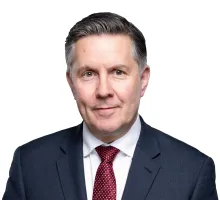
SARAH ABO, HOST: Well, One Nation’s historic surge in South Australia has our nation’s leaders grappling with a new political reality. Joining us to discuss today’s headlines is Health Minister Mark Butler, and chief political correspondent for the Sydney Morning Herald and Age, Paul Sakkal. Good morning to you both.
Mark, South Australia is your home state. A big win for Peter Malinauskas, but even their Labor’s primary vote went down, only marginally. Are we hearing alarm bells via One Nation yet?
MARK BUTLER, MINISTER FOR HEALTH AND AGEING, MINISTER FOR DISABILITY AND THE NDIS: It was a great victory for Peter Malinauskas and his Labor Government. Our primary vote barely shifted, maybe by one point. You saw a slight increase in the Greens’ vote. Really, the story in terms of primary vote was about half the people who voted for Liberal last time didn’t vote for them this time. It really is a seismic realignment of voting on the conservative side of politics. But as the Premier said yesterday, of course we’re all going to examine this result very closely because it is a huge increase in the One Nation vote. Higher in some parts of the state, but in the area I live in, in the west of Adelaide, their vote increased very substantially as well, largely at the expense of the Liberal Party. But as Peter Malinauskas said, there’s a lesson in this, an insight in this for everyone.
ABO: Well, it’s all a blessing for the Labor Party, isn’t it, Mark?
BUTLER: It was a really strong result. I think the division on the conservative side of politics is a real challenge for the Liberal Party. We've got a by-election for Sussan Ley's seat coming up. If they preference One Nation like they did over the weekend in that by-election, there's a very good chance that One Nation will be elected in that federal seat in the House of Representatives as well. I think there's a very big debate to have on the Liberal side of politics about how to manage this challenge coming at them in particular from One Nation.
ABO: Farrer will be the next test Paul, as Mark points out there, followed, of course, by the Victorian election in November. Will these results spill into those elections, do you think? I mean, it's pretty telling.
PAUL SAKKAL, THE AGE CHIEF POLITICAL CORRESPONDENT: They will spill into Farrer. I mean, Farrer will be the first big federal test for this fragmentation in the right. I think Mark is right to say that at this point, Labor has not really been touched by this surge. But there is an acknowledgement today from Peter Malinauskas, the South Australian Premier, in the papers and on Saturday night when he spoke, talking about patriotism, talking about the left needing to keep these kinds of forces at bay. So that's an admission that these issues of national identity have grown to such a level of salience that the left needs to take them quite seriously. You hear noises similar to that from the Prime Minister. But this is fundamentally a problem for the Liberal Party. There'll be a lot of people this week say they've got to shift to the right, shift to the left. It's really facile. They've just got to stand for something. They're not known for any ideas in the minds of voters. People don't understand what they are trying to do to the society and they need to change that very quickly.
ABO: Yeah, and I think that point you make about, I suppose, obviously, Peter Malinauskas is a more right-leaning Labor politician, right, versus what we're seeing in Victoria, which is the complete opposite. So it will be interesting to see how it plays out there. But I think, Paul, if Pauline is serious about blocking Labor from government, she's in fact doing the exact opposite, isn't she, by splitting the vote? Does she need to change tack? I mean, how will this play out in Victoria, for example?
SAKKAL: Well, there are senior Liberals, including in the Shadow Cabinet, who, because Pauline Hanson espouses some of the values that they hold dear in their heart, they're quite fearful of taking her on because their supporters are ostensibly Liberal supporters. So I think they needed a wake-up call, which they received on Saturday, that it is not the case that a One Nation surge could in any way be good for the Liberal Party through creating some sort of loose, unclear right-wing coalition. When One Nation surges, the right-wing vote fractures and preferences don't flow perfectly, and so the Liberal Party loses government and Labor wins perpetually. That is the lesson, and I think that's so stark as of Saturday that you'd struggle to be a Liberal shadow minister and have any doubt about that anymore.
ABO: Yeah, I'm not sure how they address it. I mean, that seems like something that is going to absolutely impact them going forward. Alright, well it is clear from the results that we saw on the weekend that the public is fed up, as if we haven't heard it loud enough yet. This fuel crisis is not making things any easier. The federal government has confirmed six oil shipments into Australia have been cancelled or deferred, and it comes, of course, as China, which supplies about a third of Australia's jet fuel, froze all of our exports of refined fuel last week. Mark, we're in a bit of trouble.
BUTLER: Chris Bowen also made the point that of those six ships, there were, in many cases, replacements being organised. We're seeing, as I understand it, an increase in shipments from the US that we haven't seen for many, many years. I think the companies but also the government is working very hard to make sure that we can get supplies from wherever possible. This is a really difficult situation, though.
Over the last couple of days, we've seen an increase, really, in tensions as a result of President Trump threatening to bomb power plants if the Strait of Hormuz is not open, and then retaliatory threats again over the last 24 hours from Iran. This this conflict does look like it's going to go on for a little longer, and it's reverberating right through the global economy. But we are working very hard with our regional partners. They receive energy from us, we receive liquid fuels from them. We're doing everything we can to get supply back into Australia and at the moment those supplies are holding up pretty well.
ABO: Yeah, establishing those relationships will be tricky. Paul, just very quickly, do we need working-from-home mandates here to help? Is that the answer or is that overreach?
SAKKAL: Well, the government's been keen to not raise up the prospect of any kind of hard-and-fast directive as we had during the pandemic, and the states might end up being the body who actually puts forward such suggestions. But we saw from Chris Bowen yesterday the first acknowledgement from the federal government that taking, you know, your destiny into your own hands a bit, conserving fuel here and there, working from home if you can, might be a good idea. But I don't think you'll see strong COVID-style directives, at least not for the next couple of weeks, although that could change pretty quickly if the situation deteriorates.
ABO: Alright, guys, thanks so much for your time this morning. Appreciate it.
Media event date:
Date published:
Media type:
Transcript
Audience:
General public
Minister: