EDWINA BARTHOLOMEW, HOST: After 25 days of mounting public pressure and intense scrutiny, Anthony Albanese has acted on demands calling a Royal Commission into antisemitism following the Bondi terror attack. It’s a sharp shift after weeks of resistance, the Prime Minister now accepting public inquiry is essential to move forward. His concerns about delays and division dropped, everything is now on the table in a bid to confront hate and help the nation heal. For their take let’s bring in Health Minister Mark Butler and Liberal Senator Jane Hume Morning to both of you. Mark, this is a change of tune from the government, a backflip. The AFR has gone even further, calling it a rolled gold act of self-inflicted humiliation. How do you come back from that perspective that the government has really been forced into this?
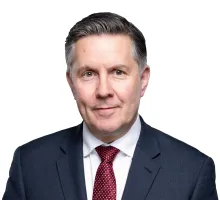
MARK BUTLER, MINISTER FOR HEALTH AND AGEING, MINISTER FOR DISABILITY AND THE NDIS: Right through the 25 days since that horrific terror attack on December 14, we've been working hard on the really urgent and immediate work that your viewers would expect us to do to strengthen hate speech laws, gun laws, also to accelerate the implementation of the antisemitism report from Jillian Segal. But as the Prime Minister said yesterday, we've also been listening. We've respected the voices that have called for a Commonwealth-led Royal Commission instead of the New South Wales-led Royal Commission that the Premier Chris Minns had already announced. We've been listening, we've been talking obviously with New South Wales but also with the Jewish community itself. Not with cameras, but in living rooms the Prime Minister's been talking to victims' families, been talking to local rabbis and came to the view that this is an essential part of our comprehensive response to the worst terror attack on Australian soil in our history.
BARTHOLOMEW: Why didn't you just say that? That it's still on the table and we're considering it instead of shifting focus to the New South Wales Commission, Royal Commission that they were holding? Because the messaging was very different. You know, Anthony Albanese, Monday, December 22nd, a week after the attack; we want urgency and unity, not division and delay and a lot of focus on how long it was going to take and we couldn't possibly have a Commonwealth Royal Commission.
BUTLER: We're a government that listens. We've got a Prime Minister who listens and we've heard the arguments for a Royal Commission. We've dealt with some of the concerns that we had that this might be a platform for hate. That's very much set out in the terms of reference that will guide the work of the Royal Commissioner. We're confident this will be a really essential part of examining the nature and prevalence of the scourge of antisemitism, learning the lessons of the Bondi terror attack and building more social cohesion in our country, dealing with this spread of religious extremism that we've all seen over recent years.
BARTHOLOMEW: Jane, Josh Frydenberg responded yesterday saying this is not about politics, it never has been, but it has been from the get-go, hasn't it? Will the Liberal Party now get on board with this process?
SENATOR JANE HUME: We were astounded that it took Anthony Albanese so long to get on board, particularly when the families of the victims started calling out for their desire for a Royal Commission. Now, that was nearly a month ago, and even as little as 10 days ago, the Prime Minister was still resisting, suggesting that somehow a Royal Commission was going to take too long or that it would make antisemitism worse. Well, we're pleased to see this backflip, humiliating as it is, because otherwise there was simply an abdication of leadership from the Prime Minister. And it was an insult. It doubled down on the trauma for the families and the victims, those 15 people that died and the 40 people that were injured in the most horrific terrorist attack that Australia has ever seen. But now it's up to the Royal Commission to make sure that they undertake their work in as effective and comprehensive manner as possible, that they leave no stone unturned to eradicate antisemitism in Australia, which has been so divisive and has put the Jewish community on edge now for a period of two years. They're pleased to hear that finally the Prime Minister is listening. So let's get this Royal Commission underway and leave no stone unturned.
BARTHOLOMEW: And that's what all Australians want out of this. Moving on, there's a new push from Aussie doctors for weight loss drugs to be added to the PBS for obesity treatment. It's a move that could cost taxpayers billions of dollars each year. Mark, you have the incredibly difficult job of deciding which drugs do go on the PBS and which don't, meaning they impact many families, have to spend tens of thousands of dollars for treatment. Where are you at with this?
BUTLER: This is a pretty extraordinary class of drugs known generally as Ozempic, but there are others as well. Wegovy, which is developed by the same company, Manjaro by another company, and I just before Christmas received some recommendations from the experts that oversee the PBS, have for many decades, that we should look at a listing on the PBS of Wegovy in particular for people with a certain level of obesity, so a BMI of 35, but also some established cardiovascular disease. Now, I only got that just before Christmas. We'll be working with the company to sit down and agree a price that works for them but also works for taxpayers because we're committed to listing every recommendation we receive from that group of experts. There'll be more work to do though with this class of drugs. It really is an extraordinary innovation we're seeing sweeping the world. Right now there's more than 400,000 Australians who pay private prices just to get this weight loss benefit and other benefits as well. But that's as much as $4,000 or $5,000 a year. It's beyond the means of many Australians who really would benefit from this. It's an equity issue as well as a health issue from my perspective.
BARTHOLOMEW: And about 6 million Australians, it's estimated, who suffer from obesity. So that's going to be a well as a health issue from my perspective. And about 6 million Australians is estimated who suffer from obesity. So that's going to be a big hit to the bottom line. So it'll be interesting to see some figures on this. Mark and Jane, thank you so much for your time this morning.
Media event date:
Date published:
Media type:
Transcript
Audience:
General public
Minister: