
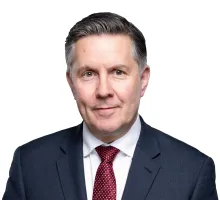
PETER STEFANOVIC, HOST: Joining us is the Minister for the NDIS Mark Butler. Good morning to you, Mark. Thank you so much for your time today. So, yeah, let's just start there. We've got a lot of questions to ask you, but that's from Melissa McIntosh, arguing there's too much focus on the individual, not enough on the providers. What's your response to that?
MARK BUTLER, MINISTER FOR HEALTH AND AGEING, MINISTER FOR DISABILITY AND THE NDIS: Look, we had a comprehensive plan to deal with rorts and fraud in the system. We've been building that over the last four years, including legislation that Jenny McAllister only managed to pass in the Senate over the last month or two. Back when the Coalition was in government, they were analysing the same number of claims over an entire year that we now do every single day. There are more prosecutions, there are more providers being kicked off the scheme. But I tried to be honest with people yesterday that more needs to be done. That's why we're going to introduce a digital payment system that means we've got a line of sight over where every dollar is going, which we currently don't have. More providers will have to be registered so that we can be confident about their quality and their qualifications to deliver these services. And also we'll move to a panel system, a commissioned panel system, so that things like plan managers, support coordinators that disability participants can choose from are a panel of people, again, with the right qualifications and, frankly, the right character.
STEFANOVIC: So, Bill Shorten was just on the programme and he pointed, he reminded us about those prosecutions that were done while he was in office, but he did say the success of your changes will rely on three words, consult, consult, consult. Disability advocates have already come out today saying they've been blindsided by your reform, so is it off to a bad start already? already?
BUTLER: I'll be meeting with those organisations later today, and I tried to give as strong an assurance as I could yesterday that the reforms to things like eligibility, the sorts of supports that people would get, the commissioning of panels of providers is going to be done in very close consultation with disability advocates. I'm very much a devotee of the idea of nothing about us without us in this scheme, and we'll be working closely with them over coming months. The legislation, though, that Melissa McIntosh was talking about isn't about scheme reform, it isn't about scheme design, it's about good financial management, frankly, which is long overdue. I was told by the actuary, the financial person in the NDIS only a few weeks ago, that even since December, spending has blown out by another $13 billion. This out-of-control spending growth simply can't continue. We've got to get the parliament to pass the controls that I need to deal with that out-of-control spending growth. It's just good management. And on the reform questions, yes, of course we need to, as Bill says, consult, consult, consult, not just with that community but with state and territory governments as well, and we're committed to doing that.
STEFANOVIC: Okay. I'm interested in the assessment tool now. I mean, you've set aside some 18 months to work up a proper tool. Participants will be nervous about this. So how will you decide on who's in and who's out? I mean, obviously there will be clear cases, but how do you decide on the not-so-clear cases?
BUTLER: This is a big change to the scheme, but it's such an important one, I think, Pete, to get the scheme back to its original purpose, which was to support people with significant and permanent disability. Right now, there's a diagnosis gateway. If you can get a doctor to give you a particular diagnosis, you're in, no matter what the level, really, of your support needs are. It was always intended that there would be this objective assessment tool. Over coming months, I hope, by the end of the year, we've done the work to design that tool. We'll need some technical advice and we'll establish that group. We'll need close consultation with the community and with states and territories. And then I hope over the course of 2027, we can test it, we can kick the tyres and we can make sure that by 2028, so the year after next, we're in a position to start implementing it.
STEFANOVIC: So have you got any early ideas of what that tool will be and where that line will be drawn?
BUTLER: I tried to give an indication yesterday about where we think it would end up in terms of numbers. Remember the Productivity Commission said that by the end of this decade, a scheme that was consistent with its original purpose would be about 550,000 people, well, it's already 760,000. And if we do nothing, it's projected to get close to a million by the end of the decade rather than 550,000. I said that a properly designed tool would probably get us to 600,000. But I was really clear, that's our initial modelling. We've got to do the hard work and really get some precise figures on that.
STEFANOVIC: I'm sort of just interested in how you would make the call behind the tool. I mean, I know it's early days, but I'm just thinking of those who might be nervous this morning about whether they'd be in or out. I mean, have you got any early ideas of how that tool would be used?
BUTLER: It will be a functional capacity tool. Really, it will determine people's functional capacity and if their support needs are significant and they're permanent, then they'll be in the scheme. And for the vast bulk of NDIS participants, that's pretty obvious and they can have some confidence that even with the introduction of this new system, there's not going to be any change for them. For people who are likely to fall the other side of the line, I think what they'll want to hear from governments, not just mine, but also state and territory, is that there will be the support systems in place for them. That's what we're doing right now with the Thriving Kids reform for kids under the age of nine, and we've got to replicate that work with states and territories for the rest of the population.
STEFANOVIC: Well, I mean, how are you going to get the states on board? Because, as you know, there's still holdouts this morning.
BUTLER: If you've been watching federal politics in Australia for any time, you'll know there's always a bit of argy-bargy between jurisdictions, particularly when it comes to funding. But two - three years ago, back in 2023, National Cabinet, so all the premiers and chief ministers and the Prime Minister, allocated $10 billion to do this work, building support systems outside of the NDIS. Now, we've allocated $4 billion of that to Thriving Kids. We've still got $6 billion in the kitty to do that work. We'll pay three. Collectively, they pay the other three. I think the community just wants us to get on with this. We've been talking about this since 2023 when we had the review of the NDIS done. We were advised we needed to get the thing back to its original purpose and then build support systems that used to exist. Your viewers would know they used to exist before the NDIS. They've been dismantled. They need to be rebuilt.
STEFANOVIC: Okay. But why would states sign up so early to something when they know that so much detail still needs to be worked up?
BUTLER: They did sign up back in 2023. They allocated the money. The premiers signed up again at the National Cabinet Agreement a couple of months ago, in return for which we're giving them $25 billion of additional funding for their hospitals. That was the package deal, but they signed on to a package deal, not a one-way deal where they get additional hospital money for nothing. We need them to help us with this really important job of securing the NDIS for the future. But I get, of course, there's a lot of detail to work through. I had a meeting with the disability ministers yesterday afternoon. I think there is a strong sense of common purpose to get this thing back on track, to secure it for decades to come. But I don't pretend there's not going to continue to be argy-bargy between jurisdictions about design, because everyone will have their view about that, and about dollars as well. But, look, three years ago, the premiers and the Prime Minister set us a task as disability ministers, and I'm certainly intent on getting on with that task, and I know my colleagues ultimately will be as well.
STEFANOVIC: Whether it's housing or whether it's energy, your government doesn't have a great record when it comes to meeting targets. So how much faith can we have that 2 per cent growth figure can be achieved?
BUTLER: A lot of that depends on the passage of the legislation that I'm going to introduce. I was very clear about the measures that I want passed through the Parliament before the 30th of June. Some of them will take pretty much immediate effect. Others will take effect later this year. We've got to get this out-of-control spending growth back under control. It's really, it's not just a question of sustainability of the scheme into the future. As I said yesterday, community support for this thing is slipping away really quickly. Seven out of ten Australians think it costs too much and is riddled with dodgy providers. As I said yesterday, six out of ten Australians think it's actually broken. We can't continue on this for much longer without the future of the NDIS frankly, being at real risk.
STEFANOVIC: Well, just finally, if you had accepted Scott Morrison's reforms years ago, would that have helped avoid the mess that the programme is in today?
BUTLER: Scott Morrison's reforms were not what we've proposed. They were not worked through over a couple of years with close consultation from the National Cabinet, the subject of a detailed review by experts like Bruce Bonyhady and Lisa Paul, which is what we have done since we came to government. They were frankly thought bubbles that I think Bill Shorten quite rightly said were not going to serve the interests of the NDIS or, more importantly, participants themselves. They are apples and pears, what Scott Morrison proposed back then and what we're proposing now.
STEFANOVIC: Okay, that's the Health Minister, NDIS Minister Mark Butler. Thank you for your time this morning, sir. We'll talk to you again soon.
Media event date:
Date published:
Media type:
Transcript
Audience:
General public
Minister: