
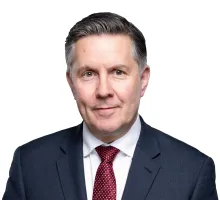
ALEX THOMAS, HOST: Let's just pick up on some of those points that Cameron made by speaking live now to the health minister, Mark Butler. Mr Butler, thanks for your time on Sky News today. I guess the first question on everyone's lips this morning is, why did it take so long for the Prime Minister to order this Federal Royal Commission?
MARK BUTLER, MINISTER FOR HEALTH AND AGEING, MINISTER FOR DISABILITY AND THE NDIS: As I think your viewers would know, Alex, the Prime Minister, other ministers and certainly officials have been working tirelessly since 14 December on the urgent and immediate work that your viewers would expect the government to do to update our hate speech laws, to be in a position once and for all to shut down those hate preachers and the organisations that employ them. Legal attempt after legal attempt over many years by governments of both political persuasions haven't been able to shut them down and we're determined to do that. To update our terror laws, to update our gun laws, to give the Home Affairs Ministers greater powers to deal with visa holders and visa applicants and of course to accelerate the work of Jillian Segal, her report, the antisemitism envoy.
But right through that time as the Prime Minister said yesterday, he's also been listening. We've all been listening to the community. The Prime Minister's been meeting with victims' families behind closed doors, not with cameras, but also local rabbis. And we've heard the message and heard the argument for a Commonwealth-led Royal Commission instead of a New South Wales-led Royal Commission to be an essential part of our comprehensive response, not just to the awful terror attack on 14 December, but to the scourge of antisemitism more broadly.
THOMAS: There's lots to do, isn't there? Can we expect an early recall of Parliament?
BUTLER: That's ultimately a matter for the Prime Minister. What we have said is we're working as fast and as hard as we can to update these laws. They're not easy. As I said just then, previous laws have not caught the hate speech that's been such a feature of some of these hate preachers and their organisations that employ them. We're determined to get the laws right, but we want to see them brought to Parliament as soon as possible.
THOMAS: How confident can Australian Jews be that the Commission will be transparent and answer all their concerns and questions?
BUTLER: I think the reason people have been arguing for a Royal Commission is that there's real confidence in that system, in that institution that's been a part of Australia's and the Westminster tradition for so many years. There's also real confidence in Virginia Bell, one of the country's most eminent jurors. She has strong criminal law background and makes sure that we don't jeopardise or prejudice the prosecution of the remaining terrorist or alleged terrorist. But she also is one of the most eminent legal jurists as a former member of the High Court. I think you can't have more confidence than in this Royal Commission led by this person with the terms of reference that were the subject of consultation with leaders from the Jewish community. If you have a look at them, they're comprehensive. They really allow the Commission to delve into all aspects of this scourge of antisemitism, including the rise in antisemitism we've seen in Australia, around the world, but here in Australia relevantly since 7 October.
THOMAS: We've spoken previously about the rising global tensions, and we've heard a lot from different members of the government about that delicate balancing act with China, for example, about maintaining good trade relations while concerns about their escalating military activity in the region. With that in mind, how concerning is it to see the actions by the US in Venezuela, their open ambitions about Greenland? And of course, the Venezuela action particularly will restrict the oil supply to China. Are you concerned that any reaction from the Chinese could lead to problems within this region?
BUTLER: We're monitoring the situation in Venezuela very closely, as other ministers and the Prime Minister have said. Your viewers would expect us to do that. We're also monitoring closely the issue with the tanker that was seized off the coast of Venezuela. The use of shadow tankers and shadow fleets is something we have seen by countries like Russia, Venezuela and the like. We do want to see more detail about that. As to Greenland, ultimately the future of Greenland from the Australian Government's perspective is a matter for Greenland and the Kingdom of Denmark. We've been very clear, as have other partner countries that we deal with so often have been very clear about that.
THOMAS: What do you make of the recent change in the way the Donald Trump Administration appears to go about its business? They're calling it peace by force, but others are saying it's about oil and about rare earth minerals. What do you feel the motivations are?
BUTLER: Obviously, this is an administration with a different approach to some administrations in the past. We have a strong relationship with our most important alliance partner that was exemplified by the meeting, the work that the Prime Minister was able to do with the US President in the second half of last year. But it reflects ongoing work that we have in engaging with our most important security partner each and every day through the mission in Washington, through ministers and obviously through officials, but most importantly through businesses and other members of our community. This is a very, very strong relationship that goes back many decades, will continue for decades into the future, and obviously transcends different governments and different administrations.
THOMAS: It's been pretty hot in Adelaide, hasn't it? How worried are you as the Health Minister about this extreme heat that many parts of Australia are facing?
BUTLER: We're getting a bit of relief in Adelaide today. I think we're all pleased to say here it was 43C here yesterday, as high as 48C in some parts of the state which is pretty extraordinary and very dangerous, particularly dangerous for people with vulnerabilities, older people, pregnant women and things like that. It's a reminder of lessons that Australians know very well. Stay hydrated, stay indoors, look out for people who might be vulnerable to the effects of extreme heat, as I said, particularly elderly neighbours, elderly relatives and the like.
We're getting a bit of relief here in Adelaide, but I know the heat is moving east and there's still a fair bit to go. It brings, obviously, with it, real fire risk. We're all thinking of the extraordinary volunteers who work in our country fire authorities and services. They're watching very closely, fire risk that's already emerging in parts of Australia. We've got a bit of a way to go yet even though we're getting some relief in Adelaide.
THOMAS: Mark Butler, appreciate your time here on Sky News. Thank you. That's the Health Minister, Mark Butler, speaking to us.
Media event date:
Date published:
Media type:
Transcript
Audience:
General public
Minister: