BRIDGET BRENNAN, HOST: But first, I want to remind you of a story we brought you yesterday about an insurance exemption that could force some midwives to pause their practise. From next year, only midwives who go through an endorsement process will qualify for homebirth insurance. We spoke to a midwife on the programme. Here's what she had to say:
[Excerpt]
MELISSA MCFARLANE, MIDWIFE: From the 1st of January next year I lose my second midwife, and also all of the women in the community lose access to midwives to support their home births.
[End of excerpt]
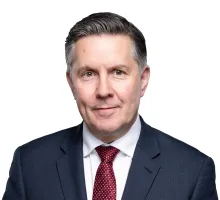
BRENNAN: That's Melissa McFarlane, Geelong-based midwife, speaking on the program. The Federal Health Minister Mark Butler joins us now. Good morning to you, Minister. Are you worried that this profession is going to be diluted by these changes?
MARK BUTLER, MINISTER FOR HEALTH AND AGEING, MINISTER FOR DISABILITY AND THE NDIS: We've been monitoring this very closely, Bridget. Just for your viewers' benefit, it's long been a requirement that all health practitioners possess indemnity insurance for obvious reasons, when things go wrong. And midwives delivering home birthing services have been provided essentially with a rolling exemption for many years from having that insurance while an insurance product was developed. Now an insurance product has now been developed and is offered to midwives, and as a result 18 months ago, health ministers across the country decided to bring midwives delivering home birthing services into line with every other health practitioner in the health system and require them to hold insurance products if they're delivering these services. They've had significant notice of that. The exemption ends on the 1st of January 2027, but we've been working with the College of Midwives about the implementation of that. I think having indemnity insurance is a bit of a no-brainer for health practitioners, particularly delivering services like birthing, given the huge consequences in those rare circumstances where things go wrong. But for many years, we've been working very hard with the midwife community to try and find a solution to this, and now there is a product for endorsed midwives.
BRENNAN: Yeah, and like midwives are telling us on the show, Minister, they want to be insured. Of course they do, but that the bar is high for endorsement, particularly for those women working part time, raising a family. Do you need to look at some changes to the way this is being implemented, when so many midwives say this could put their business out of practise and mums even telling us, look, we might not be able to have our home birth if this goes ahead.
BUTLER: Yeah, we want as much choice, particularly for mums, as possible. But those standards are set by the Nursing and Midwifery Board of Australia. Every health profession has its own board responsible for standards. The hours that an endorsed midwife or midwife needs to have under their belt before they get endorsement to deliver these sorts of services and obtain this insurance product aren't determined by the Government. They're determined by that professional body. I know they're reviewing some of those arrangements as it happens now, but those standards, very rightly, whether it's for doctors or for physiotherapists or for midwives, are set by their own professional body.
BRENNAN: And the first midwife at a home birth is an endorsed midwife, so that's been the case for quite a while. I guess what would you say to women in regional areas, even in the South Coast, who are saying, look, I'm worried that my birth plan is going to be affected by this. Naturally, there's going to be some anxiety in the community right now.
BUTLER: Sure, and I'm really conscious of that anxiety. I've met with a number of midwives over the last few months and with the college a couple of times to try and find a way through this. It's about really achieving that balance between choice and safety, on the other hand. Like since the National Law for Health Professions was set up in 2010, midwives delivering home birthing services have had this unique exemption. Only they have been exempted from having to hold insurance products. Governments have supported them in that, but now we've got an arrangement that reflects the standards of the Nursing and Midwifery Board itself and an insurance product. Health ministers have decided that midwives should be in line with every other health professional in the country.
BRENNAN: Calvary Health taking over a number of private hospitals, concerns this morning that could affect some delivery of reproductive IVF, abortions even in some areas around Australia. We've had an obstetrician on the program this morning also concerned about this. Should those services be limited at those hospitals? That's a worry for women, particularly.
BUTLER: Yeah, it is a worry, and it goes back to the point we were just talking about, Bridget, about choice. The great thing about the Australian healthcare system has been diversity and has been choice. I am pleased that Calvary has been able, along with another number of other providers, to pick up some of those Healthscope hospitals that were at risk of closure. This was the second biggest private hospital operator in the country, run by an overseas private equity firm, and we've gone through a long process to find purchases for those hospitals so services can continue. But where there is a Catholic organisation like Calvary that's taken over those hospitals, there may be an impact on some of those services that Catholic providers, for conscientious reasons, choose not to provide. And I'm very conscious of working in those regions where that is happening, to ensure those services are available through another port of call, if you like, that's often the public hospital, or if there is one, a non-denominational private hospital as well. And I think in all the regions where there is this type of acquisition by a Catholic provider like Calvary, there are other services available in those regions.
BRENNAN: Let's talk about bulk billing, such an important thing for so many Australians in the cost of living crisis. Where are we at? Are we seeing progression with more clinics offering bulk billing across the country?
BUTLER: Yeah, we're seeing great progress, Bridget. Your viewers might remember we set a target of 90 per cent of GP visits being bulk billed by the end of the decade, and we're already halfway there from where we were last year when we introduced these new investments. We're ahead of schedule, pensioners are now seeing more than 93 per cent of their GP visits bulk billed, but the biggest increases we've seen are for people without that concession card who are seeing their gap fees climb really sharply. We've seen bigger increases in regional communities, like the one I'm in this morning in Nowra on the south coast of New South Wales. We've still got a way to go, but I'm incredibly pleased with the reception we've got from general practices. There's now 4,000 of them around the country who bulk bill every single patient of theirs all of the time, and that's well ahead of where we thought we'd be by the end of 2026.
BRENNAN: Mark Butler, thanks for your time on the show this morning.
BUTLER: Thanks, Bridget.
Media event date:
Date published:
Media type:
Media release
Audience:
General public
Minister: