EMMA REBELLATO, HOST: The father of one two Melbourne teenagers who died in a mass methanol poisoning incident in Laos is making an eleventh-hour plea to the Prime Minister to intervene to secure justice for his daughter. Mark Jones says he's disgusted at reports that those responsible won't face the prospect of any significant jail time for the incident that claimed the life of his daughter, Bianca, friend Holly Morton-Bowles and four others.
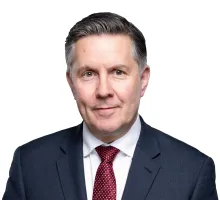
JAMES GLENDAY, HOST: The ABC understands officials in Laos will confirm as soon as today that they're going to seek to charge those responsible with offences which carry up to a one year term in jail and a maximum fine of about $1600. Bianca's father is going to join us a little later on the program. But first, let's bring in the Federal Health Minister, Mark Butler, who is in Adelaide. Now, Mark, I want to talk to you about smoking rates in a moment. Can I just take you to our top stories? The families of these two young girls want the government to intervene. Do you think that there is anything that your government can do?
MARK BUTLER, MINISTER FOR HEALTH AND AGEING, MINISTER FOR DISABILITY AND THE NDIS: The first thing I'd say, James, is we've been making representations constantly since these tragic deaths of Holly and Bianca, two 19-year-old Melbourne women, off on their coming of age trip like so many Australians have done over many decades. Four other foreign nationals also lost their lives in this tragic methanol poisoning, and we've been really clear with the Laos authorities we expect transparency, more importantly, we expect accountability.
The Prime Minister has spoken in the past to his counterpart. The Foreign Minister, Penny Wong, has spoken on a number of occasions to her counterpart as well about that. We understand this is a very poor country, so if they had trouble gathering the evidence and having a full investigation, we made it really clear we were willing to provide resources from our Federal Police to help them do that, which they unfortunately rejected. This latest news will be devastating for Holly and Bianca's parents and family and friends. I think devastating for the broader Australian community because of what this says about that rite of passage. All of us imagine the grief and the sense of loss that those families, those parents, are going through.
Now our hearts are breaking for them all over again. As you said in your introduction, James, there as I understand it is going to be a press conference later today. We want to watch that very closely, and we'll have more to say after it about our government's response. We've been making the case for accountability day in, day out since this tragedy first occurred.
GLENDAY: Bianca's parents, Mark and Michelle, are going to join us in about 15 minutes on the program. Mark has said that he'd like the Prime Minister to get on the phone again to his counterpart. Is that something that might happen later today?
BUTLER: I don't want to pre-empt what we're going to do. We're going to watch this press conference closely. I've said we'd have more to say. I've also said that the Prime Minister has been in contact with his counterpart in the past about this, as has Penny Wong. They could not be in any doubt about what we expect. I'm sure other governments who lost young foreign nationals have done exactly the same thing as well. This is not just the right thing to do, by way of the Laos authorities. It's in their interest as well. What parent possibly is going to let their young adult children go on that coming of age trip to Laos, knowing that this can happen and there not be accountability, not be transparency about this sort of thing. We would of course continue to urge them to press for real accountability and introduce some real charges with some teeth.
GLENDAY: I want to take you to your portfolio now, because a new report and a really big report has found that smoking rates have fallen to an historic low Vaping rates are steady after rising for some time. Why do you think this is happening?
BUTLER: Because we've known for a very long time more than 90 per cent of Australians who smoke want to quit. We've been boosting the supports for them to help do that from this highly addictive substance. More and more Australians who do smoke have been availing themselves of those resources. They’re modern digital resources. The number of downloads of the quit app have doubled last year, and they've doubled again this year. More Australians who smoke are filling prescriptions for nicotine replacement therapy.
That shouldn't be any real surprise. It continues a steady trajectory we've seen for decades. I want to stress, this is the most authoritative data we have on smoking. It's the statutory authority that reports on health and welfare for the country. It's provided this report for many, many years. Indeed, for decades, it's been the way in which we've tracked smoking rates.
I understand that your viewers will at the same time be thinking about all those illegal shops that are selling illegal cigarettes and other products. There's no doubt this has been a law and order disaster channelling billions of dollars from Australians who smoke into criminal gangs, bankrolling their criminal activities and also making available a whole lot of other nicotine products. I'm pleased by this report showing that the downward trajectory in the number of Australians smoking is continuing in spite of that law and order challenge that we undoubtedly have. We can now say we have some of the lowest rates of smoking in the world, and that's a good thing.
GLENDAY: You've sort of pre-empted my next question. We've had a researcher on the show earlier, and she points out that the people who are using tobacco are now appearing to use a lot more of it and many of them are seeking out illegal products because they are cheaper. Does there need to be a broader crackdown, as some advocates have suggested, on illegal, but also legal cigarettes because they are so easy for people to buy? The argument is that if you're trying to quit, you've got to walk past so many places that actually sell tobacco.
BUTLER: I understand that point that that organisation has made about cigarettes more broadly. Our focus right now is on the illicit or illegal market. We're intercepting more cigarettes at the border than ever before. Over the last 11 months, we've stunningly intercepted more than 2 billion cigarettes at the border as well as other nicotine products like vapes and pouches. We do need states to lift their enforcement effort. I'm in South Australia, which organisations like the one you talk to recognise as a leader in this area, along with Queensland. They're shutting down shops. They're going after landlords who knowingly lease their premises to people who sell these illegal products. We need to see the bigger states sort of catch up to frankly where South Australia and Queensland have been, because we know where that strong enforcement activity is happening, it is making a big difference.
This is a terrible way to bankroll some very bad criminal gangs who use this money, these billions of dollars in revenue, to fund their cybercrime, their sex trafficking, their drug trafficking. This is not in any way an innocent, victimless activity. This is a serious law enforcement and law and order issue for all governments to tackle.
GLENDAY: It's leading to all sorts of other things as well. I just want to take you to another issue we've been covering here on the program this week, and that is more alleged domestic violence murders. There are some advocates calling for a Royal Commission, but when is Australia going to put a stop to violence against women? What do you think the solution is?
BUTLER: I think every Australian asks themselves that question, James, when we hear these reports. There have been, again, very tragic reports I've seen over the course of this week. Women are getting killed by their partners, including women who haven't even reached the age of 18 yet. In spite of all the things that we're doing to support organisations who support women fleeing family and domestic violence, helping women dangerous situations, we continue to hear these heartbreaking stories.
It's not just about governments. Everyone in the community needs to think about what it is in the culture that allow us this to continue to happen week in, week out. Our National Cabinet is meeting very soon to track the progress on commitments they came together, early last year, and made jointly, all premiers, the Prime Minister and chief ministers. It's important that National Cabinet continue to track that progress. Those commitments go more to some of the root causes of this activity rather than what we've been funding, which is organisations that deal with the consequence of domestic violence.
How do we stop this happening. How do we deal with the culture, is the question every one of your viewers, every member of the Australian community, should be asking themselves, not just governments, when we continue to hear these cases.
GLENDAY: Mark, thank you very much for joining us this morning.
BUTLER: Thanks, James.
Media event date:
Date published:
Media type:
Transcript
Audience:
General public
Minister: