
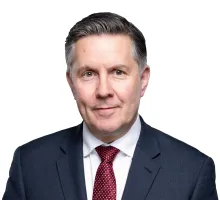
JAMES GLENDAY, HOST: Well, let’s turn to federal politics, and it is going to be a big day in Canberra with the Israeli President visiting, and of course the ongoing chaos within the Federal Opposition. The Health Minister, Mark Butler, joins us from Parliament House. G’day, Minister. Welcome back to News Breakfast.
MARK BUTLER, MINISTER FOR HEALTH AND AGEING, MINISTER FOR DISABILITY AND THE NDIS: Thank you, James.
GLENDAY: As interesting as all that associated drama is, I actually want to start with policy, and a huge issue for our audience is bulk billing. Where are things at in terms of trying to get bulk billing up to nine out of 10 doctor’s visits across the country?
BUTLER: It’s heading in the right direction, and even faster than I expected when we put in place record investments in November. This was a core part of our promise to strengthen Medicare, James. We promised more doctors. We’ve seen a 50 per cent increase in new registrations. We promised cheaper medicines, we’ve delivered that. We promised Urgent Care Clinics, and 123 of them are open. But what we really importantly promised was to turn around bulk billing, which was in freefall when we came to government. And since 1 November, we’ve seen an 8 per cent increase in bulk billing in just three months for people who don’t have a concession card. If you've got a concession card, those bulk billing rates are now comfortably above 92 per cent, again, because of investments we made a couple of years ago. But I was really focused on those people who don't have the benefits of a concession card who are facing growing out-of-pocket costs when going to the GP. We want them to go to the GP when they feel they need to rather than when they feel they can afford to. It's early days. This is something we think will take a few years to get to the target we want to see it at, but really promising signs in just the first three months.
GLENDAY: Do you expect to hit the target by 2030? And are there still some pockets of the country, bulk billing deserts that exist? Because we often hear from audiences who say, members who'll say, well, when I go back home to regional Australia I can get a bulk bill GP, but certain parts of inner cities, things like that, they really struggle to find a bulk billing doctor. And if they find one, they then can't get an appointment.
BUTLER: We're getting more doctors into the system. Really pleasingly, there's a record number of junior doctors training as GPs this year so we’re about 500 higher than the number several years ago. We're getting more GPs into the system which will make it easier to find one. But we also want to make it affordable, and you're right to say that there are parts of the country where bulk billing rates just aren't acceptable. Canberra, where I am right now, is a well-known desert for bulk billing, including for people with a concession card. So We've decided to intervene in that market. We're going to fund the opening of new bulk billing practices because we just think there's a competition issue in the Canberra market. I'm also looking very closely at Newcastle, the Hunter Valley and the Central Coast in New South Wales because their bulk billing rates are far lower, for example, than Western Sydney which enjoys bulk billing rates above 95 per cent.
Now that doesn't make sense. It's more expensive to run a business in Sydney than it is in the Hunter Valley, so again, we'll look at potential interventions in that market because this should be something enjoyed equitably right across the country.
GLENDAY: Just on intervention, specialist fees is another complaint we hear about a lot and particularly the high cost, questions about how prices are set. You've sort of hinted you might be looking at an intervention in this space. Are you any closer in working out exactly how you're going to do that?
BUTLER: I think we'll have to do a series of things. We don't have the same leavers we have with general practice. This will be harder to achieve results. But Australians are telling me time and time again that out-of-pocket costs for non-GP specialists is now the barbecue stopper in healthcare. This week I'll be introducing legislation to mandate the disclosure of out-of-pocket fees that are charged by specialists. We wanted them voluntarily to publish those fees and they just refused to do so, so I'm going to do it for them. I'm going to make sure that everyone is able to have a look at the anaesthetist or the surgeon they've been referred to and compare their out-of-pocket costs to someone up the road, because what we do see among specialists is a huge variability in the out-of-pocket costs that people are being charged.
GLENDAY: If I can just take you to some of the issues that are dominating headlines today and will probably dominate the news cycle in Parliament House, the Israeli President is going to be visiting. Do you think this visit is actually enhancing social cohesion?
BUTLER: This was a very clear request from a grieving Jewish community, and it's one we listened to. It's one the Governor-General listened to when she invited her equivalent, the Ceremonial Head of State, the President of Israel, and I think it's been already an enormous source of comfort and solace to a community that is grieving and is frightened, and we recognise the importance of that. I get that a lot of Australians feel very deeply about the conflict that is raging over in the Middle East, the other side of the world, but we thought it was important to invite the President to provide that comfort to a community that is going through such a painful period. We also -
GLENDAY: Just given what we've seen though, Minister, in hindsight, could you have invited someone else who might not have attracted the same amount of protest, the same depth of feeling within the community?
BUTLER: Well, the ceremonial head of state, the President of Israel, we think was the right person to invite. This is a person highly respected in Israel, but is not a member of the government. It's not like the executive presidency you might see in the US or France. This is the equivalent of our Governor-General, someone who is above politics but designed, or the position designed to provide statesmanship and leadership in that country, and the Jewish community wanted to hear from him here and we heard that request very clearly. Now, I know this conflict evokes deep feelings, but what we want to be clear about is that we need to continue a dialogue with Israel. If you are committed to the creation of a state of Palestine, you need to be talking, among others, to the state of Israel about that. This idea that we don't have any engagement with the state of Israel which some people have advocated, including in the Parliament over the last little while, is not going to lead to any good outcome for the people of Palestine.
GLENDAY: We have been speaking to a number of people about the appropriateness of the invitation and of course the legacy of the President, some of his past actions, so I will move on. I just want to take you to probably what is going to be the story of the day in Canberra. Resignations are expected imminently within the Liberal Party. Who knows whether this is going to happen. How do you feel watching this ongoing chaos within the Opposition? I know you've been through a number of leadership spills yourself.
BUTLER: I'm trying not to watch it, frankly, and I'm not sure there's much that I can add to the reams of commentary that Liberal MPs are engaged in on an hourly basis about each other. I'm in the press gallery here, James, and Liberal MPs are literally lining up outside TV studios to give each other a free character assessment. You know, it is a bit of a circus. It's pretty chaotic, which is why we're focused on things that we've been talking about earlier in the interview, things that we promised the Australian people we would do to make their lives easier and better.
GLENDAY: Mark Butler, thanks for your time this morning.
BUTLER: Thanks, James.
Media event date:
Date published:
Media type:
Transcript
Audience:
General public
Minister: