
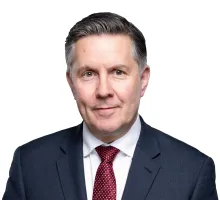
JAMES GLENDAY, HOST: Alright, time for more on our top stories now, and the Federal Cabinet Minister Mark Butler joins us. Mark, welcome back to the program.
MARK BUTLER, MINISTER FOR HEALTH AND AGEING, MINISTER FOR DISABILITY AND THE NDIS: Thank you, James.
GLENDAY: Now, you've got an announcement, we will come to that in a moment, but I just wanted to start with the war in the Middle East and Donald Trump's comments. He says that US allies should go get their own oil if they're worried about high fuel prices. Is this just bluster in your view, or are you taking the President's comments seriously?
BUTLER: We don't respond to every comment by the US President, as you know, James. It's pretty clear to all of your viewers and to everyone around the world, there's one reason why the Strait of Hormuz is closed, and that's the war that's being waged between the US, Israel and Iran. Iran's response to that, targeting countries in the region that have nothing to do with the war and obviously shutting down this incredibly important artery for the global economy is exactly why there is such a significant global fuel crisis. That's why we've called over the course of this week in particular for de-escalation, for a clear timeline that sees this war wound down and those straits opened again so that oil can continue to flow to the global economy.
GLENDAY: I know you don't want to respond to every single comment, but just in the past couple of days, the President has said, I might bomb them some more, I might do a deal with them, and now he's saying, allies, you need to step up if you want cheaper fuel. I mean, is there any chance at all, in your view that Australia could be involved in a military operation to keep the Strait open? And do we even have the military resources available if we wanted to do that?
BUTLER: We don't have any plans to do that, that's been made clear by a number of ministers. We are involved in some defensive operations to protect those innocent neighbours, particularly the UAE, where there are many thousands of Australians as expats. We don't have any plans to participate in military activities in the strait. What we need is de-escalation between those three parties, and particularly for Iran to start withdrawing its attacks on its neighbours and on shipping through the Gulf.
GLENDAY: So the US is also warning that if allies don't help out then the US will not be there for allies in the future. What do you make of that language? Does it raise questions about the future of AUKUS and all the money we've funnelled into that project?
BUTLER: We're very confident about the future of AUKUS. The US President, the administration more broadly, the Congress has made clear its commitment to that important security partnership between the US, Australia and the UK because it's in the US's interests as much as it is in our interests, our national interests and the UK's national interests.
GLENDAY: But is this the sort of problem that might change things? It does feel like the sort of moment that might change how allies cooperate and work with the United States.
BUTLER: This is why we don't provide a daily commentary on the remarks made by the US President. We're focused on the substance of our relationship between Australia and the US. This is our most important strategic relationship, as your viewers well understand. It has been for many decades, and that's been the case through a range of different political complexions both here and in the US as well, and I'm confident will endure into the future.
GLENDAY: Just before I move to a different topic, I mean, can you see any resolution to this? Is this going to drag on for weeks and weeks and weeks, or do you think there's a deal to be done just in the next couple of weeks or so?
BUTLER: I think the honest answer is that beyond those three countries, no one really knows. We've seen some encouraging remarks over the last several hours from the Iranian President as well as the Americans that that they do want to see this wound down sooner rather than later. But ultimately, that's in the hands of the three countries that are waging this war. As your viewers know, Australia is not a party to the war that Trump is waging with Iran, but certainly Australian households are being hit by it and they're being hit hard, which is why we're taking such strong action to support them.
GLENDAY: Let's get to that. Fuel prices went up very rapidly after this war began. How long should it take, do you think, for prices to go down now that fuel excise has been cut in half? Why doesn't it happen just in the next couple of days?
BUTLER: Well, because fuel excise is levied at the wholesale point of the pipeline, not at the bowsers. And as we saw back in 2022, when fuel excise was cut in response to the big spike in prices that followed Russia's invasion of Ukraine, it takes a while for that to flow through to the bowser. Now, for petrol stations that have high turnover, that might only be a few days. But for stations that have slightly lower turnover, it might be as much as one or two weeks, which is what we saw back in 2022.
The important thing, though, is that an average tank will be about $19 cheaper than it otherwise would have been because of the tax cut that this government is delivering. We'd also like to see states deliver on the commitment they made on Monday to return the windfall gain that they're making as a result of GST on higher fuel prices. But the states have a little way to go yet, it would appear, to come to an agreement about how that happens.
GLENDAY: Yeah, should they get to that agreement in the next day or so? I was going to ask about this because this, although it's quite complicated, effectively this could be maybe even as much as 10 cents a litre for motorists.
BUTLER: That's right, another eight or 10 cents a litre is going to make a real difference to motorists, and we want to see it delivered as quickly as possible. The laws that the Parliament will be passing over the course of today give the Treasurer the power to pass that on through a further fuel excise cut if the states can agree effectively to forego the windfall that they otherwise would make on the GST on higher fuel prices.
We want them to come to that agreement sooner rather than later. They hadn't as of yesterday, but I'm confident at the end of the day they will they made at National Cabinet on Monday.
GLENDAY: Just briefly, let's go to your portfolio. Of course, you are the Health Minister. You've got an announcement about free mental health care. How many people are you expecting to use this service?
BUTLER: We think about 150,000 a year will use this service. This is really designed for people who are dealing with temporary distress, more mild to moderate levels of distress and worry that doesn't need full-blown psychological therapy but just needs some advice and support for people to get back on the track, really. Often that will happen because of one those life events like the loss of a job or a relationship or a bereavement where people don't necessarily have a medical diagnosis, don't need to go and see a GP, but just need some support.
This is free, it doesn't require a GP referral, it's backed by Medicare so people know it's high quality, and it will be really available at the convenience from your home at the end of the phone. Medicare Mental Health Check In, it's going to provide some really important support to Australians. And we know right now, with cost of living pressures flowing from this global fuel crisis, there will be more people feeling distressed than usual.
GLENDAY: Mark Butler, thanks for joining News Breakfast.
BUTLER: Thanks, James.
Media event date:
Date published:
Media type:
Transcript
Audience:
General public
Minister: