
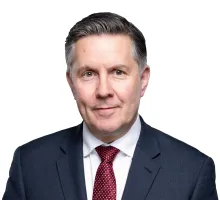
SALLY SARA, HOST: Well, National Cabinet will meet today in an effort to strike a deal on public hospital funding. The state, territory and federal governments have been locked in a stalemate over negotiations for the next five years of funding for hospitals, and a new state-run program for young children with mild developmental disabilities. Mark Butler is the Minister for Health and Ageing and joins me now. Minister, welcome back to Breakfast.
MARK BUTLER, MINISTER FOR HEALTH AND AGEING, MINISTER FOR DISABILITY AND THE NDIS: Thank you, Sally.
SARA: Are you confident you'll reach an agreement today with the states and territories?
BUTLER: I'm cautiously optimistic. I know there's a lot of goodwill by all jurisdictions. This is an agreement that was effectively committed to way back in 2023, not just covering hospitals, which is obviously very important for state governments, but also disability reform and as you said, what we're doing with children with relatively mild to moderate needs. So it's a big, complex deal, but there's a lot of goodwill.
SARA: If a deal isn't done, are the parties close enough to make another attempt before the South Australian Government enters caretaker mode next month? Or will you need to make an interim agreement for a year?
BUTLER: We are running out of time, really. Negotiations have been going on for quite a period of time. It's not easy to get National Cabinet together. Everyone's in Sydney for the meeting this morning, and they had dinner last night to start those discussions. So we really do need to get a deal done today. As you say, in a few weeks' time, South Australia goes into caretaker, which means negotiations can't continue, and then we really do sort of crash up against the end of the financial year. I think everyone understands today is critical. We've got a very generous offer on the table, $23 billion more than states would have received under the deal that they struck with Scott Morrison. And that's on top of all the investments we're making to strengthen Medicare and take pressure off the hospital system – bulk billing, Urgent Care Clinics and things like that.
SARA: What will be the cost of failure to reach a five-year deal? Will the healthcare of Australians be affected?
BUTLER: The cost of failure will be very significant because there is a shared commitment not only to ensuring our hospitals run well and deal with some changes in the population, particularly the ageing of the population. But also I think all jurisdictions recognise the need to get the NDIS back on track and ensure that it meets its original objectives, caring for people with significant and permanent disabilities. So that's why I say that there's a lot of goodwill from all jurisdictions. I mean, premiers always come to these meetings wanting more money. I think your listeners understand that truism of Australian politics. But there is a lot of goodwill, which is why I'm cautiously optimistic that we can see a deal struck today.
SARA: You're listening to Radio National Breakfast, and my guest is the Minister for Health and Ageing, Mark Butler. Heading into negotiations today, has the government offered the states and territories anything that wasn't on the table previously when your last offer was rejected in December?
BUTLER: I'm not going to go into the negotiations that the Prime Minister is having really as we speak with premiers and chief ministers. We put a very generous offer on the table just before Christmas, $23 billion on top of the $12 billion in growth funding they would have received under Scott Morrison's old deal with them. So a very generous offer and one which will make a real difference, not just the hospital system, but all of the other parts of the social care system that are important to Australians.
SARA: Let's bring it back down to the family level. A lot of parents may be worried about the services available for their kids. So just to clarify, is the 1 July start date definitely going to happen or not?
BUTLER: I said last year that I wanted to see services start to ramp up on 1 July this year. This was an in-principle commitment that governments made way back in 2023. But frankly, the progress on delivering that commitment to families had drifted. So that's why I wanted to kickstart the initiative and announce the Thriving Kids program. We've had terrific engagement with state governments. We've had an advisory group that I co-chaired work on the model of care, which is now finalised, and we are in a position now for premiers to talk about the implementation of that which will make a difference to families.
Now, they've come back and said they'd like it a little bit later, and I'm really just talking several months more than anything significant, and we'll engage with them constructively about that. But I think the important things for families to hear is that all governments now recognise the need to provide broad-based services that are easy to access, that don't require a very costly diagnosis for your young child that might take years to actually deliver. We're ready really to start rolling out a much better program for families
SARA: But it doesn't sound like 1 July will be the start date for Thriving Kids, am I right?
BUTLER: We'll be ready to start our commitment to that, our delivery to that program. It will be a program delivered in partnership with states and territories. That's a matter that will be discussed further, I imagine, by heads of government over the course of the morning.
SARA: But realistically, would it be likely to get that up and going by July?
BUTLER: We only ever committed to the start of services, and we said that we expected the program to be fully rolled out sometime after that. And certainly there'll be no changes to the access arrangements to the NDIS until the program is fully rolled out. I want to give parents that confidence. They're not going to fall between two stools, as it were.
SARA: On another matter, according to data released by the Productivity Commission, the average wait time to receive an aged care assessment increased to 27 days last financial year, up from 22 the year before. Does that concern you?
BUTLER: You and I have talked before a number of times, Sally, about the growth in demand for aged care because of the ageing of the population, particularly the number of baby boomers turning 80 right now, which is really the critical age for this. But the data you're referring to is relatively old. It only goes to 30 June. And as you know, we've made a number of changes since then, which have seen those wait times started to come down. The waitlist, for example, for Home Care Packages has reduced since September because of the huge number of additional packages we're putting into the system. But I'm not going to pretend this isn't going to continue to be a challenge. Just the sheer numbers are a very significant challenge for us to meet. But we're heading in the right direction.
SARA: Just finally, Minister, the Nipah virus, which can be a fatal virus, has been detected in India. Authorities in India, Thailand, Singapore, Hong Kong and Malaysia have now enacted new testing regimes. How concerned is the Federal Government about Nipah? Are you monitoring it carefully?
BUTLER: We're monitoring it very closely. Our Centre for Disease Control, or CDC, has information they've put up on their website as recently as yesterday afternoon for people who are interested in that. There are also smart traveller advice for people thinking about travel to India, particularly to an affected area like West Bengal. But this is something I think we're monitoring very closely, but the Indian authorities tell us that they think they've got contained. There are two confirmed cases of this virus. It's very serious. The mortality rate is as many as one in two, or even three in four people die if they develop the virus. but it's very difficult to transmit between humans. It's not transmissible in the way that your listeners would understand COVID or the flu to be transmitted in an airborne way. It requires very close personal contact between humans and the exchange effectively of bodily fluids. So there's reason to hope that this has been contained, but we're monitoring it very, very closely. We don't have any advice at the moment to our existing protocols for sick travellers who arrive in Australia. There already are protocols for that, but we'll continue to watch the situation closely.
SARA: Minister, a very busy Friday ahead for you. Thanks so much for making some time this morning.
BUTLER: My pleasure.
SARA: That's Mark Butler there, the Federal Minister for Health, Ageing, Disability and the NDIS.
Media event date:
Date published:
Media type:
Transcript
Audience:
General public
Minister: